
Anaplasma bovis–Like Infection in Humans: An Emerging U.S. Tick-Borne Infection
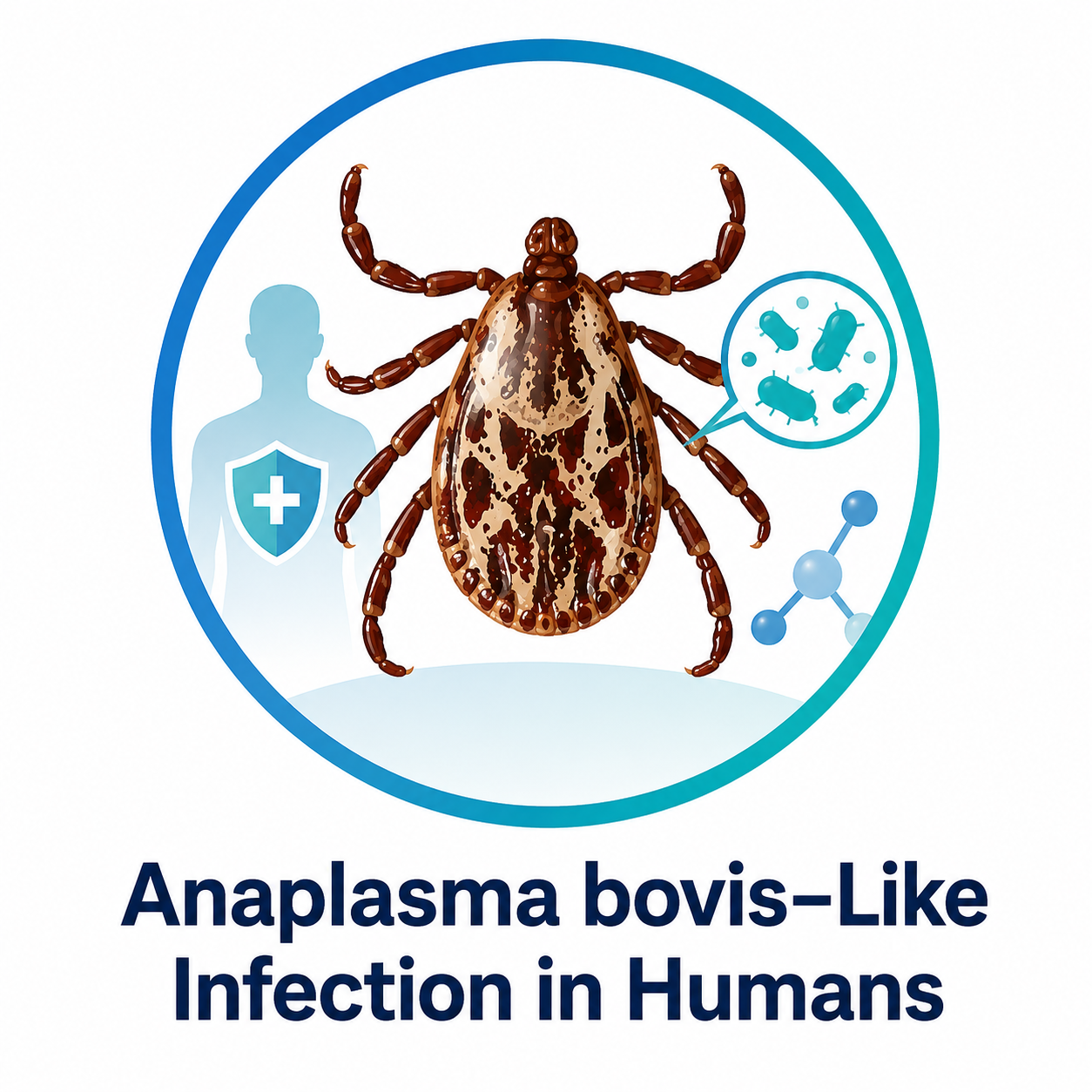
Anaplasma bovis–like infection is a newly recognized and still poorly understood human infection identified in the United States.
DNA from a novel Anaplasma bovis–like bacterium has been detected in blood specimens from U.S. patients whose samples were submitted because tick-borne illness was suspected. The organism is genetically related to Anaplasma bovis, a bacterium historically associated mainly with animals.
The CDC Yellow Book 2026 includes Anaplasma bovis among Anaplasma species known to cause human disease, lists its vector as tick, and identifies the United States as its geographic distribution. However, many important details about the specific U.S. A. bovis–like agent remain under investigation.
What Is Anaplasma bovis–like infection?
Anaplasma species are obligate intracellular bacteria associated with several tick-borne infections.
The best-established cause of human anaplasmosis in the United States is:
Anaplasma phagocytophilum
However, researchers have identified a genetically distinct A. bovis–like agent in human blood specimens from the United States.
It is called “A. bovis–like” because molecular testing shows that the organism is closely related to bacteria within the A. bovis complex, while scientists continue working to characterize its taxonomy, epidemiology and natural transmission cycle more completely.
Human Infections Identified in the United States
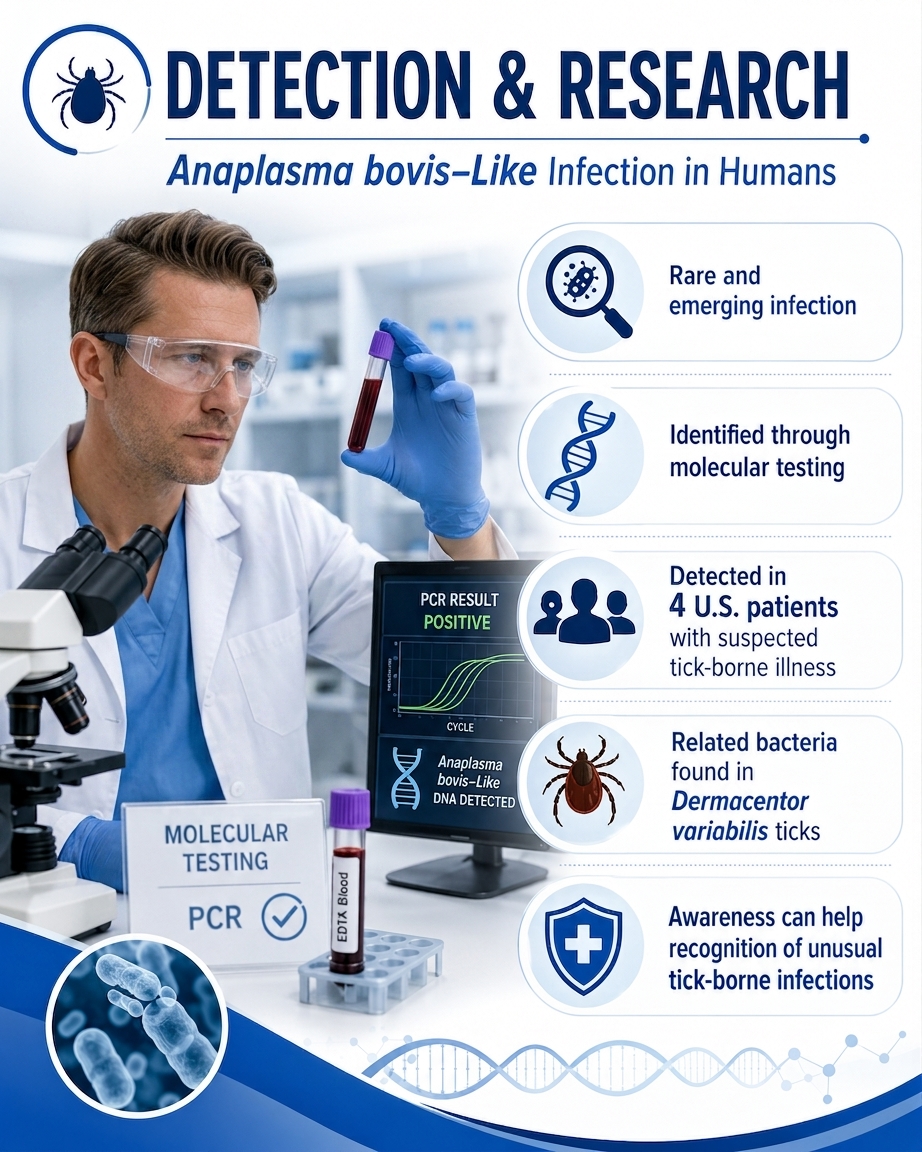
A CDC-led investigation published in Emerging Infectious Diseases in 2023 described the A. bovis–like agent in blood specimens from four U.S. patients.
The specimens were collected from:
- Oklahoma — 2015
- Minnesota — 2015
- Oklahoma — 2017
- Missouri — 2017
The patients were:
- 71-year-old woman — Oklahoma
- 34-year-old man — Minnesota
- 67-year-old woman — Oklahoma
- 54-year-old man — Missouri
These detections arose from an investigation of 29,928 residual clinical blood specimens collected during 2014–2019 from patients with suspected tick-borne disease.
The A. bovis–like organism was detected only four times in that specimen collection, indicating that recognized infections were uncommon in the population studied. However, the study cannot establish the true incidence or prevalence of human infection.
What Symptoms Does It Cause?
This remains one of the most important uncertainties.
A specific clinical syndrome for the U.S. A. bovis–like agent has not yet been established.
The study design that led to discovery of the four U.S. infections did not provide researchers with detailed clinical information about those patients.
Therefore, it would be misleading to apply the standard symptom profile for Anaplasma phagocytophilum anaplasmosis directly to these infections.
Human infections associated with A. bovis have been reported outside the United States, including in China. Reported findings have included:
- Fever
- Muscle aches
- Fatigue
- Loss of appetite
- Thrombocytopenia, or low platelet counts
However, these findings should not be treated as a confirmed symptom profile for the U.S. A. bovis–like agent.
What We Do Not Yet Know
For the U.S. A. bovis–like infection, researchers have not established a reliable:
- Incubation period
- Typical symptom pattern
- Rash frequency
- Rate of severe illness
- Hospitalization rate
- Fatality rate
- Characteristic laboratory profile
Additional well-characterized human cases and research are needed before these features can be defined.
Which Tick Spreads It?
Available evidence suggests a role for Dermacentor ticks, particularly:
American dog tick (Dermacentor variabilis)
The 2023 U.S. investigation found that genetic sequences from the human A. bovis–like agent were identical or extremely closely related at evaluated genetic targets to sequences detected in Dermacentor variabilis ticks from several central U.S. states.
Researchers concluded that D. variabilis could represent a vector of the agent.
Additional research published in 2026 likewise noted that available data suggest possible Dermacentor tick transmission.
However, this does not mean that transmission of the organism to humans by the American dog tick has been conclusively demonstrated experimentally.
The exact vector or vectors responsible for transmitting the organism to humans remain under investigation.
Important 2026 Update
New PCR Assay and Additional Infected Tick Detected
A study published in the May 2026 issue of CDC’s Emerging Infectious Diseases journal developed and validated a new real-time PCR assay specifically designed to detect the A. bovis–like agent.
The article was originally published online on April 28, 2026.
Researchers used the assay to test 672 Dermacentor ticks collected from dogs and cats across the United States during 2021–2023.
Only one of the 672 ticks — approximately 0.1% — tested positive.
It was:
A male American dog tick (Dermacentor variabilis) collected from a dog in Blaine, Minnesota.
Further molecular testing showed that its bacterial sequences were 100% identical at the evaluated targets to previously reported U.S. sequences from infected humans and Dermacentor ticks.
The low detection rate in this particular collection does not establish the true prevalence of the organism in ticks or the frequency of human infection.
Researchers emphasized that too few infected humans and ticks have been identified to make broad conclusions about the organism’s complete geographic distribution.
Evidence From Oklahoma
A separate 2024 study examined:
- 38 American dog ticks from Oklahoma
- 93 American dog ticks from Kansas
- 140 cattle blood samples from Oklahoma
Researchers detected A. bovis–like DNA in 4 of 38 Oklahoma American dog ticks.
None of the 93 Kansas ticks and none of the 140 Oklahoma cattle blood samples tested positive in that investigation.
Three of the four positive Oklahoma ticks came from the same collection site.
Because of this clustering—and because relatively few infected ticks have been identified overall—researchers have suggested that the organism’s distribution may be highly focal or localized rather than evenly distributed throughout a region.
Where Has the Agent Been Detected?
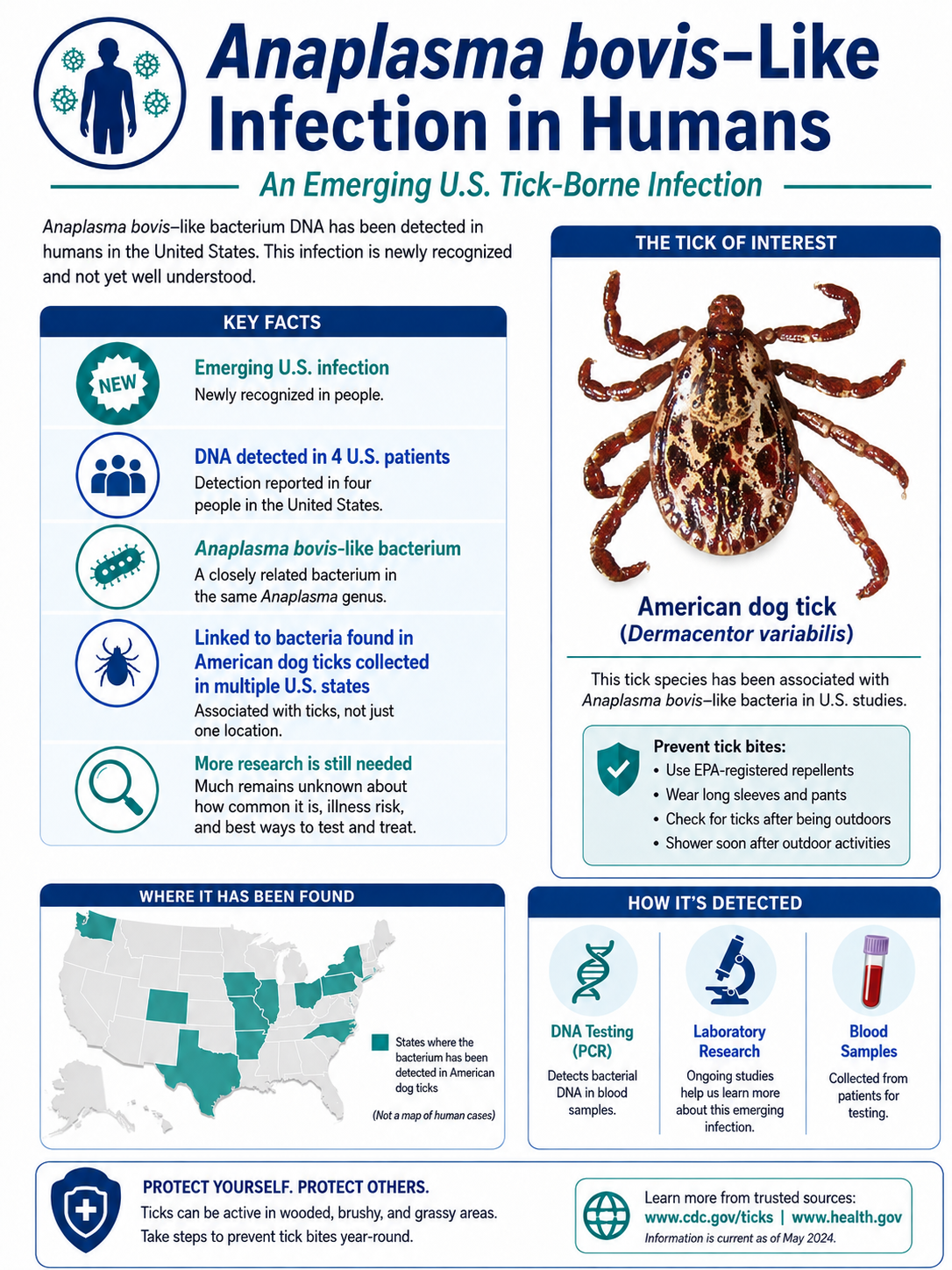
Current research has detected the U.S. A. bovis–like agent in humans or Dermacentor variabilis ticks from central U.S. states including:
- Minnesota
- Oklahoma
- Missouri
- Iowa
- Nebraska
The four molecularly characterized human specimens came from:
- Minnesota
- Oklahoma
- Missouri
Findings from Iowa and Nebraska involved ticks rather than documented human cases in the 2023 report.
Related A. bovis–like bacteria have also historically been detected in certain wildlife species in other U.S. locations.
Researchers caution that the currently known locations should not be interpreted as a complete map of the organism’s geographic range.
Surveillance remains limited, and additional infected ticks, animals or humans may eventually be identified elsewhere.
Is This the Same as Regular Human Anaplasmosis?
Not exactly.
In routine U.S. public-health guidance, anaplasmosis is primarily described as disease caused by Anaplasma phagocytophilum.
CDC identifies two principal U.S. vectors of A. phagocytophilum:
- Blacklegged tick (Ixodes scapularis)
- Western blacklegged tick (Ixodes pacificus)
The newly recognized U.S. A. bovis–like infection is therefore a distinct and emerging area of investigation.
The CDC Yellow Book 2026 includes A. bovis among Anaplasma species associated with human disease and lists tick as its vector and the United States as its geographic distribution.
However, CDC’s routine public-facing anaplasmosis guidance remains primarily focused on A. phagocytophilum.
Is It a Nationally Notifiable Disease?
This requires an important distinction.
Anaplasmosis is nationally notifiable in the United States.
However, CDC’s current 2024 national surveillance case definition for anaplasmosis is specifically based on Anaplasma phagocytophilum.
Its organism-specific laboratory criteria include evidence involving A. phagocytophilum, such as detection of its DNA, antigen, isolation, or appropriate serologic evidence.
Therefore, routine national anaplasmosis surveillance counts should not be interpreted as case counts specifically for A. bovis–like human infection.
How Is It Diagnosed?
CDC’s current dedicated anaplasmosis diagnostic guidance is focused on Anaplasma phagocytophilum and does not provide organism-specific routine clinical testing guidance for the newly recognized U.S. A. bovis–like agent.
The original U.S. infections were discovered through specialized molecular testing and subsequently characterized using additional molecular methods and sequencing.
2026 PCR Development
The 2026 study introduced a specific real-time PCR assay for the A. bovis–like organism.
The assay had a reported analytical limit of detection of 10 target copies.
During laboratory specificity testing, the assay did not cross-amplify DNA from several related organisms that were evaluated.
The assay represents an important research and surveillance development, but the publication does not establish it as a routinely available commercial clinical diagnostic test for human patients.
Researchers indicated that future use of the assay could facilitate larger-scale screening of:
- Humans
- Potential tick vectors
- Animal hosts
and help researchers better define the organism’s epidemiology.
CDC’s routine clinical testing recommendations for anaplasmosis remain focused on A. phagocytophilum.
How Is It Treated?
This section requires careful interpretation because species-specific treatment studies of the U.S. A. bovis–like agent are lacking.
There is currently insufficient U.S. clinical information to establish a treatment regimen specifically validated for this organism.
For suspected anaplasmosis and other tick-borne rickettsial infections, however, CDC recommends prompt treatment with doxycycline, and treatment should not be delayed while waiting for confirmatory laboratory results when illness is clinically suspected.
CDC’s Yellow Book likewise identifies doxycycline as the treatment of choice for rickettsial infections.
This general guidance should not be interpreted as evidence that a clinical treatment trial or species-specific treatment regimen has been established for U.S. A. bovis–like infection.
Diagnosis and treatment decisions should be made by a qualified healthcare professional.
Should Antibiotics Be Taken After a Tick Bite?
For anaplasmosis and other rickettsial diseases, routine preventive antibiotic treatment is not recommended for an asymptomatic person simply because a tick bite or suspected exposure occurred.
CDC specifically states that antibiotic prophylaxis after a tick bite is not recommended to prevent anaplasmosis.
Important Distinction: Lyme Disease Is Different
Lyme disease has separate post-exposure recommendations.
In certain circumstances, a single dose of doxycycline after a qualifying tick bite may be considered to reduce the risk of Lyme disease.
Therefore, the recommendation against prophylactic antibiotics for anaplasmosis and other rickettsial diseases should not be interpreted as meaning that antibiotic prophylaxis is never appropriate after any tick bite.
A person who develops illness following a tick bite or possible tick exposure should contact a healthcare professional and provide information about:
- The tick exposure
- Where the exposure occurred
- Recent outdoor activities
- Recent travel
When symptoms began
How Can You Reduce Your Risk?
Because the precise transmission biology of the U.S. A. bovis–like agent remains under investigation, prevention should focus on reducing tick bites generally.
Useful measures include:
- Use an EPA-registered insect repellent according to label directions.
- Consider clothing and gear treated with permethrin according to product instructions.
- Avoid direct contact with brush, leaf litter and tall grass when practical.
- Check clothing and gear for ticks after outdoor activities.
- Check pets for ticks.
- Perform a full-body tick check after spending time outdoors.
- Shower after returning indoors.
- Remove attached ticks promptly and properly.
Reducing exposure to ticks remains one of the most important ways to lower the risk of tick-borne infections.
What Scientists Know — and What Is Still Unknown
What We Know
- A genetically characterized A. bovis–like bacterium has been detected in human blood specimens in the United States.
- Four molecularly characterized U.S. specimens were collected from patients in Oklahoma, Minnesota and Missouri during 2015–2017.
- The organism is genetically associated with bacteria detected in Dermacentor variabilis ticks.
- Additional positive American dog ticks have been identified in Oklahoma and Minnesota.
- Related sequences have also been reported from D. variabilis ticks in Iowa and Nebraska.
- The CDC Yellow Book 2026 includes A. bovis among Anaplasma organisms associated with human disease, lists its vector as tick, and identifies the United States as its geographic distribution.
- A specific real-time PCR assay was published in the May 2026 issue of Emerging Infectious Diseases, providing researchers with an improved tool for epidemiologic investigation.
What We Still Do Not Know
Researchers still need to establish:
- The full clinical spectrum in U.S. patients
- A reliable incubation period
- How frequently infection causes symptomatic illness
- The risk of severe disease
- The hospitalization rate
- Whether fatal infections occur
- The complete geographic distribution
- The primary wildlife reservoir or reservoirs
- Which tick species are competent vectors
- Whether D. variabilis is a principal human vector
- How efficiently infected ticks transmit the bacterium
- How long an infected tick must be attached for transmission
- The true frequency of human infection
- The best organism-specific diagnostic strategy in routine clinical care
- A treatment regimen specifically studied for this organism
Why This Emerging Infection Matters
The discovery of A. bovis–like human infection illustrates how improvements in molecular testing continue to identify previously unrecognized or poorly characterized tick-associated pathogens in the United States.
The four molecularly characterized U.S. detections were extremely uncommon in the large clinical specimen collection in which they were identified.
At the same time, development of a specific real-time PCR assay in 2026 provides researchers with a more practical tool for investigating additional human specimens, ticks and potential animal hosts.
The most scientifically appropriate message is therefore:
Awareness Without Overstatement
- bovis–like human infection has been molecularly documented in the United States, but scientists are still determining its clinical features, geographic distribution, natural reservoirs, vector relationships and frequency of human infection.
When to Contact a Healthcare Provider
Contact a healthcare professional if you develop fever, headache, unusual fatigue, muscle aches, gastrointestinal symptoms, rash, confusion, or another concerning illness after a known or possible tick exposure.
These symptoms are not being presented as a specific symptom profile for U.S. A. bovis–like infection.
They are general warning symptoms that can occur with several tick-borne illnesses.
Tell your healthcare provider:
- Whether you found an attached tick
- When the exposure may have occurred
- Where the exposure occurred
- Whether you recently traveled
- When your symptoms began
Several tick-borne diseases can cause similar early symptoms. A healthcare professional should determine which infections need to be considered and whether empiric treatment is appropriate.
Key Takeaway
Anaplasma bovis–like human infection is a newly recognized and emerging U.S. tick-associated infection that remains incompletely understood.
Human infections have been molecularly identified in Oklahoma, Minnesota and Missouri, while genetically matching or closely related bacteria have been detected in American dog ticks (Dermacentor variabilis) from several central U.S. states.
Available evidence supports an association with Dermacentor ticks, particularly D. variabilis, but vector competence and the precise human transmission cycle have not yet been established.
The specific real-time PCR assay published in the May 2026 issue of Emerging Infectious Diseases represents an important step toward improving surveillance and facilitating future investigation of humans, potential tick vectors and animal hosts.
The scientifically supported conclusion is:
Human infection with this A. bovis–like agent has been molecularly documented in the United States, and continued surveillance and research are warranted—but fundamental questions about its clinical significance, transmission and epidemiology remain unanswered.
Educational Disclaimer
This information is provided for educational purposes only and is not a substitute for professional medical advice, diagnosis or treatment. If you develop fever, rash, unusual fatigue, headache, body aches, nausea, vomiting, confusion or other concerning symptoms after a known or possible tick exposure, contact a qualified healthcare professional.

