
An Uncommon Upper Midwest Tick-Borne Infection
What Is Ehrlichia muris eauclairensis Ehrlichiosis?
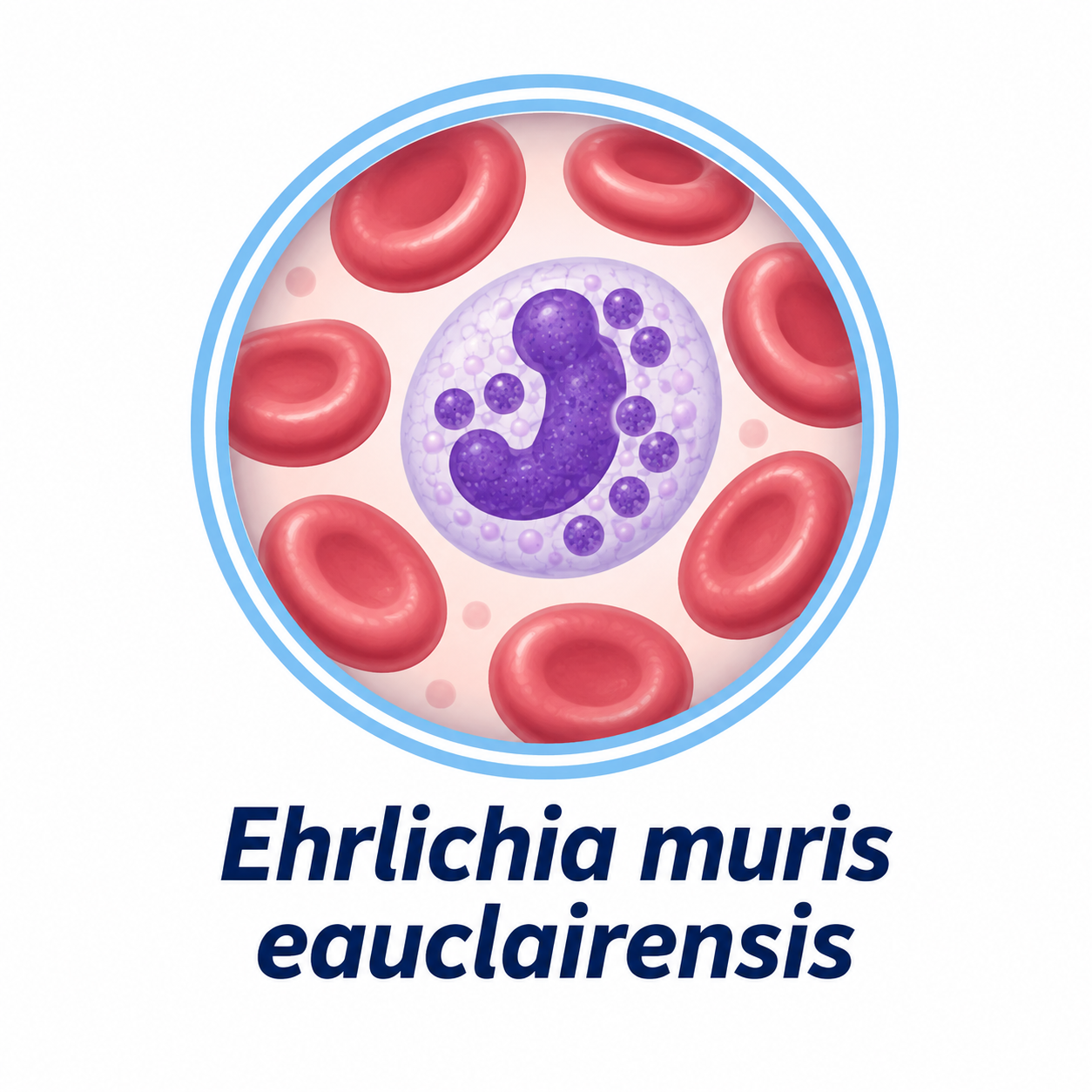
Ehrlichia muris eauclairensis (EME) is a bacterium that causes a form of ehrlichiosis, a tick-borne bacterial illness.
In the United States, CDC identifies three Ehrlichia species as causes of human ehrlichiosis:
- Ehrlichia chaffeensis
- Ehrlichia ewingii
- Ehrlichia muris eauclairensis
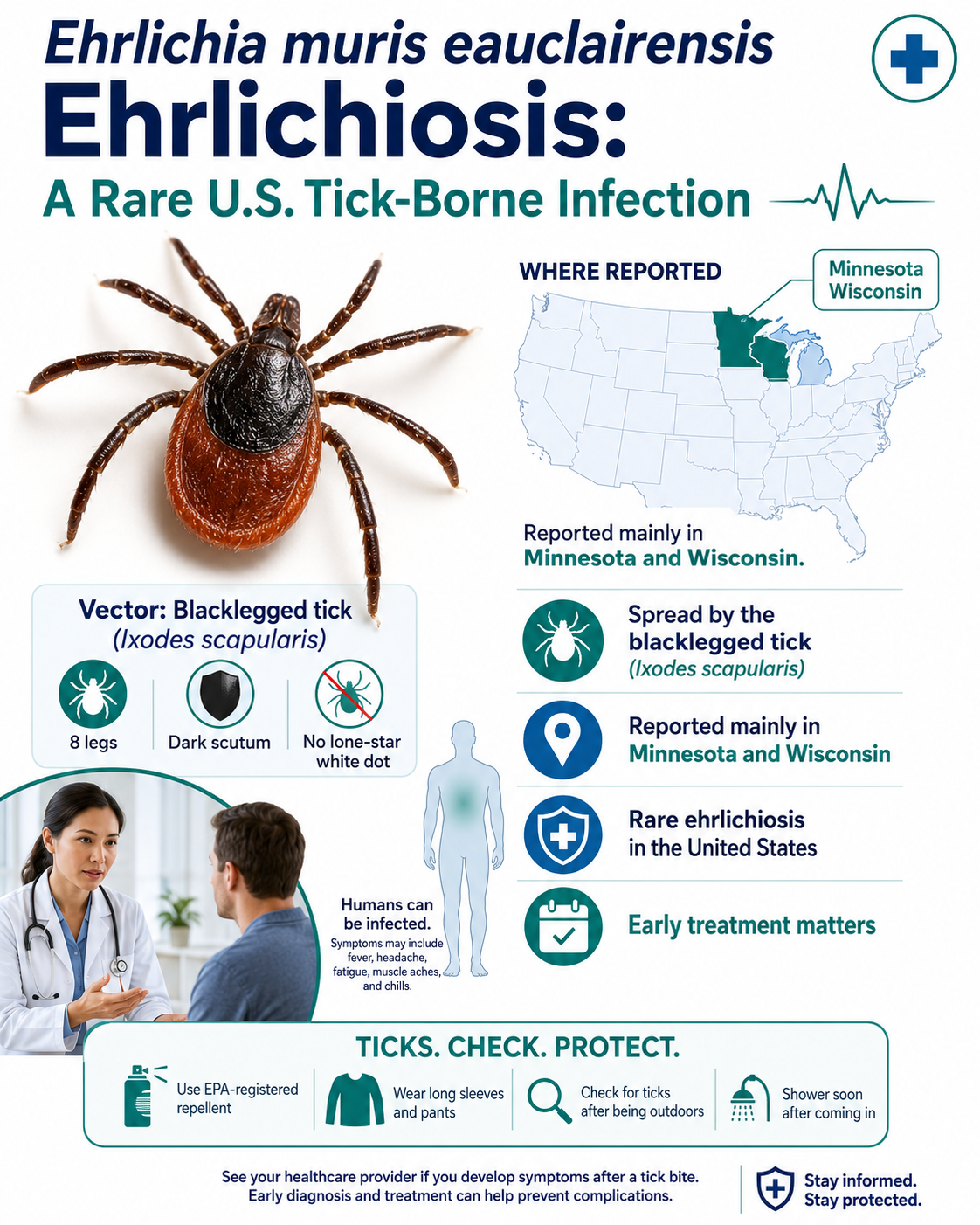
A key distinction is that E. muris eauclairensis is transmitted by the blacklegged tick (Ixodes scapularis), commonly called the deer tick. E. chaffeensis and E. ewingii are transmitted by the lone star tick (Amblyomma americanum).
Where Is It Found?
- muris eauclairensis was identified as a cause of human illness in 2009, after infections were recognized in patients associated with Wisconsin and Minnesota.
CDC states that human E. muris eauclairensis cases have been reported from Wisconsin and Minnesota, including residents of or travelers to these states.
This geographic distinction is important. The blacklegged tick itself is distributed much more widely across the eastern United States, and CDC surveillance also tracks where EME has been detected in host-seeking ticks. The presence of blacklegged ticks—or detection of the organism in ticks—does not automatically mean that locally acquired human EME illness has been documented in that area.
Human EME illness remains uncommon. Wisconsin reported 9 confirmed cases of EME ehrlichiosis in 2024, while Minnesota continues to report low numbers of EME infections each year.
Which Tick Spreads It?
Blacklegged Tick — Ixodes scapularis
The blacklegged tick, also known as the deer tick, transmits E. muris eauclairensis.
The blacklegged tick can also transmit several other disease-causing pathogens in certain geographic areas, including those responsible for:
- Lyme disease
- Anaplasmosis
- Babesiosis
- Hard tick relapsing fever caused by Borrelia miyamotoi
- Powassan virus disease
Not every blacklegged tick carries E. muris eauclairensis, and being bitten by a blacklegged tick does not mean that infection will occur.
How Long Must the Tick Be Attached?
The minimum attachment time necessary for transmission of E. muris eauclairensis to a person is not known.
The Minnesota Department of Health notes that transmission may require approximately 12–24 hours if EME behaves similarly to anaplasmosis, but this has not been established specifically for EME. A definite transmission-time threshold should therefore not be presented as proven.
The safest recommendation is to remove an attached tick as soon as possible rather than waiting for a particular attachment time.
When Do Symptoms Begin?
For ehrlichiosis, signs and symptoms typically begin about 5–14 days after the bite of an infected tick.
Many people do not remember being bitten because ticks can be small and tick bites may go unnoticed.
Signs & Symptoms
The clinical features of E. muris eauclairensis infection are generally similar to those of other forms of ehrlichiosis. CDC notes, however, that EME infections are typically less severe than E. chaffeensis ehrlichiosis and that rash is infrequent with EME.
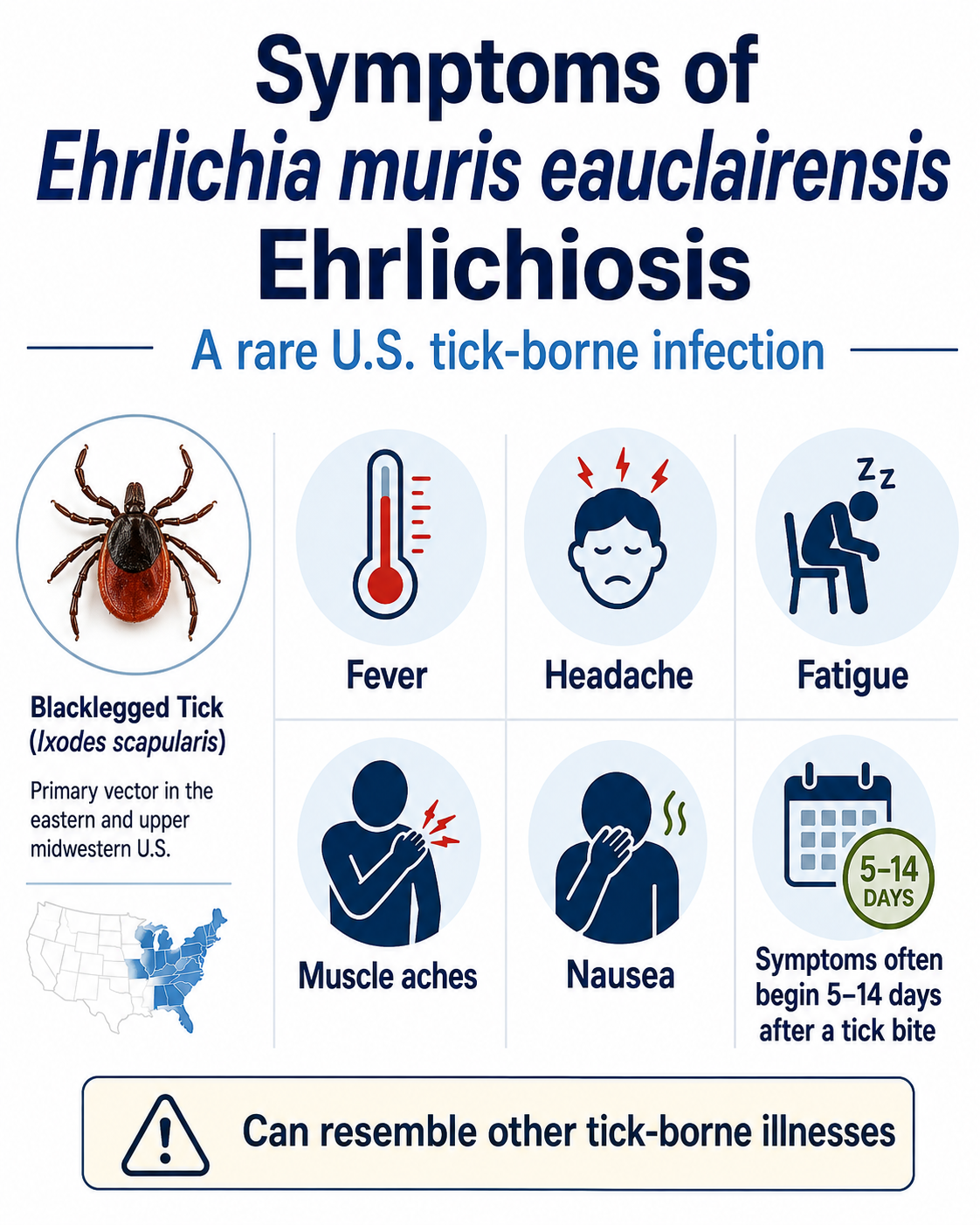
Symptoms may include:
- Fever
- Headache
- Fatigue or malaise
- Muscle aches
- Chills
- Nausea
- Vomiting
- Diarrhea or other gastrointestinal symptoms
- Confusion or other neurologic symptoms in some patients
An early U.S. investigation of 69 patients infected with what was then called the Ehrlichia muris-like pathogen found that the most frequently reported symptoms included fever, fatigue or malaise, headache, and muscle aches. Rash was considerably less common. All patients in that investigation were considered likely to have been exposed in Minnesota or Wisconsin.
Common Laboratory Findings
Blood-test abnormalities reported with EME and ehrlichiosis can include:
- Leukopenia — low white blood cell count
- Thrombocytopenia — low platelet count
- Lymphopenia — low lymphocyte count
- Elevated liver aminotransferase levels
CDC identifies leukopenia, thrombocytopenia, and elevated hepatic transaminases as common laboratory abnormalities in ehrlichiosis. Lymphopenia has also been frequently documented specifically among patients with EME.
These abnormalities can support a diagnosis but do not by themselves confirm EME infection. Normal laboratory findings, particularly early in the illness, do not rule out ehrlichiosis.
Can It Become Serious?
Yes.
CDC describes E. muris eauclairensis infection as typically less severe than E. chaffeensis ehrlichiosis, but serious and even fatal EME illness can occur.
For ehrlichiosis generally, severe illness may include:
- Meningitis or meningoencephalitis
- Other central nervous system involvement
- Acute respiratory distress syndrome
- Toxic shock-like or septic shock-like illness
- Kidney failure
- Liver failure
- Coagulation abnormalities
- Pancytopenia
Delayed antibiotic treatment is an important risk factor for progression to severe ehrlichiosis.
Important 2026 Report
In January 2026, CDC’s Emerging Infectious Diseases journal published a report documenting a fatal case of severe E. muris eauclairensis ehrlichiosis in a liver-transplant recipient in Minnesota.
The patient developed severe illness that included acute respiratory failure and ultimately multiorgan failure. Molecular testing confirmed E. muris eauclairensis. The patient died despite receiving doxycycline during hospitalization.
This report documents that fatal EME infection can occur, particularly in the setting of substantial immunosuppression. Older educational resources stating that no fatal EME infections had been reported are therefore no longer current.
Who May Be at Higher Risk for Severe Disease?
For ehrlichiosis generally, CDC identifies the following factors as increasing the risk of severe disease:
- Delayed antibiotic treatment
- Age younger than 5 years
- Age older than 65 years
- Immune-compromising conditions
Immune-compromising conditions may include advanced HIV infection, chemotherapy, treatment with other immunosuppressive medications, or conditions associated with substantial impairment of immune function.
For EME specifically, the 2026 fatal-case report emphasizes the potential for severe or atypical infection in immunocompromised patients, including organ-transplant recipients.
People receiving immunosuppressive medications or who have undergone organ transplantation may therefore require particularly careful medical evaluation when compatible symptoms develop after possible tick exposure.
How Is It Diagnosed?
Diagnosis should consider:
- Signs and symptoms
- Recent outdoor or tick exposure
- Geographic exposure
- Travel history
- Blood-test abnormalities
- Specialized laboratory testing
Healthcare providers should not exclude ehrlichiosis simply because a patient does not remember a tick bite.
PCR Testing
PCR testing for ehrlichiosis is commonly performed on whole blood.
PCR is most sensitive during the first week of illness, and its sensitivity decreases after appropriate antibiotic treatment begins—particularly within about 48 hours.
A positive PCR result provides strong evidence of active infection. However, a negative PCR result does not rule out ehrlichiosis, and treatment should not be withheld solely because PCR testing is negative.
Identifying E. muris eauclairensis Specifically
Species identification is important because antibody tests generally cannot reliably distinguish among individual Ehrlichia species.
CDC notes that most commercial laboratories cannot differentiate Ehrlichia species using serologic testing, and antibodies among closely related Ehrlichia and Anaplasma organisms may cross-react.
Wisconsin DHS states that commercial species-specific testing for E. muris eauclairensis is available by PCR, whereas species-specific EME identification is not available through serology.
Molecular testing is therefore particularly important when specifically identifying EME.
How Is It Treated?
Doxycycline Is the Treatment of Choice
CDC recommends doxycycline as the first-line treatment for ehrlichiosis in adults and children of all ages.
Treatment should begin promptly when ehrlichiosis is suspected. Healthcare providers should not wait for laboratory confirmation before beginning treatment when clinical suspicion is strong. Early treatment helps reduce the risk of severe illness.
CDC’s general treatment recommendation for ehrlichiosis is:
At least 5–7 days and until at least 72 hours after fever has subsided, with evidence of clinical improvement.
Important EME-Specific Treatment Note
Because E. muris eauclairensis is transmitted by the same blacklegged tick that can transmit Borrelia burgdorferi, the Wisconsin Department of Health Services currently recommends that patients with suspected EME infection receive doxycycline for 10–14 days to cover possible Lyme disease coinfection.
The appropriate drug, dose, route, and duration for an individual patient should be determined by a healthcare professional based on the clinical situation.
When ehrlichiosis responds to doxycycline, fever generally improves within 24–48 hours.
Should Antibiotics Be Taken After Every Tick Bite?
No.
Antibiotic treatment after a tick bite is not recommended specifically to prevent ehrlichiosis. There is no evidence that routine antibiotic prophylaxis prevents ehrlichiosis.
Instead, people who have been bitten by a tick should monitor for symptoms and contact a healthcare professional if fever, headache, rash, unusual fatigue, muscle aches, or other concerning symptoms develop during the following days or weeks.
This recommendation applies specifically to ehrlichiosis. Lyme disease has separate post-exposure prophylaxis guidance, and preventive antibiotics may be appropriate after certain high-risk blacklegged tick bites.
Is There a Vaccine?
No.
There is currently no vaccine available to prevent ehrlichiosis.
Prevention therefore focuses on avoiding tick bites, checking for ticks after outdoor exposure, and promptly removing attached ticks.
How to Reduce Your Risk
CDC recommends several measures to reduce exposure to ticks:
- Use an EPA-registered insect repellent according to product directions.
- Treat clothing and outdoor gear with products containing 0.5% permethrin, or use pretreated clothing and gear.
- Avoid wooded and brushy areas with high grass and leaf litter when practical.
- Walk near the center of trails.
- Check your entire body for ticks after outdoor activities.
- Check clothing, outdoor gear, and pets for ticks.
- Shower within about 2 hours after coming indoors when possible.
- Remove attached ticks as soon as possible.
Key Facts at a Glance
Disease: Ehrlichiosis
Cause: Ehrlichia muris eauclairensis
Type: Bacterial tick-borne infection
Vector: Blacklegged tick (Ixodes scapularis)
Documented U.S. Human Case Area: Minnesota and Wisconsin
First identified as a cause of human illness: 2009
Typical ehrlichiosis symptom onset: About 5–14 days after an infected tick bite
Common symptoms: Fever, headache, fatigue/malaise, and muscle aches
Rash: Infrequent with EME
Common laboratory findings: Leukopenia, thrombocytopenia, lymphopenia, and elevated liver aminotransferases
Treatment: Doxycycline
Vaccine: None
Antibiotics after every tick bite to prevent ehrlichiosis: Not recommended
Minimum tick-attachment time for EME transmission: Unknown
Can severe or fatal disease occur? Yes
Important severe-disease risk: Immunocompromised patients may be at increased risk; CDC also identifies delayed treatment, age younger than 5, and age older than 65 as risk factors for severe ehrlichiosis.
When to Seek Medical Care
Contact a healthcare professional if you develop fever, headache, unusual fatigue, muscle aches, nausea, vomiting, confusion, rash, or other concerning symptoms after a known or possible tick exposure.
Tell your healthcare provider about:
- Any known tick bite
- Recent outdoor activities
- Where the possible exposure occurred
- Recent travel
- When symptoms began
Do not assume a tick-borne illness is impossible simply because you never noticed a tick bite.
Educational Disclaimer
This information is provided for educational purposes only and is not a substitute for professional medical advice, diagnosis, or treatment. If you develop symptoms after a known or possible tick bite or tick exposure, contact a qualified healthcare professional.

