A Newly Recognized Tick-Borne Spotted Fever Disease
What Is Rickettsia lanei Rickettsiosis?
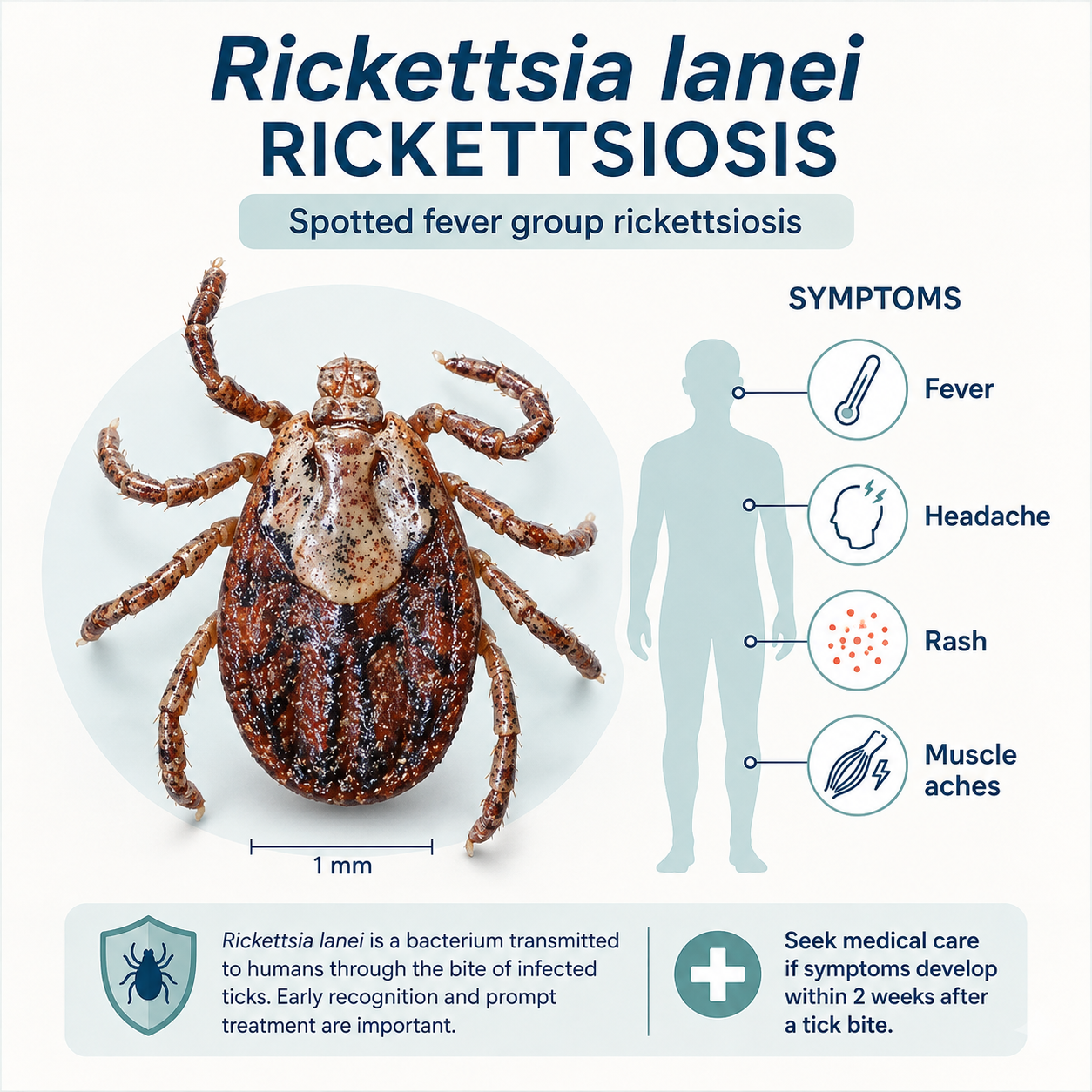
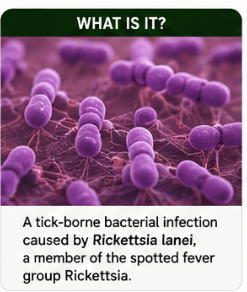
Rickettsia lanei rickettsiosis is a newly recognized tick-borne bacterial disease caused by Rickettsia lanei, a member of the spotted fever group Rickettsia.
The disease can cause a serious illness resembling Rocky Mountain spotted fever (RMSF). Because R. lanei is closely related to other spotted fever group Rickettsia, infections can be difficult to distinguish from RMSF and other spotted fever rickettsioses based on symptoms and routine laboratory testing alone.
The organism associated with R. lanei disease was previously investigated as Rickettsia sp. CA6269 after researchers identified it as the cause of severe RMSF-like illnesses in northern California. Subsequent genomic research supported classification of the organism as the species Rickettsia lanei.
Human infections have been recognized in the western United States, including California and Oregon. Because the disease has only recently been recognized and very few human infections have been identified, its true frequency, geographic distribution, complete range of illness, and transmission ecology remain uncertain.
How Is Rickettsia lanei Rickettsiosis Spread?
Current evidence indicates that R. lanei is a tick-borne pathogen.
The Pacific Coast tick (Dermacentor occidentalis) is strongly implicated as a source of human R. lanei infection and is listed by the California Department of Public Health as a potential vector.
In a California investigation published in 2026, researchers detected R. lanei in a Pacific Coast tick collected from a location associated with a patient’s likely exposure. The bacterial genome recovered from that tick was identical to the genome recovered from the patient’s infection, providing strong evidence that the Pacific Coast tick was the source of transmission in that case.
However, additional studies are still needed to formally confirm the tick’s vector competence, meaning its ability to acquire and transmit R. lanei under controlled conditions.
What About Rabbit Ticks?
Rickettsia lanei has also been detected in the rabbit tick (Haemaphysalis leporispalustris).
Rabbit ticks may play an important role in maintaining R. lanei in nature. However, researchers consider them less likely than Pacific Coast ticks to be an important direct source of human infection because rabbit ticks preferentially feed on rabbits and related animals and rarely infest people.
A historical Rickettsia isolate obtained from rabbit ticks collected in Montana helped establish R. lanei as a distinct species. A closely related, separately designated spotted fever group genotype, Rickettsia sp. ME2023, has also been reported from rabbit ticks in Maine. The complete relationship between R. lanei, closely related Rickettsia, different tick species, wildlife hosts, and human infection remains under investigation.
Tick bites can be painless, and a person with a tick-borne rickettsial infection may not remember being bitten.
Where Does Rickettsia lanei Rickettsiosis Occur?
Human infections have so far been recognized in:
- California
- Oregon
Peer-reviewed medical reports describe three human infections: two northern California cases with illness onset in 2004 and 2023, and one Oregon case with illness onset in 2025.
In addition, the California Department of Public Health confirmed another R. lanei infection in a Northern California patient diagnosed in April 2026. The patient was seriously ill and hospitalized but was subsequently discharged and recovering. Detailed clinical findings from this case have not yet been published in the peer-reviewed medical literature.
Therefore, as of August 2026, four known human infections have been publicly reported—three in California and one in Oregon.
The locations of recognized human cases should not be considered the complete geographic range of the organism or the disease. R. lanei has been identified in ticks outside the immediate locations associated with known human infections, and closely related Rickettsia have also been detected elsewhere.
The California Department of Public Health states that R. lanei rickettsiosis has been identified in the western United States and notes that additional cases may be recognized as molecular detection methods improve.
What Are the Symptoms?
Because only a small number of human infections have been identified, the complete range and frequency of symptoms are not yet known.
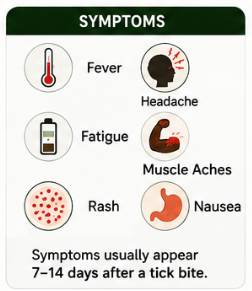
Symptoms reported in the peer-reviewed cases have included:
- Fever
- Headache
- Muscle aches
- Nausea
- Vomiting
- Rash in some patients
- Altered mental status or confusion
Other findings reported in individual patients have included diarrhea, abdominal symptoms, joint pain, loss of appetite, sensitivity to light, difficulty walking, and respiratory symptoms.
The two California patients described in the original medical report developed severe systemic illnesses. The Oregon patient’s illness also included fever, headache, muscle aches, altered mental status, hyponatremia, elevated liver enzymes, and rash but differed from the severe California cases in several respects. These reports demonstrate that the clinical presentation of R. lanei infection can vary.
What Does the Rash Look Like?
A rash can occur, but not every documented patient has developed one.
Reported findings have included:
- A maculopapular rash involving the palms in one California patient
- A transient macular rash on the trunk in the Oregon patient
- Later petechiae on the foot and ankle of the Oregon patient
One of the severe California patients had no documented rash.
Because so few cases have been identified, there is not yet enough evidence to define a single characteristic rash pattern for R. lanei rickettsiosis.
What Laboratory Abnormalities Can Occur?
Laboratory abnormalities reported in patients have included:
- Low platelet counts (thrombocytopenia)
- Low blood sodium levels (hyponatremia)
- Elevated liver enzymes
- Abnormal kidney function or acute kidney injury in severe cases
These abnormalities can also occur with other spotted fever rickettsioses and therefore are not specific to R. lanei.
How Soon Do Symptoms Appear?
A precise incubation period for R. lanei rickettsiosis has not yet been established.
The number of recognized human infections is still too small to define a reliable disease-specific incubation range.
For example, the Oregon patient reported outdoor tick exposure during the two weeks before illness, but the precise infectious tick bite and date of transmission could not be established.
People who develop concerning symptoms after a known or possible tick exposure should tell their healthcare provider when and where the exposure may have occurred.
Can Rickettsia lanei Rickettsiosis Be Serious?
Yes.
The two California infections described in the original peer-reviewed report caused severe RMSF-like illnesses requiring hospitalization and intensive care.
Serious complications documented in those patients included:
- Altered mental status
- Encephalopathy
- Seizures
- Acute respiratory failure
- Coma
- Acute kidney injury
- Severe thrombocytopenia
- Hyponatremia
- Elevated liver enzymes
- Cutaneous necrosis and gangrene in one severely ill patient
The two California patients were hospitalized for 22 days and 13 days, respectively, and both required intensive care.
The Oregon patient was hospitalized for four days and recovered. The additional California infection diagnosed in April 2026 was also reported by public health officials as a serious illness requiring hospitalization, but detailed clinical information has not yet been published.
The California Department of Public Health considers R. lanei rickettsiosis a severe tick-borne illness and emphasizes the importance of prompt recognition and treatment.
At the same time, the number of known cases remains extremely small, so the full spectrum of disease severity is not yet known. It should not be assumed that every infection will result in the same degree of severe illness.
How Is Rickettsia lanei Rickettsiosis Diagnosed?
Diagnosis can be challenging because early symptoms can resemble Rocky Mountain spotted fever and other spotted fever group rickettsioses.
Healthcare providers may consider:
- Symptoms and physical examination
- Recent outdoor activity
- Possible exposure to ticks or tick habitat
- Geographic location and travel history
- Routine laboratory findings
- Serologic testing for spotted fever group Rickettsia
- Specialized molecular or genomic testing when available
Why Can Testing Be Difficult?
Routine antibody testing for spotted fever group Rickettsia generally cannot determine which specific Rickettsia species caused the infection.
Closely related spotted fever group species share similar antigens, so antibodies produced against one species can cross-react with others.
CDC notes that commercial serologic tests cannot reliably differentiate one spotted fever group infection from another. Antibody tests are also frequently negative during the first week of illness, so an early negative result does not rule out infection.
Paired blood samples—an acute sample and a later convalescent sample—can help confirm that a spotted fever group infection occurred.
However, identifying R. lanei specifically may require specialized molecular testing, genomic sequencing, or other advanced laboratory methods.
In the Oregon case, microbial cell-free DNA metagenomic sequencing initially produced sequences interpreted as R. rickettsii. After comparison with the newly available R. lanei genome, the sequences showed their highest similarity to R. lanei, enabling identification of the infection.
Because of these diagnostic limitations, treatment should not be delayed while waiting for laboratory confirmation when a serious spotted fever rickettsiosis is suspected.
How Is Rickettsia lanei Rickettsiosis Treated?
Doxycycline is recommended when R. lanei rickettsiosis or another serious spotted fever rickettsiosis is suspected.
The California Department of Public Health recommends empiric doxycycline treatment within the first five days of illness for suspected RMSF or R. lanei rickettsiosis to reduce the risk of severe illness and death.
Treatment should be started promptly when the disease is suspected rather than waiting for laboratory confirmation.
CDC recommends doxycycline as first-line treatment for suspected rickettsial infections in adults and children of all ages. Treatment is most effective at preventing severe illness and death when it is started within the first five days of symptoms.
Treatment decisions should always be made by a qualified healthcare professional.
Can Rickettsia lanei Rickettsiosis Be Prevented?
There is currently no licensed vaccine in the United States for preventing tick-borne rickettsial diseases.
Reducing exposure to ticks and promptly removing attached ticks remain important prevention strategies.
Before Going Outdoors
- Know where ticks are commonly found, including grassy, brushy, and wooded areas.
- Avoid high grass, brush, and leaf litter when possible.
- Walk near the center of maintained trails when practical.
- Use an EPA-registered insect repellent according to label directions.
- Treat clothing and outdoor gear with products containing 0.5% permethrin, or use pretreated clothing and gear.
After Being Outdoors
- Check your entire body for ticks.
- Carefully check children for ticks.
- Examine clothing, pets, backpacks, coats, and other outdoor gear.
- Shower soon after returning indoors. Showering within two hours can help wash off unattached ticks and provides an opportunity to perform a tick check.
- Remove attached ticks as soon as possible.
How to Remove an Attached Tick
If you find an attached tick:
- Use clean, fine-tipped tweezers.
- Grasp the tick as close to the skin’s surface as possible.
- Pull the tick away from the skin with steady, even pressure.
- Do not twist or jerk the tick.
- Dispose of the tick appropriately.
- Thoroughly clean the bite area and your hands with soap and water, rubbing alcohol, or hand sanitizer.
- Check the rest of your body for additional ticks.
Do not use petroleum jelly, heat, nail polish, or other substances to try to force a tick to detach.
Removing an attached tick as soon as possible is important. CDC notes that delaying tick removal can increase the risk of acquiring a disease spread through tick bites.
When Should You Contact a Healthcare Provider?
Contact a healthcare provider if you develop fever, rash, severe headache, unusual fatigue, muscle aches, confusion, breathing problems, or other concerning symptoms after a known or possible tick exposure.
Tell your healthcare provider about:
- Any known tick bite
- Possible exposure to ticks or tick habitat
- When the exposure may have occurred
- Where the exposure occurred
- Recent outdoor activities
- Recent travel
Remember that many people with tick-borne rickettsial diseases do not remember being bitten by a tick.
Because R. lanei rickettsiosis can resemble RMSF and other serious infections, do not wait for a rash or for every possible symptom to appear before seeking medical attention if you are seriously ill.
Important Facts About Rickettsia lanei Rickettsiosis
- It is caused by the bacterium Rickettsia lanei.
- It is a newly recognized spotted fever group rickettsiosis.
- It can cause a severe Rocky Mountain spotted fever-like illness.
- As of August 2026, four known human infections have been publicly reported—three in California and one in Oregon.
- Three of those infections have been described in peer-reviewed medical reports; detailed information about the April 2026 California case has not yet been published.
- The Pacific Coast tick (Dermacentor occidentalis) is strongly implicated as a source of human infection, although formal vector-competence studies are still needed.
- R. lanei has also been detected in rabbit ticks (Haemaphysalis leporispalustris), which may help maintain the bacterium in nature but appear less likely to be an important direct source of human infection.
- A closely related, separately designated Rickettsia genotype has also been detected in rabbit ticks in Maine.
- The complete geographic distribution of R. lanei remains uncertain.
- A precise disease-specific incubation period has not yet been established.
- Reported symptoms include fever, headache, muscle aches, nausea, vomiting, rash in some patients, and altered mental status.
- Severe infections have included respiratory failure, neurologic complications, kidney injury, and other serious complications.
- Routine spotted fever antibody tests generally cannot identify the specific Rickettsia species responsible.
- Doxycycline should be started promptly when a serious spotted fever rickettsiosis is suspected rather than waiting for laboratory confirmation.
- Preventing tick bites and promptly removing attached ticks are important ways to reduce the risk of tick-borne disease.
Sources
- Centers for Disease Control and Prevention, Emerging Infectious Diseases: Newly Recognized Spotted Fever Group Rickettsia as Cause of Severe Rocky Mountain Spotted Fever-Like Illness, Northern California, USA (2024).
- Paddock CD, Harris A, Clark TR, et al.: Rickettsia lanei, sp. nov. (Rickettsiales: Rickettsiaceae), a Newly Recognized Pathogen of Humans Associated with the Rabbit Tick, Haemaphysalis leporispalustris, American Journal of Tropical Medicine and Hygiene (2025).
- Centers for Disease Control and Prevention, Emerging Infectious Diseases: Dermacentor occidentalis Ticks and Link to Rickettsia lanei Infections, California, USA (2026).
- Centers for Disease Control and Prevention, Emerging Infectious Diseases: Rickettsia lanei Rickettsiosis, Oregon, USA, 2025 (2026).
- California Department of Public Health: Spotted Fever Group Rickettsioses — Information for Healthcare Professionals.
- Centers for Disease Control and Prevention: Clinical and Laboratory Diagnosis for Other Spotted Fever Rickettsioses.
- Centers for Disease Control and Prevention: Clinical Care of Other Spotted Fever Rickettsioses.
- Centers for Disease Control and Prevention: Preventing Tick Bites.
- Centers for Disease Control and Prevention: What to Do After a Tick Bite (updated June 9, 2026).
Public confirmation from the California Department of Public Health regarding the April 2026 Northern California Rickettsia lanei infection, reported June 2026.
Educational Disclaimer
This information is provided for educational purposes only and is not a substitute for professional medical advice, diagnosis, or treatment.
If you develop a fever, rash, unusual fatigue, severe headache, body aches, confusion, breathing problems, or other concerning symptoms after a known or possible tick exposure, contact a qualified healthcare provider and mention the possible tick exposure.