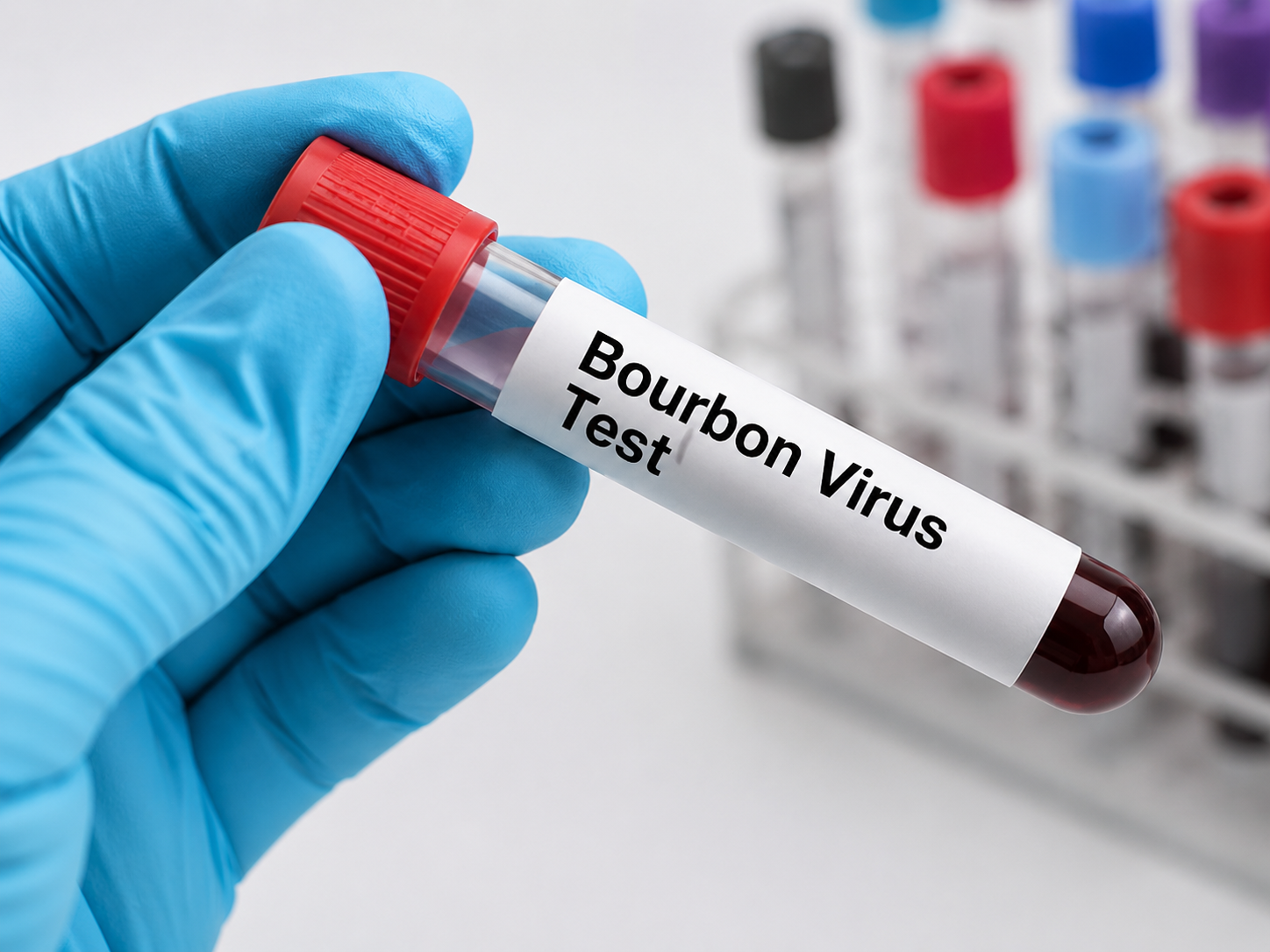
Bourbon Virus Disease: A Rare Emerging Tick-Borne Viral Disease
What Is Bourbon Virus Disease?
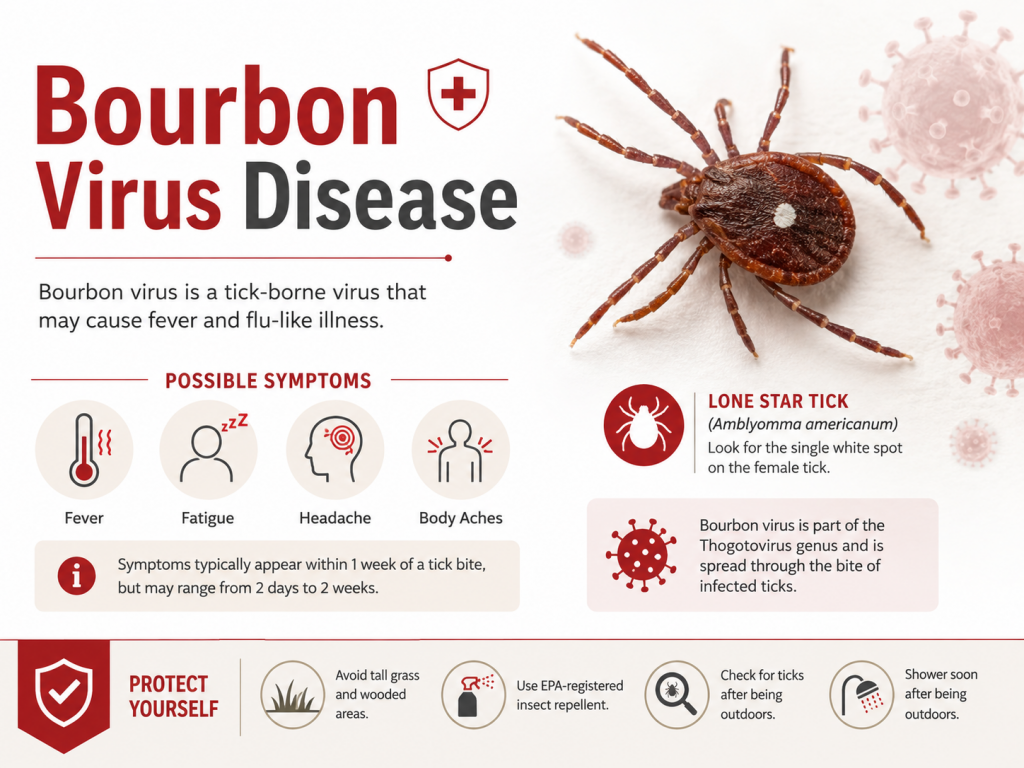
Bourbon virus disease is a rare tick-borne viral illness caused by Bourbon virus.
Bourbon virus is an RNA virus in the genus Thogotovirus and the family Orthomyxoviridae.
The virus was first identified in 2014 in a patient from Bourbon County, Kansas, which is how the virus received its name.
Only a limited number of human Bourbon virus infections have been identified in the United States. Because the disease is rare and its symptoms can resemble other tick-borne illnesses, much remains unknown about its true frequency, geographic distribution, and full range of illness.
How Does Bourbon Virus Spread?
CDC states that Bourbon virus is believed to spread to people through the bites of infected ticks, likely lone star ticks (Amblyomma americanum).
Most patients diagnosed with Bourbon virus disease have reported exposure to ticks before becoming ill.
Research provides strong additional evidence for the role of the lone star tick. Bourbon virus has been detected in field-collected lone star ticks, including adults and nymphs, and laboratory research has demonstrated that A. americanum is a competent vector capable of acquiring and transmitting Bourbon virus.
Although the evidence strongly supports an important role for the lone star tick, many details about the virus’s natural transmission cycle remain under investigation.
Which Tick Is Most Strongly Associated With Bourbon Virus?
The tick most strongly associated with Bourbon virus is the lone star tick (Amblyomma americanum).
The lone star tick is an aggressive human-biting tick that is widely distributed throughout the Northeast, South, and Midwest United States.
The adult female lone star tick can be recognized by the distinctive white dot or “lone star” on its back, which gives the species its common name.
CDC reports that nymphs and adult female lone star ticks most frequently bite people and spread disease-causing pathogens.
Laboratory research has demonstrated that the lone star tick is a competent vector for Bourbon virus, supporting its important role in the virus’s transmission cycle.
How Can Babesiosis Affect Red Blood Cells?
Babesia parasites infect red blood cells and multiply within them.
As infected red blood cells are destroyed, some people can develop hemolytic anemia, a condition in which red blood cells are destroyed faster than the body can replace them.
Signs and symptoms associated with hemolytic anemia can include:
- Fatigue
- Weakness
- Jaundice, or yellowing of the skin or eyes
- Dark urine
Babesiosis-related destruction of red blood cells can become severe and contribute to serious complications.
Has Bourbon Virus Been Found in Other Tick Species?
Yes. Bourbon virus RNA has also been detected in field-collected Asian longhorned ticks (Haemaphysalis longicornis) in Virginia.
Researchers detected Bourbon virus RNA in nymphal, larval, and adult-female Asian longhorned ticks collected in Virginia.
However, detecting viral RNA in a tick does not by itself establish that the species is a competent vector capable of transmitting Bourbon virus to people. Researchers specifically noted that it remains unknown whether the Asian longhorned tick can transmit Bourbon virus to subsequent hosts.
The lone star tick remains the tick species with the strongest evidence supporting a role in Bourbon virus transmission to people.
Where Has Bourbon Virus Been Found?
Bourbon virus was first identified in Kansas in 2014.
CDC’s current Bourbon virus guidance, updated June 17, 2026, states that a limited number of Bourbon virus disease cases have been reported in the Midwest, East Coast, and Southern United States.
Recognized human infections have been reported in states including:
- Kansas
- Oklahoma
- Missouri
- New York
CDC notes that it is not currently known whether Bourbon virus may also occur in other parts of the United States.
Confirmed Bourbon Virus Infection in New York
In 2026, researchers led by Stony Brook Medicine reported the first confirmed human Bourbon virus infection in New York State.
The peer-reviewed study evaluated 107 people in Suffolk County, New York, who had experienced an acute febrile illness following a recent tick bite between 2019 and 2024.
Two patients had neutralizing antibodies against Bourbon virus. One demonstrated a fourfold increase in neutralizing antibody titer, providing evidence of an acute or recent Bourbon virus infection.
The study provided serologic evidence that human Bourbon virus infection had occurred on Long Island and expanded the recognized geographic area of human infection.
The finding does not mean Bourbon virus disease is common in New York or elsewhere in the Northeast. The number of recognized human infections remains very small.
What Did Earlier New York Research Find?
Evidence that Bourbon virus was circulating in New York existed even before the first confirmed human infection was reported.
In July 2019, Bourbon virus RNA was detected in a lone star tick removed from a Long Island resident.
During expanded surveillance in 2021, researchers detected Bourbon virus RNA in five pools of unengorged lone star tick nymphs collected in Suffolk County and successfully isolated infectious virus from the positive pools.
Researchers also detected Bourbon virus-neutralizing antibodies in white-tailed deer. Together, the tick and deer findings provided evidence of active Bourbon virus transmission in Suffolk County, New York.
Importantly, the earlier investigation did not establish Bourbon virus infection in the person from whom the virus-positive tick was removed, because blood samples were not available for testing.
The confirmed human infection reported in 2026 therefore represented a separate and important development.
What Has Research Found in North Carolina?
A 2024 study published in CDC’s Emerging Infectious Diseases journal provided evidence of human Bourbon virus infection in North Carolina.
Researchers tested serum from 518 North Carolina residents.
Bourbon virus-specific neutralizing antibodies were confirmed in 4 of 518 people, or approximately 0.77% of those tested.
However, these findings require careful interpretation.
The researchers emphasized that:
- Neutralizing antibodies provide evidence of previous Bourbon virus infection.
- The presence of antibodies does not necessarily mean a person had clinically recognizable Bourbon virus disease.
- The study was not designed to establish the full clinical history of Bourbon virus illness.
- Researchers could not completely exclude previous travel by antibody-positive participants to states where Bourbon virus cases had already occurred.
The study therefore provides evidence of human Bourbon virus infection in North Carolina, but the four antibody-positive individuals should not simply be described as four confirmed cases of clinical Bourbon virus disease.
The findings suggest that some Bourbon virus infections may be asymptomatic or have more subtle clinical manifestations, which could contribute to underrecognition.
What Are the Symptoms of Bourbon Virus Disease?
People diagnosed with Bourbon virus disease have experienced symptoms including:
- Fever
- Fatigue
- Rash
- Headache
- Body aches
- Nausea
- Vomiting
CDC’s clinical guidance has also described:
- Decreased appetite
- Maculopapular rash
Laboratory testing in diagnosed patients has commonly found:
- Leukopenia — a lower-than-normal white blood cell count
- Thrombocytopenia — a lower-than-normal platelet count
Published cases have also described laboratory abnormalities including elevated liver enzymes.
These symptoms and laboratory abnormalities are not unique to Bourbon virus disease and can overlap with several other tick-borne illnesses, making diagnosis difficult without appropriate laboratory testing.
How Soon Do Symptoms Appear?
The exact incubation period for Bourbon virus disease is not firmly established.
CDC does not currently publish a definitive incubation-period range for Bourbon virus disease.
A review of the small number of previously characterized human cases found that initial symptoms appeared approximately 2–7 days after reported tick exposure.
Because so few human infections have been characterized, this observation should not be interpreted as a firmly established incubation period that applies to every Bourbon virus infection.
A cautious practical message is that symptoms in reported cases have appeared within several days after suspected tick exposure, while the complete incubation range remains uncertain.
Can Bourbon Virus Disease Become Serious?
Yes. Bourbon virus disease can become severe and potentially life-threatening.
CDC reports that some patients diagnosed with Bourbon virus infection have died during their acute illness.
Because so few infections have been recognized, scientists do not yet know:
- What percentage of infections cause symptoms
- What percentage become severe
- Which people are most likely to develop serious disease
- The true case-fatality rate
For this reason, a reliable death rate should not be calculated from the small number of recognized cases.
2026 Fatal Kansas Case
A peer-reviewed case report published on January 16, 2026, described a fatal Bourbon virus infection in a 63-year-old man who had recent tick exposure in Bourbon County, Kansas.
The patient developed severe illness involving shock and acute multisystem organ failure and required intensive supportive treatment, including renal replacement therapy and venoarterial extracorporeal membrane oxygenation (VA-ECMO).
The report demonstrates that although recognized Bourbon virus infections are rare, critical and fatal illness can occur.
How Is Bourbon Virus Disease Diagnosed?
Bourbon virus disease usually cannot be diagnosed from symptoms alone because its clinical features overlap with several other tick-borne illnesses.
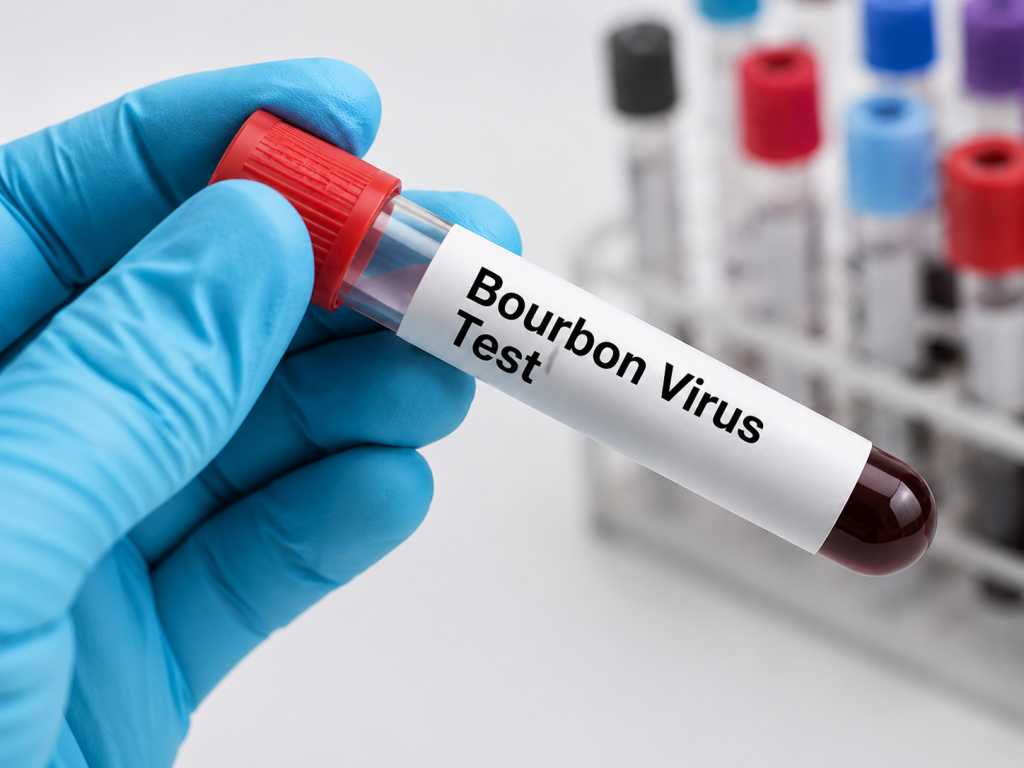
Laboratory testing is available, but CDC states that there are currently no commercially available diagnostic tests for Bourbon virus infection in the United States.
CDC’s Arboviral Diseases Branch offers routine diagnostic testing for Bourbon virus through the public-health system.
Current CDC testing available for Bourbon virus includes:
- Reverse transcription-polymerase chain reaction (RT-PCR)
- Plaque reduction neutralization testing (PRNT)
Healthcare providers who suspect Bourbon virus disease should contact their state or local health department, which can help determine whether specimens should be submitted to CDC.
When Might Healthcare Providers Consider Bourbon Virus Testing?
CDC recommends considering testing for Heartland or Bourbon virus in patients with an acute febrile illness within the past three months who have at least one epidemiologic criterion AND at least one clinical criterion.
Relevant epidemiologic criteria include:
- A known tick bite
- Finding a tick on the body
- Potential tick exposure through outdoor activities during the three weeks before illness began during spring through fall, for example April–October
- Living in or recently traveling to an area where there is previous evidence of Bourbon or Heartland virus
Relevant clinical criteria include:
- Unexplained leukopenia
- Unexplained thrombocytopenia
- A suspected tickborne disease, such as ehrlichiosis or Rocky Mountain spotted fever, that does not clinically respond to appropriate treatment, such as doxycycline
Healthcare providers should consult their state or local health department before submitting specimens.
These testing criteria are intended for healthcare professionals and should not be used by individuals to diagnose themselves.
How Does CDC Test for Bourbon Virus?
CDC’s testing approach depends partly on how long a person has been ill.
For specimens collected less than 14 days after symptom onset, serum should be submitted for Bourbon virus RT-PCR and antibody testing.
For specimens collected 14 days or more after symptom onset, serum specimens should generally be submitted for antibody testing.
If the patient is immunocompromised, RT-PCR may also be performed on serum collected more than 14 days after symptom onset.
CDC currently does not have a specific Bourbon virus IgM antibody test.
Because of this, acute and convalescent blood samples may be needed to diagnose an acute Bourbon virus infection using serologic testing.
CDC notes that samples collected more than three months after symptom onset are not currently tested under this guidance because of limitations in the current understanding of Bourbon virus antibody kinetics.
How Is Bourbon Virus Disease Treated?
There are currently no specific medications or therapies for Bourbon virus disease.
Treatment is supportive, meaning medical care focuses on managing symptoms and supporting the patient while the body responds to the infection.
CDC states that mild symptoms may be treated with measures such as over-the-counter pain-relieving medicines, when appropriate.
Patients with more serious illness may require hospitalization and supportive care such as:
- Intravenous fluids
- Treatment for pain
- Treatment for fever
- Additional supportive hospital care depending on the patient’s condition
Do Antibiotics Treat Bourbon Virus Disease?
No. Antibiotics do not treat Bourbon virus itself because Bourbon virus is a virus, not a bacterium.
CDC notes that Bourbon virus disease can resemble other tick-borne illnesses but will not respond to antibiotic treatment such as doxycycline when the illness is caused by Bourbon virus.
However, this does not mean antibiotics should be avoided when a bacterial tick-borne illness is suspected.
Diseases such as ehrlichiosis and Rocky Mountain spotted fever can become serious quickly, and treatment decisions should be made by a qualified healthcare provider based on the patient’s symptoms, exposure history, laboratory findings, and clinical condition.
Is There a Vaccine for Bourbon Virus?
No. There is currently no vaccine available to prevent Bourbon virus disease.
There are also no medicines available specifically to prevent Bourbon virus disease.
Preventing tick bites is therefore the primary way to reduce the risk of Bourbon virus infection.
How Common Is Bourbon Virus Disease?
Bourbon virus disease is considered rare, and only a limited number of recognized human infections have been reported.
However, the true number of infections is unknown.
Several factors may contribute to underrecognition:
- Symptoms overlap with other tick-borne illnesses.
- There are no commercially available Bourbon virus diagnostic tests in the United States.
- Specialized laboratory testing is required.
- Some infections may have subtle or nonspecific clinical manifestations.
- Some infections may potentially occur without recognizable illness.
The North Carolina antibody study provides evidence that human infection may occur without the severe clinical presentation described in the earliest recognized Bourbon virus cases.
Researchers therefore continue to investigate the true incidence, geographic distribution, and clinical spectrum of Bourbon virus infection.
Is Bourbon Virus Disease Nationally Notifiable?
No. Bourbon virus disease is not currently a nationally notifiable condition in the United States.
However, Bourbon virus disease cases can be reported to ArboNET, CDC’s national arboviral surveillance system.
CDC requests that states voluntarily report Heartland and Bourbon virus disease cases using the current Council of State and Territorial Epidemiologists arboviral disease case definition.
Because reporting is voluntary and diagnostic testing is specialized, recognized case numbers may not capture every Bourbon virus infection that occurs.
How Can Bourbon Virus Disease Be Prevented?
There is no vaccine or preventive medication specifically for Bourbon virus disease.
The best way to reduce risk is to prevent tick bites.
Before Going Outdoors
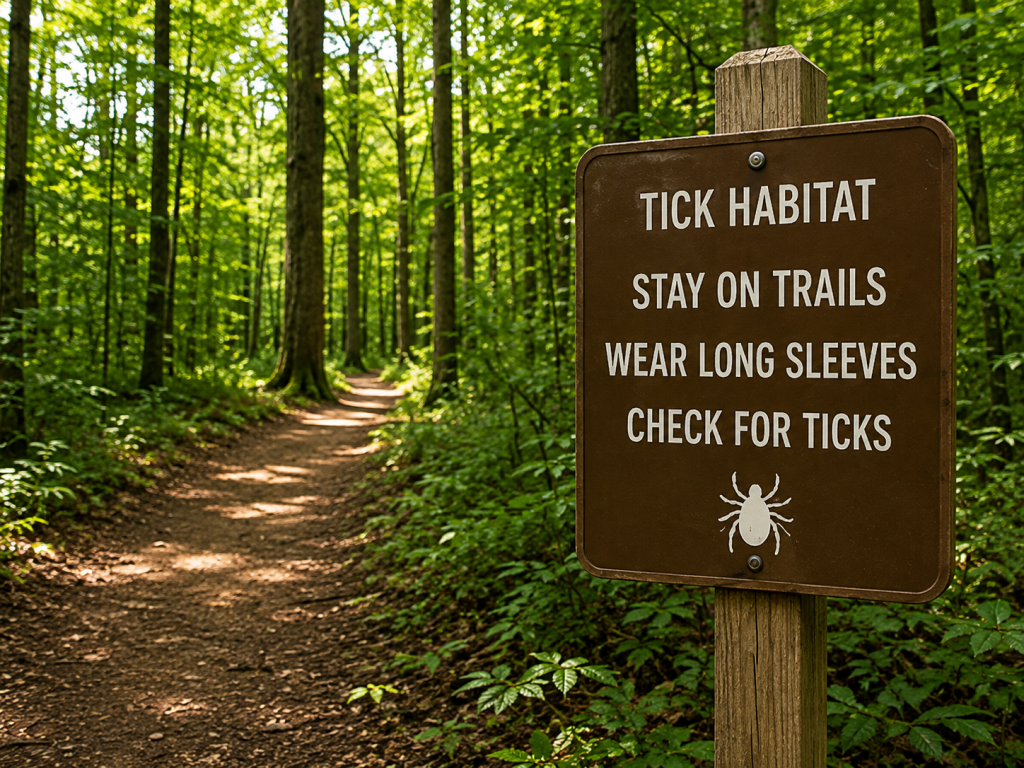
- Know where ticks are commonly found, including grassy, brushy, and wooded areas.
- Avoid wooded and brushy areas with high grass and leaf litter when practical.
- Walk in the center of trails when possible.
- Use an EPA-registered insect repellent according to label directions.
- Treat clothing and outdoor gear with products containing 0.5% permethrin, following product instructions.
- Wear protective clothing, such as long pants and long-sleeved shirts, when appropriate.
After Coming Indoors
- Check clothing for ticks.
- Tumble dry dry clothing on high heat for 10 minutes after coming indoors to kill ticks. Damp clothing may require additional drying time.
- Examine backpacks, coats, outdoor equipment, and other gear.
- Check pets for ticks.
- Shower within two hours of coming indoors when possible. Showering can help wash off unattached ticks and provides an opportunity to perform a tick check.
- Perform a full-body tick check.
- Carefully check children for ticks.
- Remove attached ticks as soon as possible.
Common areas to check include:
- Under the arms
- In and around the ears
- In and around the hair
- Inside the belly button
- Behind the knees
- Between the legs
- Around the waist
How Should an Attached Tick Be Removed?
If you find an attached tick, remove it as soon as possible.
CDC advises not to wait to visit a healthcare provider before removing an attached tick because delaying removal could increase the risk of a tick-borne disease.
- Use clean, fine-tipped tweezers to grasp the tick as close to the skin’s surface as possible. If fine-tipped tweezers are unavailable, regular tweezers or your fingers may be used. Grasp the tick close to the skin’s surface and avoid squeezing its body.
- Pull the tick away from the skin using steady, even pressure.
- Do not twist or jerk the tick.
- If mouthparts break off and remain in the skin, they may be removed with tweezers if they can be removed easily. If they cannot be removed easily, leave them alone and allow the skin to heal.
- Dispose of the live tick by placing it in a sealed container, wrapping it tightly in tape, flushing it down the toilet, or placing it in alcohol. Do not crush the tick with your fingers.
- Thoroughly clean the bite area and your hands with soap and water, rubbing alcohol, or hand sanitizer.
- Check the rest of your body for additional ticks and promptly remove any that are found.
Do not use:
- Petroleum jelly
- Heat
- Nail polish
- Other substances intended to make the tick detach
CDC warns that these methods may agitate the tick and force infected fluid from the tick into the skin.
Should a Removed Tick Be Tested?
CDC generally does not recommend commercial pathogen testing of removed ticks to make medical treatment decisions.
There are several reasons:
- A positive result showing that a tick contains a disease-causing organism does not necessarily mean the person became infected.
- A negative result may provide false reassurance, including because a person may have been bitten by another infected tick without realizing it.
- Tick-testing laboratories are not required to follow the same quality-control standards used by clinical diagnostic laboratories.
- A person who becomes ill should not delay appropriate medical evaluation or treatment while waiting for tick-testing results.
Identifying the tick species, however, may still provide useful information about potential exposure.
When Should You Contact a Healthcare Provider?
Contact a healthcare provider if you develop a fever, rash, unusual fatigue, headache, body aches, nausea, vomiting, or other concerning symptoms after a known or possible tick exposure.
CDC recommends seeking medical care if a rash or fever develops within several days to weeks after removing a tick.
Tell your healthcare provider:
- When the tick bite or possible exposure occurred
- Where the exposure most likely occurred
- When your symptoms began
- What the tick looked like, if known
Remember that not everyone notices a tick bite.
If you develop unexplained illness after spending time in grassy, brushy, wooded, or other tick-prone environments, mention the possible tick exposure to your healthcare provider even if you never saw an attached tick.
Important Facts to Remember
- Bourbon virus disease is a rare tick-borne viral illness.
- Bourbon virus was first identified in Bourbon County, Kansas, in 2014.
- Bourbon virus is an RNA virus in the genus Thogotovirus and family Orthomyxoviridae.
- CDC says Bourbon virus is believed to spread through the bites of infected ticks, likely lone star ticks.
- The lone star tick (Amblyomma americanum) is the tick species most strongly associated with Bourbon virus transmission.
- Laboratory studies have demonstrated that the lone star tick is a competent vector for Bourbon virus.
- Lone star ticks are widely distributed throughout the Northeast, South, and Midwest United States.
- Bourbon virus RNA has also been detected in Asian longhorned ticks (Haemaphysalis longicornis) in Virginia, but it has not been established that this species is a competent vector for Bourbon virus.
- Only a limited number of recognized human Bourbon virus infections have been identified.
- CDC currently reports Bourbon virus disease from the Midwest, East Coast, and Southern United States.
- Recognized human infections have been reported in Kansas, Oklahoma, Missouri, and New York.
- In 2026, researchers reported the first confirmed human Bourbon virus infection in New York State.
- A 2024 study found Bourbon virus-specific neutralizing antibodies in 4 of 518 North Carolina residents tested, providing evidence of previous human infection but not necessarily clinically recognizable Bourbon virus disease.
- Symptoms may include fever, fatigue, rash, headache, body aches, nausea, vomiting, and decreased appetite.
- Leukopenia and thrombocytopenia are important laboratory findings associated with recognized Bourbon virus disease.
- The precise incubation period is not firmly established; previously characterized cases generally developed initial symptoms approximately 2–7 days after reported tick exposure.
- Bourbon virus disease can become severe, and some diagnosed patients have died during their acute illness.
- A 2026 Kansas case report described another fatal infection involving severe shock and multisystem organ failure.
- There are currently no commercially available Bourbon virus diagnostic tests in the United States.
- CDC offers specialized Bourbon virus testing through the public-health system.
- Current CDC Bourbon virus testing includes RT-PCR and PRNT.
- There is currently no specific Bourbon virus IgM antibody test available at CDC.
- There are no specific medications or therapies for Bourbon virus disease.
- Treatment is supportive.
- Antibiotics do not treat Bourbon virus itself.
- There is currently no vaccine to prevent Bourbon virus disease.
- Bourbon virus disease is not nationally notifiable, but cases may be voluntarily reported to ArboNET.
- The true frequency, clinical spectrum, and geographic distribution of Bourbon virus infection remain incompletely understood.
- Preventing tick bites and promptly removing attached ticks are the primary ways to reduce risk.
Recent Research and Public-Health Updates
2026 — CDC Updates Bourbon Virus Geographic Description
On June 17, 2026, CDC updated its main Bourbon virus information page.
CDC now states that a limited number of Bourbon virus disease cases have been reported in the Midwest, East Coast, and Southern United States.
CDC also states that Bourbon virus is believed to spread through infected tick bites, likely lone star ticks (Amblyomma americanum).
2026 — First Confirmed Human Bourbon Virus Infection in New York
A peer-reviewed study published in the American Journal of Tropical Medicine and Hygiene evaluated 107 patients from Suffolk County, New York, who had acute febrile illness after recent tick bites.
Two patients had Bourbon virus-neutralizing antibodies. One demonstrated a fourfold rise in neutralizing antibody titer, indicating acute or recent Bourbon virus infection.
Stony Brook Medicine identified the finding as the first confirmed Bourbon virus case in New York State.
The finding is an important geographic development and demonstrates that recognized human Bourbon virus infection can occur on the East Coast.
2026 — Fatal Bourbon Virus Case in Kansas
A case report published on January 16, 2026, described a 63-year-old man with recent tick exposure in Bourbon County, Kansas who developed severe Bourbon virus infection.
The patient developed shock and acute multisystem organ failure and required intensive supportive treatment including renal replacement therapy and VA-ECMO.
The patient ultimately died.
The report reinforces that Bourbon virus disease, although rare, can cause critical and fatal illness.
2025 — CDC Expands Routine Diagnostic Testing
On November 19, 2025, CDC updated its Heartland and Bourbon virus testing guidance.
CDC’s earlier research protocols used to identify cases and validate diagnostic methods concluded, and the CDC Arboviral Diseases Branch now offers routine diagnostic testing for both viruses.
Current Bourbon virus testing available at CDC includes:
- RT-PCR
- Plaque reduction neutralization testing (PRNT)
Healthcare providers should coordinate testing through their state or local health department.
2024 — Evidence of Human Bourbon Virus Infection in North Carolina
Researchers identified Bourbon virus-specific neutralizing antibodies in 4 of 518 North Carolina residents tested.
The findings provide evidence that human Bourbon virus infection has occurred among North Carolina residents and suggest that Bourbon virus infection may be more frequently overlooked than the small number of recognized severe cases indicates.
However, researchers cautioned that neutralizing-antibody positivity does not equal clinical Bourbon virus disease, and previous travel to states with recognized cases could not be completely excluded.
The findings also suggest that some infections may be asymptomatic or have more subtle manifestations.
2022 — Bourbon Virus Detected in Asian Longhorned Ticks in Virginia
Researchers reported the first detection of Bourbon virus RNA in Asian longhorned ticks (Haemaphysalis longicornis) collected in the United States.
Bourbon virus RNA was detected in Asian longhorned ticks collected in several locations in Virginia.
The finding demonstrates that Asian longhorned ticks can carry Bourbon virus RNA, but researchers emphasized that further study is required to determine whether this tick species is a competent vector capable of transmitting Bourbon virus to subsequent hosts.
Earlier Evidence of Bourbon Virus Circulation in New York
Before the confirmed human New York infection was reported, researchers had already documented Bourbon virus circulation on Long Island.
Bourbon virus RNA was detected in a lone star tick removed from a Long Island resident in 2019.
Additional surveillance later detected Bourbon virus in unengorged lone star tick nymphs, and neutralizing antibodies were identified in white-tailed deer.
Together, those findings demonstrated active Bourbon virus transmission in Suffolk County.
The earlier research established environmental circulation of Bourbon virus but did not confirm infection in the person from whom the virus-positive tick was removed.
More Resources
For additional information about Bourbon virus disease, diagnostic testing, tick-bite prevention, and proper tick removal, visit:
- Centers for Disease Control and Prevention (CDC) — About Bourbon Virus
- CDC — Symptoms, Diagnosis, and Treatment
- CDC — Clinical Diagnosis, Treatment, and Prevention of Bourbon Virus Disease
- CDC — Heartland and Bourbon Virus Testing Guidance
- CDC — Preventing Bourbon
- CDC — Lone Star Tick Surveillance
- CDC — Preventing Tick Bites
- CDC — What to Do After a Tick Bite
- Emerging Infectious Diseases — Comprehensive Review of Emergence and Virology of Tickborne Bourbon Virus in the United States
- Emerging Infectious Diseases — Evidence of Human Bourbon Virus Infections, North Carolina, USA
- American Journal of Tropical Medicine and Hygiene — Evidence of Heartland and Bourbon Viruses Transmitted by Ticks in Suffolk County, New York
- Emerging Infectious Diseases — Bourbon Virus Transmission, New York, USA
- Emerging Infectious Diseases — Bourbon Virus in Field-Collected Ticks, Missouri, USA
- Pathogens — Pathogen Spillover to an Invasive Tick Species: First Detection of Bourbon Virus in Haemaphysalis longicornis in the United States
- Case Reports in Infectious Diseases — Lethal Case of Bourbon Virus Leading to Shock and ECMO Utilization
Educational Disclaimer
This information is provided for educational purposes only and is not intended to replace professional medical advice, diagnosis, or treatment.
If you develop a fever, rash, unusual fatigue, headache, body aches, nausea, vomiting, or other concerning symptoms following a known or possible tick exposure, contact a qualified healthcare provider and mention the potential tick exposure.