Soft Ticks (Ornithodoros spp.)
Ornithodoros spp.
All life stages (larvae, nymphs, and adults) can bite humans, typically at night. They often hide in cracks and crevices of buildings (such as homes, cabins, barns, and bird roosts) and can survive for long periods without feeding, making them difficult to detect and eliminate.
Commonly found in cracks and crevices of buildings (such as homes, cabins, barns, and bird roosts)
Most active at night (can bite year-round)
Can transmit disease-causing pathogens (e.g., relapsing fever [Borrelia spp.] and, in some regions, Colorado tick fever virus)
 Identification & Key Features
 Identification & Key Features
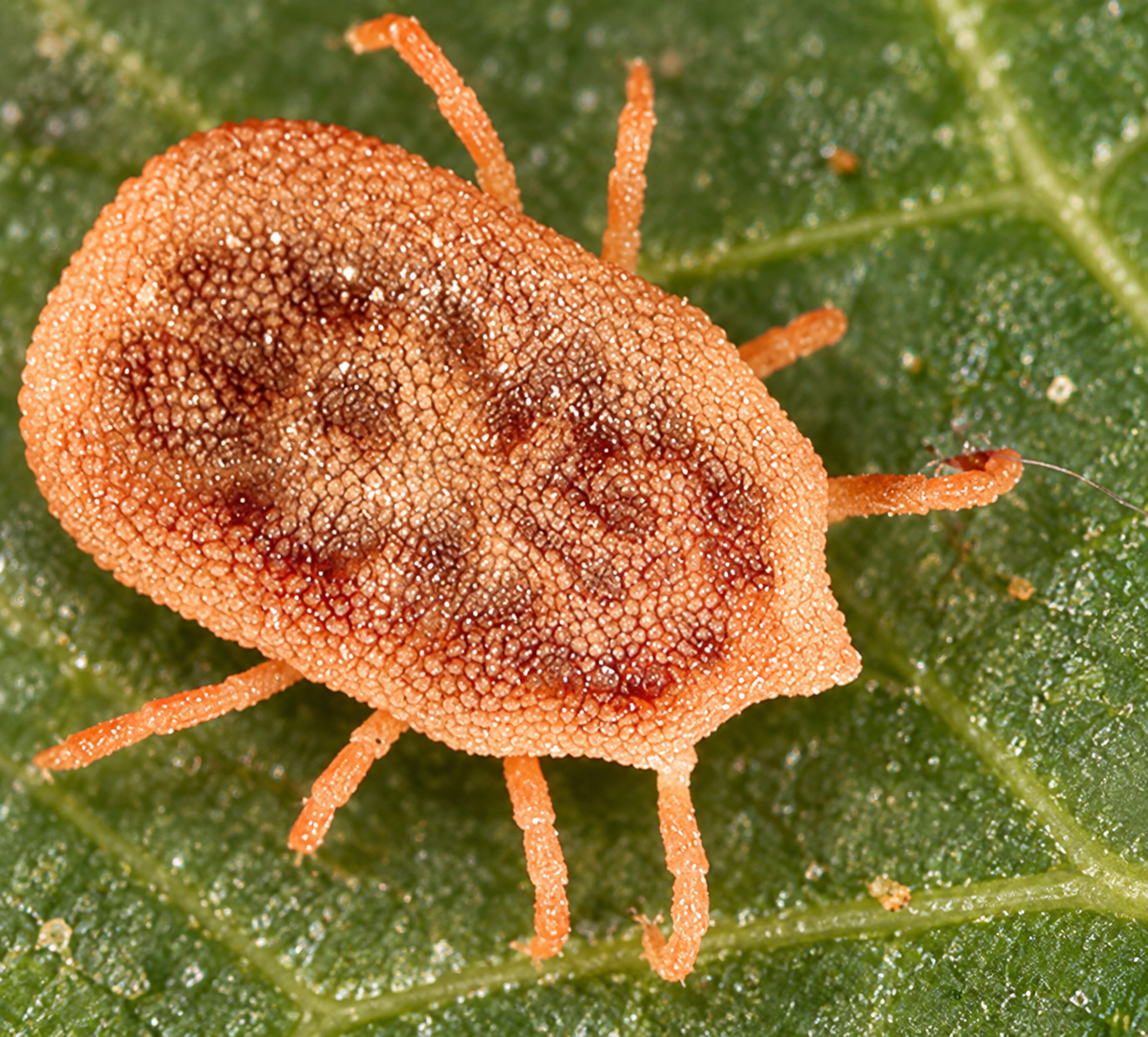
 Soft ticks have a very different appearance from most familiar hard ticks.
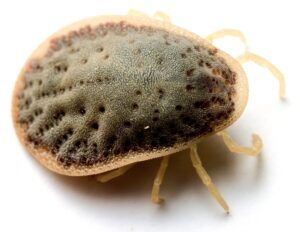
Their bodies generally appear soft, leathery, wrinkled, or granular, without the distinct hard dorsal shield seen in hard ticks.
Adult Female
Adult female Ornithodoros ticks generally:
- Have 8 legs
- Lack a scutum
- Have a soft or leathery body
- Have mouthparts located on the underside of the body
- Usually have mouthparts that are not visible from above
- Are generally brown, reddish brown, or gray-brown
- Can take multiple blood meals during adulthood
- Can lay multiple batches of eggs during their lifespan
Unlike most female hard ticks, which take one major adult blood meal before laying a large egg mass, female soft ticks may feed and reproduce repeatedly.
Adult Male
Adult males:
- Have 8 legs
- Lack a scutum
- Have mouthparts positioned underneath the body
- Have a soft, leathery body
- Can take repeated blood meals
- Are generally similar in overall appearance to females
Soft ticks do not display the pronounced external sexual dimorphism seen in many hard ticks.
As a result, male-versus-female identification may be considerably less obvious without close examination.
Nymph
Soft-tick nymphs:
- Have 8 legs
- Resemble smaller versions of adults
- Lack a scutum
- Have mouthparts positioned underneath the body
- Take blood meals as they develop
- May pass through multiple separate nymphal stages, called instars
This is one of the major differences between soft and hard ticks.
Hard ticks normally have one nymphal stage, whereas soft ticks have two or more nymphal instars. Depending on the species, an argasid soft-tick life cycle may include several nymphal instars.
For example, research on O. hermsi describes approximately 2–5 nymphal instars, most commonly three, although the exact number varies among species and individuals.
Larva
Larvae:
- Have 6 legs
- Are extremely small
- Hatch from eggs in protected environments
- Feed on suitable animal hosts
- Later molt into the first eight-legged nymphal stage
Feeding behavior varies by species.
Larval feeding can range from relatively brief feeding periods to several days, depending on the particular soft-tick species.
Other Identification Features
Important characteristics of Ornithodoros soft ticks include:
- No dorsal scutum
- Soft or leathery body
- Granular or wrinkled appearance in many species
- Mouthparts located toward the underside of the body
- Mouthparts generally not visible from above
- Less obvious external differences between adult males and females
- Multiple nymphal instars
- Rapid feeding by nymphs and adults
Some features needed to identify an exact Ornithodoros species are microscopic.
Using a magnifier can help make the tick’s body texture, legs, body margins, and other identification features easier to see.
Reliable species-level identification may require microscopic examination and information about where the specimen was collected.
Distinguishing Soft Ticks From Hard Ticks
A useful comparison is:
Soft Ticks — Family Argasidae
- No scutum
- Soft or leathery body
- Mouthparts generally hidden when viewed from above
- Multiple nymphal instars
- Nymphs and adults generally feed rapidly
- Can take repeated blood meals
- Commonly associated with nests, burrows, caves, or sheltered structures
Hard Ticks — Family Ixodidae
- Have a scutum
- Mouthparts generally project forward and can be seen from above
- Normally have a single nymphal stage
- Many species remain attached for several days
- Many species seek hosts from vegetation
These biological differences are important because soft-tick exposure can occur very differently from exposure to common hard ticks.
Geographic Distribution & Habitat
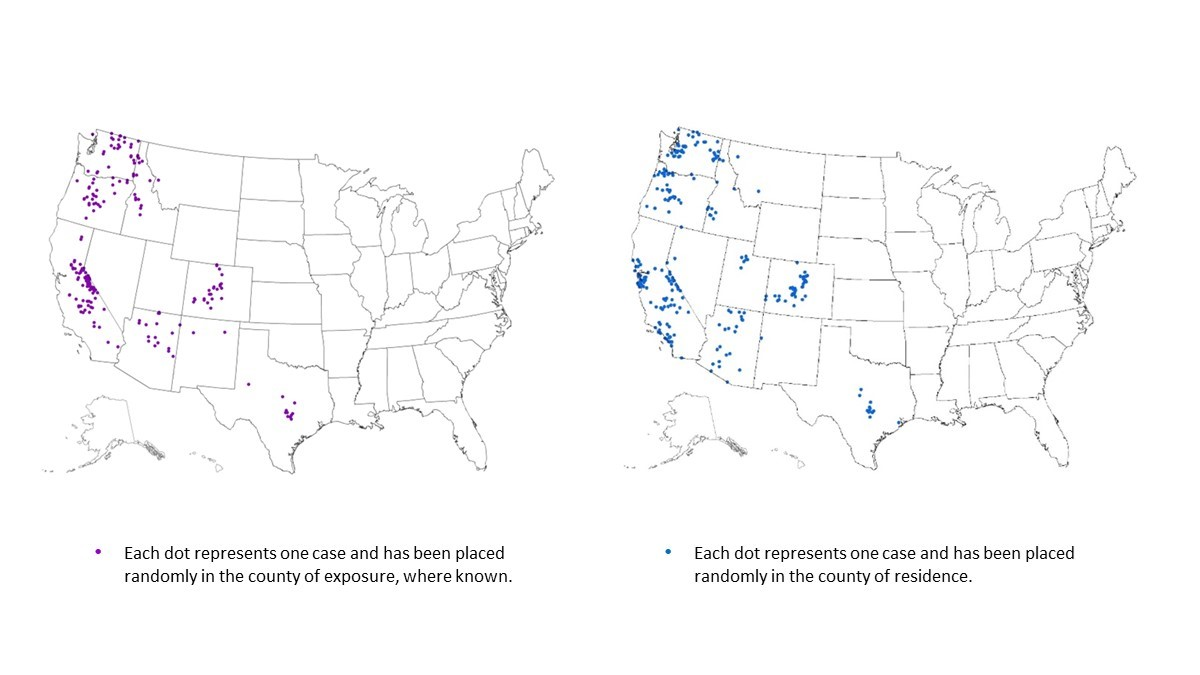
Geographic Distribution & Habitat In the United States, medically important Ornithodoros soft ticks associated with soft tick relapsing fever occur primarily across the western half of the country, including Texas.
This should be distinguished from the geographic distribution of reported human STRF.
CDC’s 2026 surveillance case definition states that STRF occurs most commonly in 10 western U.S. states:
- Arizona
- California
- Colorado
- Idaho
- Montana
- New Mexico
- Oregon
- Texas
- Utah
- Washington
This list describes the principal geographic pattern of human disease and should not be interpreted as a complete map of every Ornithodoros population.
Ornithodoros hermsi
- hermsi is the recognized vector of Borrelia hermsii and Borrelia nietonii.
It is especially associated with:
- Mountainous western regions
- Rodent nests
- Chipmunk and squirrel habitat
- Rustic cabins
- Buildings occupied by rodents
CDC’s 2026 case definition states that O. hermsi is typically found in rodent nests in mountainous environments above approximately:
1,500 feet / 450 meters
where chipmunks or squirrels are present.
Research describes O. hermsi as a nidicolous tick, meaning it remains closely associated with nest cavities and other sheltered sites used by its hosts.
Ornithodoros turicata
- turicata is the principal recognized vector of Borrelia turicatae.
It is especially associated with the south-central and southwestern United States, with human disease particularly recognized in Texas.
Typical habitats include:
- Caves
- Prairie dog burrows
- Ground squirrel burrows
- Other rodent nests and burrows
- Protected underground animal shelters
CDC’s 2026 surveillance guidance identifies caves and prairie dog or ground squirrel nests and burrows in plains regions of the southwestern United States as characteristic O. turicata habitat.
Common Soft-Tick Habitats
Many Ornithodoros ticks are strongly nidicolous.
Rather than spending most of their time exposed on vegetation, they remain in protected places used by their hosts.
They may occur in:
- Rodent nests
- Mammal burrows
- Caves
- Rustic cabins
- Walls
- Woodwork
- Cracks and crevices
- Attics
- Crawl spaces
- Areas beneath floors
- Other sheltered environments occupied by animal hosts
This behavior helps explain why people may be bitten while sleeping without ever seeing the tick.
Life Cycle & Seasonal Activity
Life Cycle & Seasonal Activity Soft ticks have a distinctly different life cycle from hard ticks.
The general pattern is:
Egg → 6-legged Larva → Multiple 8-legged Nymphal Instars → Adult
Soft ticks generally have a multihost life cycle, with repeated blood meals occurring as the tick develops and, in many species, during adulthood.
Larvae
Larvae:
- Have 6 legs
- Hatch in protected locations
- Seek nearby animal hosts
- Take a blood meal
- Leave the host
- Molt into the first nymphal instar
The duration of larval feeding varies among species.
Nymphs
Nymphs:
- Have 8 legs
- Pass through multiple nymphal instars
- Require blood meals during development
- Usually feed rapidly
- Detach after feeding
- Return to protected hiding places
A successful feeding may be followed by another molt.
The number of nymphal instars depends on the species and can also vary with biological and environmental conditions.
Adults
Adults:
- Have 8 legs
- Spend most of their time away from hosts
- Can take multiple blood meals
- Feed rapidly and then detach
- Generally mate away from the host
- May survive and reproduce for many years
Females of many soft-tick species can lay a batch of eggs after a blood meal and may repeat the feeding and egg-laying cycle multiple times during their lives.
Rapid Feeding
One of the most important characteristics of Ornithodoros ticks is their rapid feeding behavior.
Soft-tick bites involved in STRF transmission are commonly:
- Less than 30 minutes
- Generally painless
- Frequently unnoticed by the person being bitten
This is very different from many hard ticks, which may remain attached for days.
Because soft ticks feed and leave quickly, most people with STRF do not remember being bitten by a tick.
Long Lifespan
Soft ticks can be exceptionally long-lived.
Depending on species and conditions, soft ticks can:
- Live for many years and, in some cases, decades
- Take numerous blood meals
- Survive long intervals between hosts
- Persist in an infested building for years
- Remain capable of transmitting relapsing-fever Borrelia after becoming infected
Research on O. hermsi demonstrates that the species can survive several years without feeding when hosts are unavailable.
Seasonal Activity
There is no single universal soft-tick season.
For O. hermsi, human STRF exposure is particularly associated with summer stays in rodent-infested mountain cabins.
However, winter exposure can also occur. Heating a cold cabin can activate O. hermsi ticks resting within walls and woodwork, allowing them to seek sleeping humans.
For O. turicata, exposure is more closely associated with:
- Caves
- Burrows
- Rodent habitats
and is not accurately summarized by one simple national seasonal window.
For a national website, the clearest summary is:
Soft-tick exposure can occur at different times of year. O. hermsi**-associated human exposure is particularly common during summer stays in rodent-infested mountain cabins, although winter exposure can also occur.** O. turicata exposure is more closely linked to entering infested caves and animal burrows.
Diseases & Health Risks
Diseases & Health Risks The principal established human disease associated with Ornithodoros soft ticks in the United States is:
Soft Tick Relapsing Fever
STRF
Soft tick relapsing fever (STRF) was historically commonly called tickborne relapsing fever (TBRF).
CDC now uses STRF to distinguish relapsing fever transmitted by soft ticks from hard tick relapsing fever (HTRF).
CDC specifically identifies Borrelia hermsii, Borrelia turicatae, and other STRF-group Borrelia as causes of soft tick relapsing fever.
Current taxonomy additionally recognizes:
Borrelia nietonii
This species was formerly classified as B. hermsii genomic group II. It includes isolates obtained from humans with relapsing fever and is associated with Ornithodoros hermsi.
Borrelia hermsii & Borrelia nietonii Soft Tick Relapsing Fever
Vector: Ornithodoros hermsi
Borrelia hermsii is a major cause of STRF associated with mountainous western regions of the United States.
Borrelia nietonii is a closely related, now separately recognized relapsing-fever species that was previously classified within the B. hermsii species complex.
Human exposure associated with O. hermsi typically occurs when people:
- Stay overnight in rustic cabins
- Sleep in rodent-infested structures
- Occupy buildings containing squirrel or chipmunk nests
- Sleep while infected O. hermsi ticks emerge from walls or woodwork
The ticks commonly emerge at night, take a brief blood meal, and return to their hiding places before the person realizes a bite occurred.
Borrelia turicatae Soft Tick Relapsing Fever
Vector: Ornithodoros turicata
Borrelia turicatae causes STRF primarily in the south-central United States, with many recognized exposures associated with Texas.
Human infection is particularly associated with:
- Caves
- Cave exploration
- Prairie dog or ground squirrel burrows
- Other infested underground animal shelters
Possible Symptoms of Soft Tick Relapsing Fever
Symptoms may begin approximately:
4–21 days after exposure
CDC’s 2026 surveillance definition states that the incubation period averages about one week.
Common symptoms include:
- Fever
- Chills
- Headache
- Muscle aches
- Joint pain
- Dizziness
- Nausea
- Vomiting
- Loss of appetite
During fever episodes, symptoms can become intense and may include:
- Shaking chills
- Drenching sweats
- Low blood pressure
Why Is It Called “Relapsing” Fever?
A defining characteristic of STRF is that fever can disappear and then return.
CDC’s general patient guidance describes a typical pattern of approximately:
3 days of fever
followed by:
about 7 days without fever
followed by:
another fever episode
Without antibiotic treatment, this pattern can repeat several times.
CDC’s 2026 surveillance case definition describes a broader clinical range:
- Fever periods: approximately 2–7 days
- Afebrile periods: approximately 4–14 days
The repeated episodes occur because relapsing-fever Borrelia can alter their surface proteins through antigenic variation, allowing successive populations of bacteria to temporarily evade the immune response.
Potential Complications
STRF can occasionally cause serious complications, including:
- Neurologic disease
- Eye involvement
- Facial paralysis
- Myocarditis
- Acute respiratory distress syndrome
- Severe low blood pressure
Pregnancy requires particular attention because infection can cause:
- Pregnancy loss
- Premature birth
- Infection of the fetus
- Severe neonatal infection
- Neonatal death
Treatment
Soft tick relapsing fever is treated with antibiotics.
CDC’s July 10, 2026 clinical guidance lists doxycycline as the preferred treatment for nonpregnant adults and children who do not have neurologic complications.
Other treatment options may include:
- Azithromycin
- Penicillin G
- Ceftriaxone
The appropriate medication depends on the patient and clinical circumstances.
For pregnant patients or patients with neurologic involvement, CDC advises initial parenteral beta-lactam antibiotic therapy with close medical management.
Jarisch-Herxheimer Reaction
A particularly important treatment consideration is the Jarisch-Herxheimer reaction.
After antibiotic treatment begins, a patient may temporarily experience worsening symptoms such as:
- High fever
- Rigors or severe chills
- Low blood pressure
CDC’s current guidance states that this reaction occurs in up to approximately 50% of STRF cases.
CDC recommends observing patients during the first four hours of antibiotic therapy because of this risk.
Important Lyme Disease Clarification
Soft tick relapsing fever is not Lyme disease.
Both illnesses involve bacteria belonging to the genus Borrelia, but they are caused by different groups of bacteria and transmitted by different ticks.
Soft Tick Relapsing Fever
- Borrelia hermsii
- Borrelia nietonii
- Borrelia turicatae
- Other STRF-group Borrelia
- Transmitted by Ornithodoros soft ticks
Lyme Disease
- Primarily Borrelia burgdorferi in the United States
- Also Borrelia mayonii in a limited region of the upper Midwestern United States
- Transmitted in the United States by Ixodes hard ticks
Ornithodoros soft ticks should not be presented as established Lyme disease vectors.
Important Hard Tick Relapsing Fever Clarification
Soft tick relapsing fever should also be distinguished from:
Hard Tick Relapsing Fever — HTRF
HTRF in the United States is caused by:
Borrelia miyamotoi
and transmitted by:
- Ixodes scapularis — Blacklegged Tick
- Ixodes pacificus — Western Blacklegged Tick
STRF and HTRF therefore involve different tick families and different principal Borrelia species.
Important to Know
Most people with soft tick relapsing fever do not remember being bitten by a tick.
That is because Ornithodoros ticks:
- Feed rapidly
- Often feed at night
- Cause bites that are generally painless
- Detach soon after feeding
- Return to cracks, nests, burrows, caves, or other hiding places
Therefore, a history of sleeping in a rodent-infested cabin or entering an infested cave can be important even when no tick was ever seen.
CDC’s 2026 surveillance criteria also recognize circumstances such as time spent in cabins or other rodent-infested structures, caves, camping, and handling firewood as potentially relevant exposure history.
Bite Prevention & Protection
Bite Prevention & Protection Soft-tick prevention differs somewhat from prevention for common hard ticks because Ornithodoros ticks often live inside buildings, nests, caves, and burrows rather than primarily on outdoor vegetation.
In Cabins & Buildings
To reduce exposure:
- Avoid sleeping in rodent-infested buildings whenever possible.
- Look for signs of rodent activity, including:
- Droppings
- Nesting materials
- Gnaw marks
- Chewed materials
- Stale odors
- Move beds away from walls.
- Do not allow sheets or bedding to touch the floor.
- Avoid sleeping directly on the floor.
- Keep rodents—particularly squirrels and chipmunks—out of cabins and homes.
- Seal openings that can allow rodents to enter buildings.
Rodent & Tick Control
If a cabin or other structure has evidence of a substantial rodent or soft-tick infestation, professional pest control is recommended.
CDC advises consulting a licensed pest-control professional who can safely:
- Identify and remove rodent nests
- Help prevent rodents from re-entering
- Treat appropriate cracks and crevices for ticks
- Develop a long-term pest-control plan
Rodent droppings, urine, saliva, and nesting materials can also carry pathogens and should be handled using appropriate rodent-cleanup precautions.
Avoid sweeping or vacuuming dry rodent droppings or nesting material in a way that can place contaminated particles into the air.
Caves & Burrows
When entering caves or areas containing animal burrows where STRF may occur:
- Wear long pants
- Wear long-sleeved shirts
- Avoid unnecessary direct contact with cave floors
- Avoid contact with rodent nests and animal burrows
- Use an EPA-registered insect repellent according to label directions
- Treat clothing and gear with products containing 0.5% permethrin when appropriate and according to label directions
If You Find an Attached Soft Tick
An attached Ornithodoros tick may be difficult to find because many soft-tick bites are completed within minutes.
If a tick is still attached, remove it promptly using clean, fine-tipped tweezers.
Grasp the tick as close to the skin as possible and pull upward and away from the skin with steady, even pressure.
Do not attempt to make a tick detach using:
- Petroleum jelly
- Nail polish
- Heat
- Other substances or chemicals
The key distinction with soft ticks is that not finding an attached tick does not rule out exposure. The tick may already have fed and returned to its hiding place before the person noticed anything.
After Possible Exposure
Seek medical care if you develop an unexplained or recurring fever following a plausible soft-tick exposure, especially after:
- Sleeping in a rodent-infested cabin
- Staying in a rustic mountain structure
- Exploring caves
- Entering areas containing rodent burrows
- Camping in an area where STRF occurs
Tell the healthcare provider:
- Where you traveled or stayed
- Whether rodents were present
- Whether you slept in a cabin or similar structure
- Whether you entered caves
- Approximately when the exposure occurred
Because soft-tick bites often go unnoticed, exposure history can be particularly important in recognizing STRF.
Identification Gallery
Identification Gallery - Ornithodoros hermsi
- Soft, leathery/granular body
- No scutum
- Mouthparts hidden from above
- 8 legs in nymphs and adults
Commonly associated with rodent-infested mountain cabins in the western U.S.
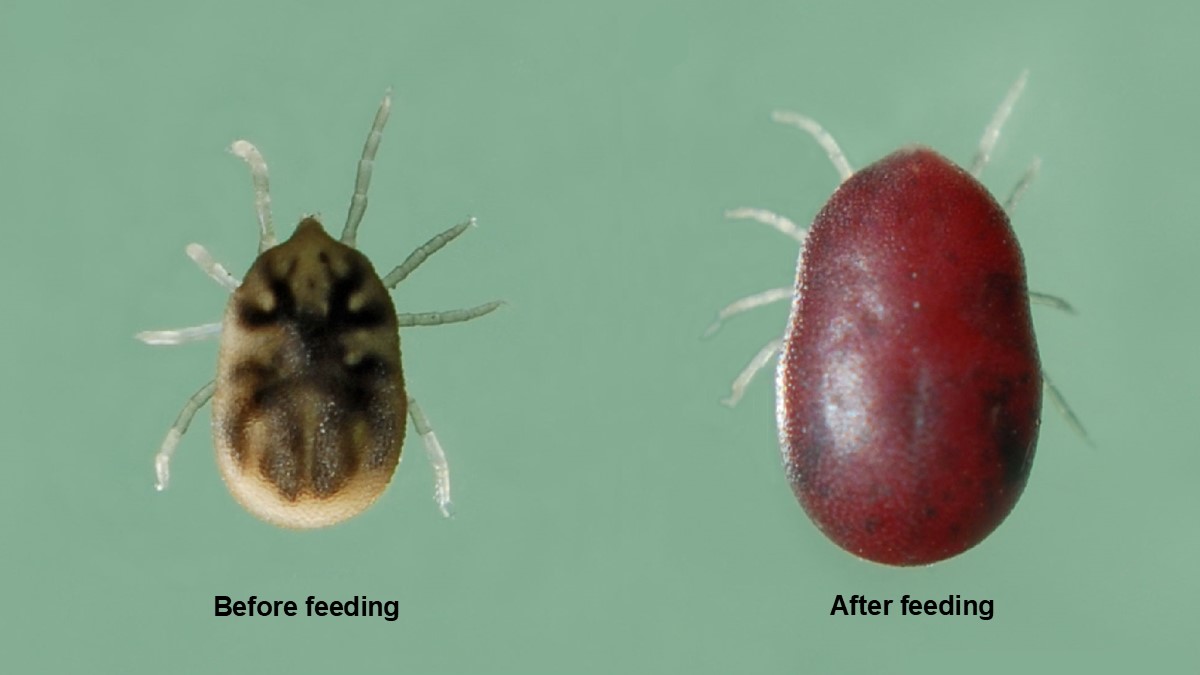
Before & After Feeding — O. hermsi
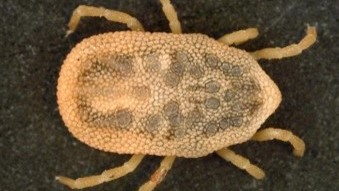
- Ornithodoros turicata
- Broad, oval body
- Wrinkled/granular surface
- No scutum
- Mouthparts hidden from above
- 8 legs in nymphs and adults
Associated especially with caves and rodent burrows in the south-central and southwestern U.S.
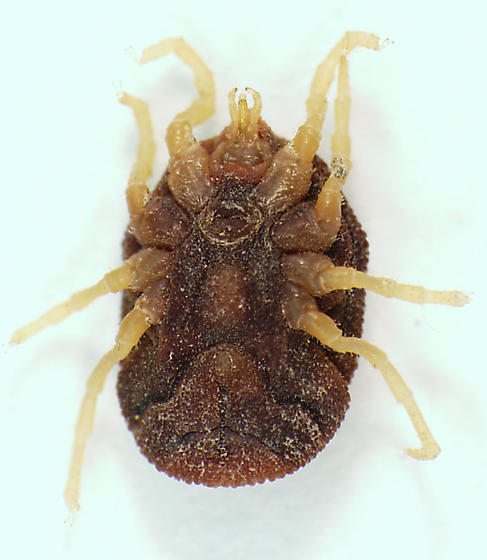
Dorsal vs. Ventral View
- Dorsal: Mouthparts generally not visible
- Ventral: Mouthparts visible underneath
Adult
- 8 legs
- No scutum
- Soft body
- Mouthparts hidden from above
A male-vs.-female comparison is not necessary as a main identification feature.
Nymph
- 8 legs
- No scutum
- Smaller than adults
Larva
- 6 legs
- Extremely small
- Show beside a nymph for size comparison
Life Stages
Use:
Egg → 6-legged Larva → Nymph 1 → Nymph 2 → Additional Nymphal Stage(s) → Adult
Note:
Soft ticks have two or more nymphal stages; the number varies by species.
Soft Tick vs. Hard Tick
Highlight:
- No scutum vs. scutum
- Mouthparts hidden from above vs. visible from above
- Multiple nymphal stages vs. one nymphal stage
- Rapid feeding vs. generally longer feeding
- Caves, burrows and nests vs. vegetation-associated host seeking common in many hard ticks