
Ehrlichia ewingii Ehrlichiosis: An Emerging U.S. Tick-Borne Infection
What Is Ehrlichia ewingii Ehrlichiosis?
Ehrlichia ewingii ehrlichiosis is a tick-borne bacterial infection caused by Ehrlichia ewingii.
In the United States, CDC identifies three Ehrlichia species as important causes of human ehrlichiosis:
- Ehrlichia chaffeensis
- Ehrlichia ewingii
- Ehrlichia muris eauclairensis
Most ehrlichiosis cases reported to CDC are caused by E. chaffeensis. E. ewingii infections are reported much less frequently.
However, a CDC analysis published in 2025 found that reported E. ewingii infections increased overall and were reported from a broader geographic area during 2013–2021. CDC researchers described the infection as an emerging disease and growing public health concern in the United States.
During 2013–2021, 234 confirmed cases of E. ewingii ehrlichiosis were reported to CDC through the National Notifiable Diseases Surveillance System. Because species-specific molecular testing is needed to reliably distinguish E. ewingii from other Ehrlichia species, the true number of infections is likely underestimated.
How Is Ehrlichia ewingii Spread?
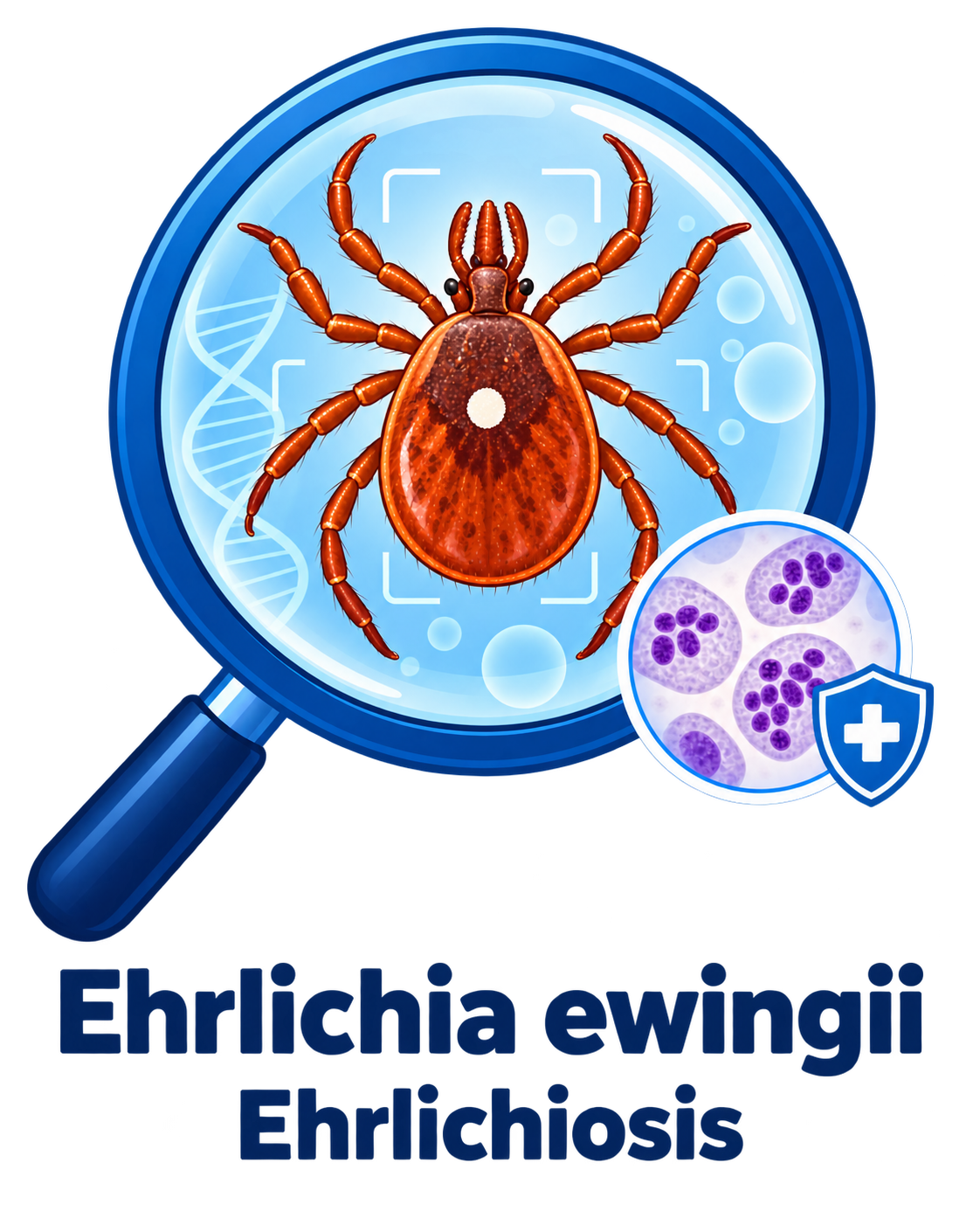
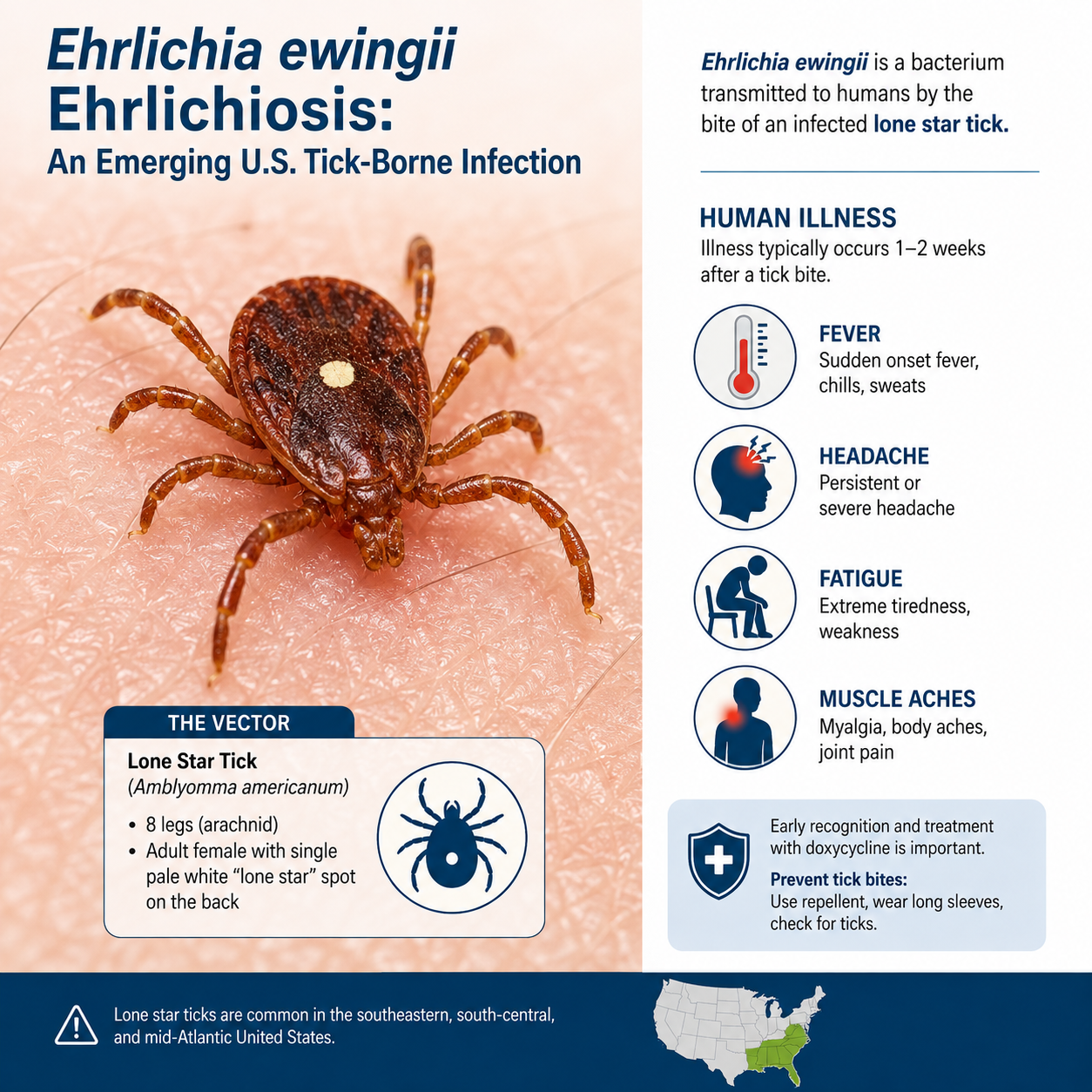
People become infected primarily through the bite of an infected lone star tick (Amblyomma americanum).
The lone star tick also transmits Ehrlichia chaffeensis.
CDC describes the lone star tick as occurring widely in parts of the eastern, southern, and central United States. E. chaffeensis and E. ewingii infections occur primarily in the south-central, southeastern, and mid-Atlantic states.
Tick bites are the main route of ehrlichiosis transmission. Rare transmission of Ehrlichia species through blood transfusion and organ transplantation has also been reported.
A confirmed E. ewingii infection likely transmitted through a transfusion of leukoreduced platelets was reported in 2013. These routes are rare compared with transmission through infected tick bites.
Where Is Ehrlichia ewingii Found in the United States?
According to CDC, E. ewingii infections occur primarily in the:
- South-central United States
- Southeastern United States
- Mid-Atlantic states
These areas overlap substantially with the distribution of the lone star tick.
In CDC’s analysis of confirmed cases reported during 2013–2021, the largest numbers of cases were reported from:
- Missouri — 112 cases
- Arkansas — 22 cases
- Kansas — 11 cases
- New Jersey — 11 cases
- Tennessee — 10 cases
- Virginia — 10 cases
- Maryland — 7 cases
- Oklahoma — 6 cases
- Delaware — 5 cases
- Kentucky — 5 cases
Missouri accounted for approximately 48% of all confirmed cases included in the analysis.
CDC also found that E. ewingii ehrlichiosis was reported from 15 jurisdictions that had not previously reported cases during the earlier 2008–2012 surveillance period.
However, surveillance data do not necessarily show the complete geographic distribution of the infection. CDC researchers note that it is unclear how much of the observed increase represents a true increase in infections versus improved healthcare-provider awareness, greater availability of molecular testing, changes in reporting, or a combination of these factors.
When Do Infections Occur?
Ehrlichiosis can occur whenever infected ticks are active and people are exposed to them.
For ehrlichiosis overall, the majority of illnesses reported to CDC begin during the summer months, with cases typically peaking during June and July.
People may encounter ticks while:
- Hiking
- Camping
- Hunting
- Gardening
- Walking through wooded or brushy areas
- Spending time in grassy areas
- Working or playing outdoors
- Spending time in yards where ticks are present
How Soon Do Symptoms Begin?
Signs and symptoms of ehrlichiosis typically begin 5–14 days after the bite of an infected tick.
Many people do not remember being bitten by a tick, so the absence of a known tick bite does not rule out ehrlichiosis.
What Are the Symptoms?
CDC states that symptoms of E. ewingii infection are generally similar to those of E. chaffeensis ehrlichiosis, although E. ewingii infections have typically been considered less severe.
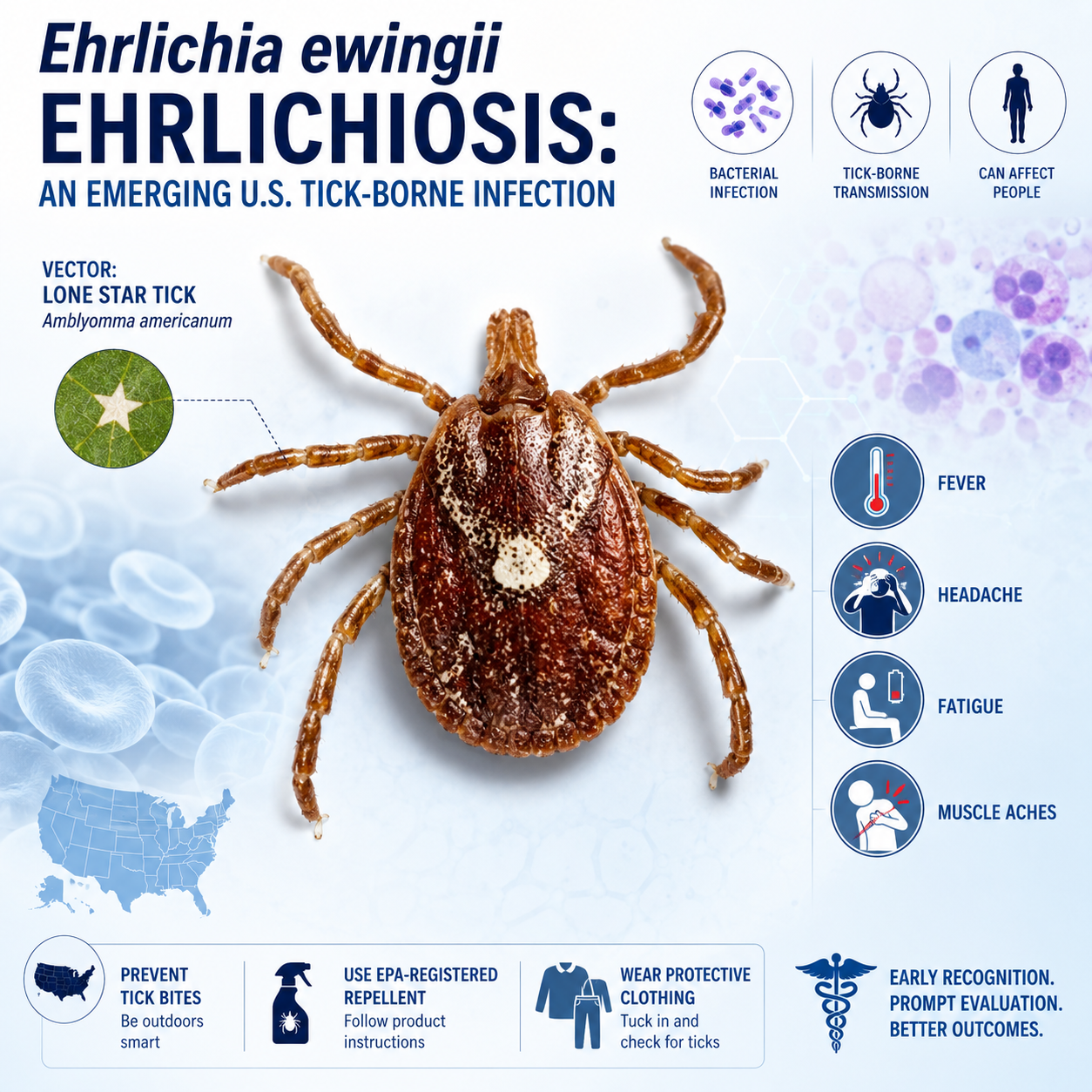
Common symptoms associated with ehrlichiosis include:
- Fever
- Chills
- Headache
- Fatigue or malaise
- Muscle aches
Other possible symptoms include:
- Nausea
- Vomiting
- Diarrhea
- Loss of appetite
- Confusion
- Rash
For E. ewingii specifically, CDC notes that gastrointestinal symptoms are less common than with E. chaffeensis infection. Detailed CDC clinical guidance has also described rash as less common with E. ewingii than with E. chaffeensis.
The clinical characteristics of E. ewingii infection are still not as well defined as those of E. chaffeensis, partly because relatively few species-confirmed cases have been identified.
Can a Rash Occur?
Yes.
A rash can occur with E. ewingii ehrlichiosis, although available CDC clinical guidance indicates that rash is less commonly associated with E. ewingii than with E. chaffeensis infection.
Rash should not be relied upon to recognize or rule out E. ewingii infection. A person can have ehrlichiosis without developing a rash.
What Blood-Test Abnormalities Can Occur?
Laboratory abnormalities commonly associated with ehrlichiosis include:
- Leukopenia — a low white blood cell count
- Thrombocytopenia — a low platelet count
- Elevated hepatic transaminases — increased liver enzyme levels
These abnormalities can appear during the first week of illness.
However, normal laboratory results do not rule out ehrlichiosis, particularly early in the illness.
Can Ehrlichia ewingii Cause Severe Illness?
Yes.
Although E. ewingii infections have generally been considered less severe than E. chaffeensis infections, serious illness can occur.
CDC identifies delayed antibiotic treatment and immune-compromising conditions as important risk factors for severe ehrlichiosis.
People who are immunocompromised—including people with advanced HIV infection, those receiving chemotherapy or other immune-suppressing medications, and organ-transplant recipients—may be at greater risk for severe outcomes.
Can E. ewingii Be Fatal?
Yes, although a reported fatal outcome has been extremely uncommon.
Older CDC publications stated that no deaths had been reported from E. ewingii ehrlichiosis. That information has been superseded by newer surveillance data.
A 2025 CDC study reported that one fatal case of E. ewingii ehrlichiosis was reported to CDC in 2018.
Therefore, E. ewingii infection should not be described as a disease that cannot cause death.
Who Is at Greater Risk for Severe Ehrlichiosis?
CDC identifies the following general risk factors for severe ehrlichiosis:
- Delayed antibiotic treatment
- Age younger than 5 years
- Age older than 65 years
- Immune-compromising conditions
- Advanced HIV infection
- Chemotherapy or other immune-suppressing medications
Underlying health conditions, immune status, age, and the timing of treatment can influence the severity of illness.
These are risk factors for ehrlichiosis overall. Species-specific risk data for E. ewingii remain comparatively limited.
How Is Ehrlichia ewingii Diagnosed?
Diagnosing E. ewingii infection can be challenging because early symptoms are nonspecific and can resemble many other illnesses.
Healthcare providers should consider:
- Symptoms
- Recent tick exposure
- Outdoor activity
- Travel history
- Geographic location
- Laboratory findings
Many patients do not recall a tick bite.
Importantly, treatment should never be delayed while waiting for laboratory results when ehrlichiosis is clinically suspected.
PCR Testing
Polymerase chain reaction (PCR) testing is particularly important for diagnosing E. ewingii.
PCR is typically performed on whole blood and is most sensitive during the first week of illness.
Its sensitivity begins to decrease within approximately 48 hours after appropriate antibiotics are started.
A positive PCR result provides clear evidence of active infection. However, a negative PCR result does not rule out ehrlichiosis, and treatment should not be withheld solely because PCR is negative.
Why Molecular Testing Is Important for E. ewingii
PCR or another molecular method is needed to reliably distinguish E. ewingii from other Ehrlichia species.
This is particularly important because standard serologic testing generally cannot determine which Ehrlichia species caused the infection.
Under the current CDC surveillance case definition, ehrlichiosis is reported at the species level only when molecular testing identifies the species.
CDC researchers have identified limited use of species-specific molecular testing as one reason E. ewingii infections are probably underrecognized.
What About Antibody Testing?
The reference-standard serologic test for ehrlichiosis is the IgG indirect fluorescent antibody (IFA) test.
CDC recommends testing paired serum samples:
- An acute sample collected during the first two weeks of illness
- A convalescent sample collected 2–10 weeks after the acute sample
A fourfold increase in IgG antibody titer between appropriately timed samples provides strong evidence of recent infection.
Antibody levels are frequently negative during the first week of illness, so an early negative antibody test does not rule out ehrlichiosis.
Additionally:
- IgM testing is not considered reliable for diagnosing ehrlichiosis
- Antibodies can remain elevated for months after an infection has resolved
- Antibodies to related Ehrlichia and Anaplasma organisms can cross-react
- Most commercial laboratories cannot distinguish among Ehrlichia species using serology alone
Therefore, serology cannot reliably identify E. ewingii specifically.
Can Ehrlichia ewingii Be Seen on a Blood Smear?
Sometimes.
Ehrlichia organisms can form microscopic clusters called morulae inside white blood cells.
CDC notes that:
- E. chaffeensis most commonly infects monocytes
- E. ewingii more commonly infects granulocytes
However, blood-smear examination is not sensitive enough to rule out ehrlichiosis.
The type of white blood cell containing morulae also cannot conclusively distinguish Ehrlichia species or reliably distinguish Ehrlichia from Anaplasma.
How Is Ehrlichia ewingii Ehrlichiosis Treated?
The recommended treatment for suspected ehrlichiosis is doxycycline.
CDC recommends doxycycline as the first-line treatment for adults and children of all ages.
Treatment should begin as soon as ehrlichiosis is suspected. Healthcare providers should not wait for laboratory confirmation before beginning treatment when the clinical situation suggests ehrlichiosis.
CDC recommends treating suspected ehrlichiosis:
- For at least 5–7 days
- And until at least 72 hours after the fever has subsided
- And until there is evidence of clinical improvement
When doxycycline treatment is effective, fever generally subsides within 24–48 hours.
Should Antibiotics Be Taken After a Tick Bite to Prevent Ehrlichiosis?
No. Routine antibiotic prophylaxis after a tick bite is not recommended to prevent ehrlichiosis.
CDC advises people who have been bitten by a tick to watch for symptoms and contact a healthcare provider if fever, rash, headache, or other concerning symptoms develop within approximately two weeks after the tick bite.
This is different from certain circumstances involving Lyme disease, in which preventive doxycycline may sometimes be recommended after a qualifying tick bite.
Is There a Vaccine?
No. There is currently no vaccine to prevent ehrlichiosis.
Prevention depends primarily on reducing tick exposure, checking for ticks, and promptly removing attached ticks.
How Can You Reduce Your Risk?
To reduce your risk of E. ewingii and other tick-borne infections:
- Avoid unnecessary contact with tall grass, brush, leaf litter, and dense vegetation.
- Walk near the center of maintained trails when possible.
- Use an EPA-registered insect repellent according to label instructions.
- Treat clothing and outdoor gear with products containing 0.5% permethrin, following the product label.
- Check clothing for ticks after returning indoors.
- Examine pets and outdoor gear for ticks.
- Perform a full-body tick check after outdoor activity.
- Check children carefully for ticks.
- Shower soon after coming indoors.
- Promptly remove any attached ticks that are found.
CDC states that showering within two hours of coming indoors has been shown to reduce the risk of Lyme disease and may help reduce the risk of other tick-borne diseases. Showering can also help wash off unattached ticks and provides an opportunity to perform a tick check.
What Should You Do If You Find an Attached Tick?
Remove the tick as soon as possible. Do not wait to visit a healthcare provider before removing an attached tick.
CDC’s updated June 9, 2026 tick-removal guidance recommends:
- Use clean fine-tipped tweezers to grasp the tick as close to the skin’s surface as possible.
- If fine-tipped tweezers are not available, regular tweezers or your fingers can be used. Grasp the tick close to the skin to avoid squeezing its body.
- Pull the tick away from the skin using steady, even pressure.
- Do not twist or jerk the tick, because this can cause the mouthparts to break off and remain in the skin.
- If mouthparts remain and can be removed easily with tweezers, remove them. If they cannot be removed easily, leave them alone and allow the skin to heal; the body will naturally push them out over time.
- Dispose of the live tick by placing it in a sealed container, wrapping it tightly in tape, flushing it down the toilet, or placing it in alcohol. Do not crush a tick with your fingers.
- After removal, thoroughly clean the bite area and your hands with soap and water, rubbing alcohol, or hand sanitizer.
- Check the rest of your body carefully for additional ticks and promptly remove any that are found.
Do not use petroleum jelly, heat, nail polish, or other substances to try to force a tick to detach.
Should You Have the Tick Tested?
CDC generally does not recommend commercial testing of removed ticks to guide medical treatment.
A positive tick test does not mean that the person was infected, and a negative result can provide false reassurance. Results from tick testing should not be used to make treatment decisions.
Treatment decisions should instead be based on the person’s symptoms, exposure history, clinical evaluation, and appropriate diagnostic testing.
When Should You Contact a Healthcare Provider?
Seek medical advice if you develop concerning symptoms after a known or possible tick exposure, particularly symptoms such as:
- Fever
- Chills
- Headache
- Unusual fatigue
- Muscle or body aches
- Nausea or vomiting
- Diarrhea
- Confusion
- Rash
Be sure to tell the healthcare provider about:
- A known or possible tick bite
- When the exposure may have occurred
- Where the exposure occurred
- Recent outdoor activities
- Recent travel
Symptoms of ehrlichiosis generally begin 5–14 days after an infected tick bite, and early treatment is important.
Healthcare providers should not delay treatment while waiting for diagnostic test results when ehrlichiosis is suspected.
Is Ehrlichia ewingii Ehrlichiosis Nationally Notifiable?
Yes.
Ehrlichiosis was first made nationally notifiable in the United States in 1999.
A distinct E. ewingii surveillance category was included when the ehrlichiosis/anaplasmosis surveillance case definition was revised in 2008.
The surveillance definition was revised again for 2024. The current CDC definition includes the following ehrlichiosis subtypes:
- Ehrlichia chaffeensis
- Ehrlichia ewingii
- Ehrlichia muris eauclairensis
- Ehrlichia, other species or unspeciated
Under the current surveillance definition, species-level reporting requires molecular testing, because serologic testing cannot definitively distinguish among closely related Ehrlichia species. Species-specific E. ewingii cases reported for national surveillance are therefore classified as confirmed cases.
Although E. ewingii ehrlichiosis is nationally notifiable, individual states and jurisdictions determine which diseases and conditions are legally reportable within their jurisdiction.
Key Facts About Ehrlichia ewingii
Cause: Ehrlichia ewingii
Type: Tick-borne bacterial infection
Primary U.S. vector: Lone star tick (Amblyomma americanum)
Main U.S. regions: South-central, southeastern, and mid-Atlantic states
Typical symptom onset: 5–14 days after an infected tick bite
Common symptoms: Fever, headache, fatigue or malaise, muscle aches, and chills
Other possible symptoms: Nausea, vomiting, diarrhea, loss of appetite, confusion, and rash
Common laboratory findings: Leukopenia, thrombocytopenia, and elevated liver enzymes
Species-specific diagnosis: PCR or another molecular method is needed to reliably identify E. ewingii
Treatment: Doxycycline
Treatment timing: Begin promptly when ehrlichiosis is suspected; do not wait for laboratory confirmation
Vaccine: None
Preventive antibiotics after a tick bite: Not routinely recommended for ehrlichiosis
Reported fatality: One fatal E. ewingii case was reported to CDC in 2018 in the 2025 national CDC analysis
National surveillance: Ehrlichiosis has been nationally notifiable since 1999; E. ewingii became a distinct surveillance category in 2008, and the current case definition was revised for 2024. Species-specific surveillance classification requires molecular testing.
Why Ehrlichia ewingii Matters
ewingii remains a relatively uncommon and probably underrecognized cause of ehrlichiosis in the United States.
CDC’s 2025 national analysis found:
- 234 confirmed cases during 2013–2021
- The greatest numbers of reported cases in Missouri and Arkansas
- Approximately a twofold increase in the average number of reported cases compared with the 2008–2012 period
- Reports from 15 jurisdictions that had not previously reported cases
However, CDC cautions that the apparent increase may reflect several factors, including improved awareness, increased molecular testing, changes in reporting, a true increase in infections, or a combination of these factors.
Because routine serologic testing generally cannot distinguish E. ewingii from other Ehrlichia species, some infections may never be identified at the species level.
The 2025 CDC analysis describes E. ewingii ehrlichiosis as an emerging disease and emphasizes the need for greater use of molecular testing to better understand its true epidemiology and disease burden.
Sources & References
- Centers for Disease Control and Prevention (CDC) — Clinical Overview of Ehrlichiosis
- CDC — Clinical Signs and Symptoms of Ehrlichiosis
- CDC — Clinical Testing and Diagnosis for Ehrlichiosis
- CDC — Clinical Care of Ehrlichiosis
- CDC — About Ehrlichiosis
- CDC — Ehrlichiosis Epidemiology and Statistics
- CDC — Ehrlichiosis 2024 Case Definition
- CDC — What to Do After a Tick Bite, updated June 9, 2026
- CDC — Preventing Tick Bites
- CDC / Emerging Infectious Diseases — Adams SN, Bestul NC, Calloway KN, Kersh GJ, Salzer JS. National Surveillance of Human Ehrlichiosis Caused by Ehrlichia ewingii, United States, 2013–2021. Emerging Infectious Diseases. 2025;31(2):222–227.
- CDC — Diagnosis and Management of Tickborne Rickettsial Diseases: Rocky Mountain Spotted Fever and Other Spotted Fever Group Rickettsioses, Ehrlichioses, and Anaplasmosis — United States
Regan J, Matthias J, Green-Murphy A, et al. A Confirmed Ehrlichia ewingii Infection Likely Acquired Through Platelet Transfusion. Clinical Infectious Diseases. 2013;56(12)–e107.
Educational Disclaimer
This information is provided for educational purposes only and is not a substitute for professional medical advice, diagnosis, or treatment.
If you develop a fever, rash, unusual fatigue, headache, body aches, nausea, vomiting, or other concerning symptoms after a known or possible tick exposure, contact a qualified healthcare provider and mention the possible tick exposure.

