Heartland Virus Disease: A Rare Tickborne Viral Disease
What Is Heartland Virus Disease?
A rare tickborne illness caused by Heartland virus. The virus is spread to people through the bite of an infected tick.
Heartland virus was first identified as a cause of human illness in 2009 in Missouri. It belongs to the genus Bandavirus in the family Phenuiviridae, a group that includes viruses that can be transmitted by ticks.
Cases of Heartland remain rare in the United States. As of July 2026, more than 80 cases had been reported from 15 states.
Unlike bacterial tickborne diseases such as ehrlichiosis, Heartland is caused by a virus, so antibiotics do not treat the infection. There is currently no specific treatment for Heartland virus disease and no licensed vaccine to prevent it.
Heartland is not currently a nationally notifiable condition. However, CDC asks states to report possible cases voluntarily, and cases can be reported through ArboNET.
How Do Ticks Spread Heartland Virus?
Heartland virus is transmitted through the bite of an infected tick.
Based on human cases and laboratory studies, the tick primarily responsible for transmitting Heartland virus is the:
- Lone star tick (Amblyomma americanum)
The lone star tick is widely distributed in the Northeast, South, and Midwest United States.
CDC states that information from patients and laboratory studies supports the lone star tick as the primary vector. However, researchers do not yet know whether other tick species can spread Heartland virus or whether people can become infected in other ways.

The Asian longhorned tick (Haemaphysalis longicornis) has been shown to be a competent vector for Heartland virus under laboratory conditions. Whether it plays an important role in natural transmission of Heartland virus to people in the United States has not been established.
Scientists also do not yet know whether any mammals serve as reservoirs for Heartland virus, although antibodies against the virus have been detected in several animal species.
Where Does Heartland Virus Disease Occur?
Heartland virus has been identified primarily in parts of the eastern, southeastern, and south-central United States.
As of July 2026, CDC reports that more than 80 cases of Heartland had been reported from 15 states:
- Arkansas
- Georgia
- Illinois
- Indiana
- Iowa
- Kansas
- Kentucky
- Missouri
- New York
- North Carolina
- Oklahoma
- Pennsylvania
- Tennessee
- Virginia
- West Virginia
Most people diagnosed with Heartland became ill during May through September.
CDC notes that residents of and visitors to areas where Heartland virus activity has been identified may be at risk, particularly people who work or participate in recreational activities outdoors and therefore have greater opportunities for tick exposure.
What Are the Symptoms of Heartland Virus Disease?
The time between a tick bite and the development of symptoms—the incubation period—can range from a few days to several weeks.
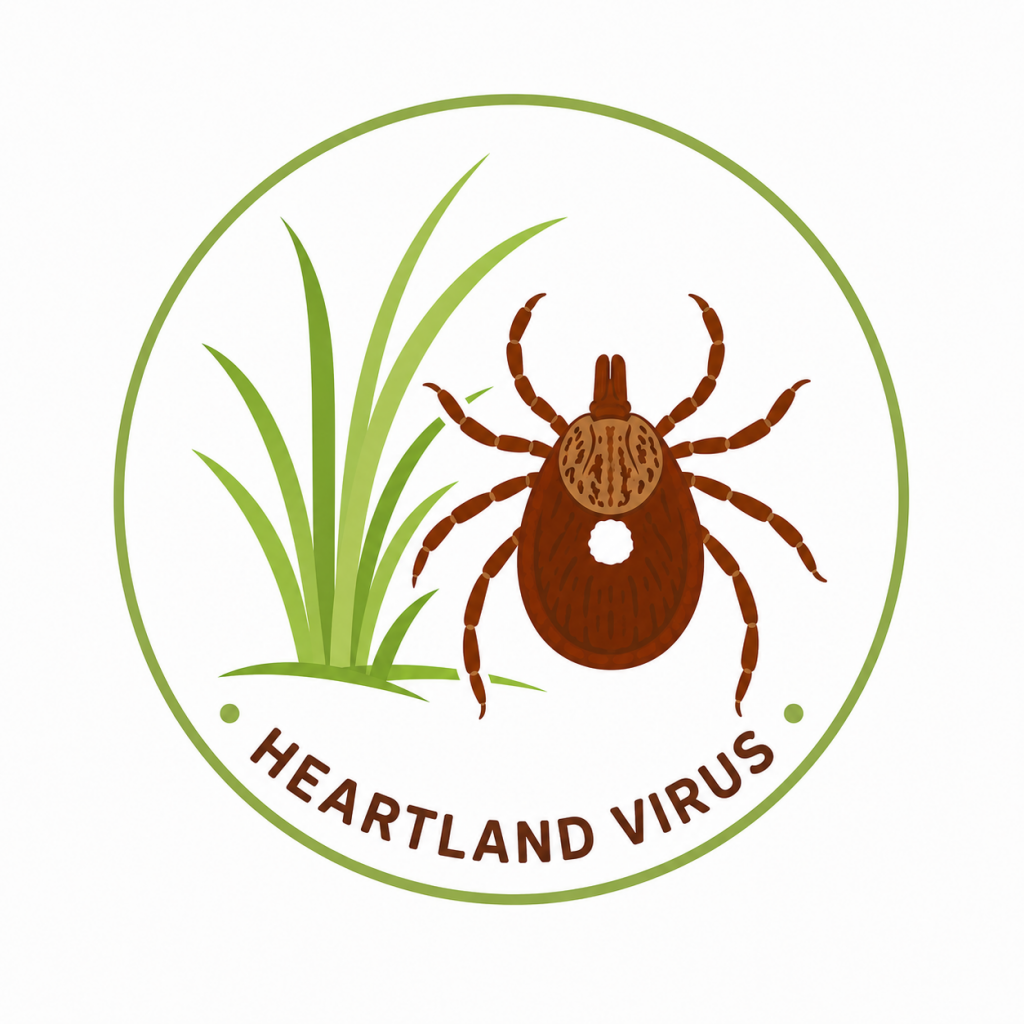
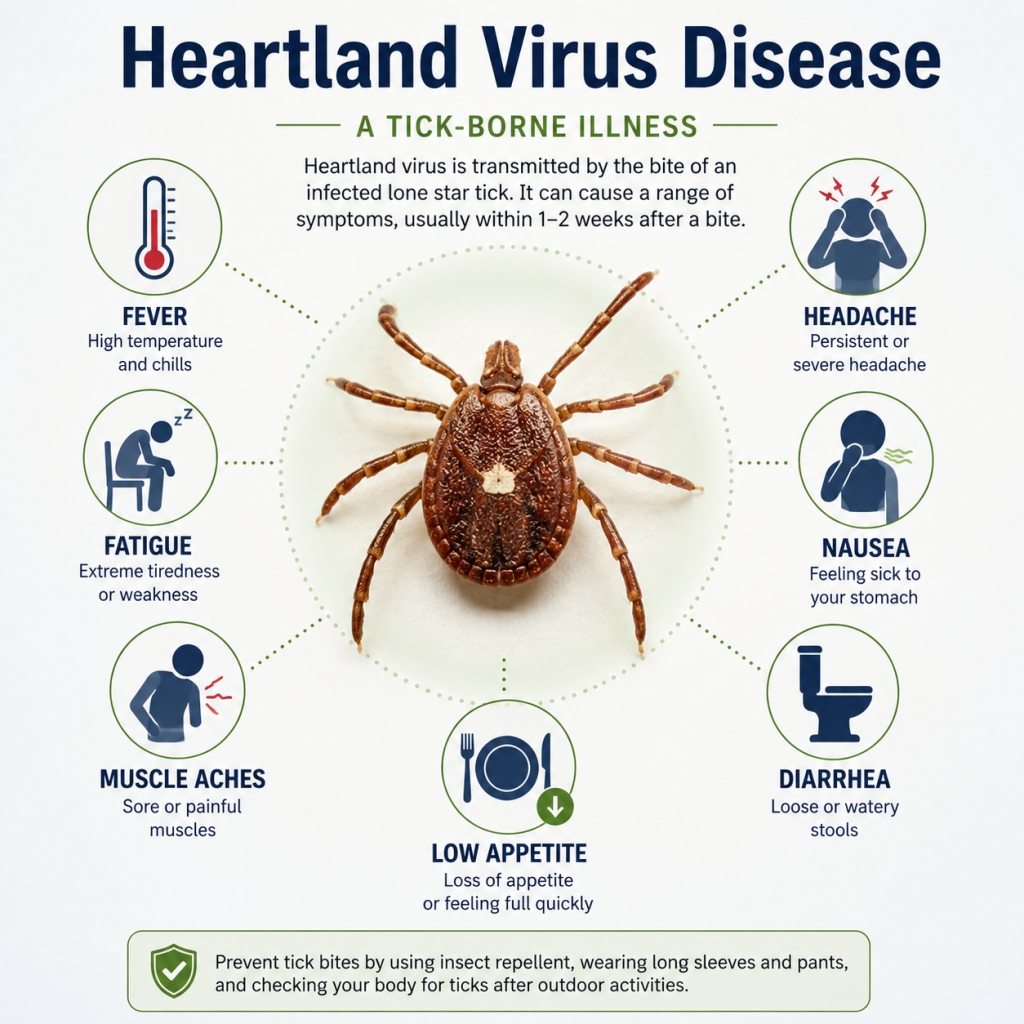
Symptoms can include:
- Fever
- Fatigue
- Decreased appetite
- Headache
- Nausea
- Diarrhea
- Muscle pain
- Joint pain
People with Heartland virus disease may also have abnormalities on laboratory blood tests, including:
- Low white blood cell counts (leukopenia)
- Low platelet counts (thrombocytopenia)
- Elevated liver enzymes
These symptoms and laboratory findings are described in current CDC guidance.
The early illness can look similar to other tickborne diseases, particularly ehrlichiosis and anaplasmosis.
This similarity is important because ehrlichiosis is a bacterial illness that generally responds to doxycycline, whereas Heartland virus does not respond to antibiotics. CDC advises healthcare providers to consider Heartland virus disease in appropriate patients being treated for suspected ehrlichiosis who do not readily improve with doxycycline.
Can Heartland Virus Disease Become Severe?
Yes. Although Heartland virus disease is rare, severe illness and deaths have occurred.
Many patients diagnosed with Heartland have required hospitalization. With supportive care, most people have fully recovered, but some older people with underlying medical conditions have developed severe disease and died.
Heartland virus infection has rarely been associated with a serious inflammatory condition called hemophagocytic lymphohistiocytosis (HLH). Severe disease and death have been reported among patients with immunocompromising conditions or multiple medical comorbidities.
Patients with significant medical comorbidities who are diagnosed with Heartland virus disease may therefore require particularly close monitoring for severe complications.
How Is Heartland Virus Disease Diagnosed?
Heartland virus disease can be challenging to recognize because its symptoms and routine laboratory findings may resemble those of other tickborne illnesses, particularly ehrlichiosis.
Healthcare providers may consider factors including:
- Signs and symptoms
- Recent possible tick exposure
- Residence in or travel to an area where Heartland virus activity has been identified
- Laboratory findings
- Whether a suspected bacterial tickborne illness responds to appropriate antibiotic treatment
CDC’s current testing guidance considers epidemiologic exposure, compatible clinical findings, and lack of response to appropriate treatment for certain suspected tickborne diseases when determining whether Heartland virus testing may be appropriate.
There are currently no commercially available diagnostic tests for Heartland virus infection in the United States. Molecular and serologic testing can be performed at CDC. Healthcare providers should contact their state or local health department for assistance determining whether testing is appropriate and arranging specimen submission.
CDC testing methods currently available for Heartland virus include:
- Reverse transcription-polymerase chain reaction (RT-PCR)
- IgM microsphere-based immunoassay (MIA)
- Plaque reduction neutralization test (PRNT)
For specimens collected less than 14 days after symptom onset, CDC guidance calls for serum to be submitted for RT-PCR and antibody testing. For specimens collected 14 days or more after symptom onset, serum should be submitted for antibody testing; RT-PCR may also be performed on serum collected later in some immunocompromised patients.
CDC notes that some tests may not always be available, so healthcare professionals should verify current testing availability through CDC and the appropriate public-health department.
How Is Heartland Virus Disease Treated?
There is currently no specific treatment for Heartland virus disease. Clinical management is supportive, meaning medical care focuses on relieving symptoms and supporting the patient during the illness.
Depending on the severity of illness, supportive care may include:
- Rest
- Fluids
- Appropriate over-the-counter pain medications to help relieve some symptoms
- Intravenous fluids and other supportive care for hospitalized patients
CDC states that some patients may need hospitalization for intravenous fluids and supportive care for pain, fever, or other related problems.
Many diagnosed patients have required hospitalization, although most people have fully recovered with supportive care.
Because Heartland is caused by a virus, antibiotics do not treat Heartland virus infection.
How Can Heartland Virus Disease Be Prevented?
There is currently no licensed vaccine or preventive medicine for Heartland virus disease. The best way to reduce the risk of Heartland is to prevent tick bites.
To reduce your risk:
- Use an EPA-registered insect repellent according to label directions.
- Treat clothing and gear with products containing 0.5% permethrin, or use permethrin-treated clothing and gear.
- Wear long sleeves and pants when appropriate.
- Avoid wooded and brushy areas with high grass and leaf litter when possible.
- Walk near the center of trails.
- Check your body and clothing for ticks after spending time outdoors.
- Examine pets and outdoor gear for ticks.
- Shower soon after returning indoors.
- Promptly remove attached ticks.
These measures are consistent with CDC’s current tick-bite prevention guidance.
Tick exposure can occur year-round, although ticks are generally most active during warmer months, particularly April through September.
What Should You Do If You Find an Attached Tick?
CDC recommends removing an attached tick as soon as possible. Delaying tick removal to seek assistance could increase the risk of acquiring a tickborne disease.
- Use clean, fine-tipped tweezers to grasp the tick as close to the skin’s surface as possible.
- Pull the tick away from the skin using steady, even pressure.
- Do not twist or jerk the tick.
- After removing the tick, thoroughly clean the bite area and your hands with soap and water, rubbing alcohol, or hand sanitizer.
- Check the rest of your body for additional ticks and promptly remove any you find.
If fine-tipped tweezers are unavailable, CDC states that regular tweezers or your fingers may also be used. Grasp the tick close to the skin’s surface and avoid squeezing the tick’s body.
CDC advises not to use petroleum jelly, heat, nail polish, or other substances to try to make an attached tick detach.
When Should You Contact a Healthcare Provider?
Contact a healthcare provider if you develop fever or other concerning symptoms after a known tick bite or possible tick exposure. Heartland symptoms can include fatigue, decreased appetite, headache, nausea, diarrhea, and muscle or joint pain.
A person may not always realize that a tick bite occurred, so possible tick exposure from spending time in grassy, brushy, or wooded areas can also be important information to tell a healthcare provider. CDC recognizes outdoor activities as a potential epidemiologic exposure when evaluating possible Heartland virus disease.
Tell your healthcare provider:
- About any recent known tick bite or possible tick exposure
- When the exposure may have occurred
- Where you were when the exposure occurred
- About recent travel
- What symptoms you are experiencing
Heartland virus disease should be considered in the appropriate clinical setting when an illness resembles ehrlichiosis but does not readily respond to doxycycline.
Heartland Virus Disease: Important Facts to Remember
- Heartland is a rare tickborne viral disease.
- It is caused by Heartland virus.
- The lone star tick (Amblyomma americanum) is primarily responsible for transmission.
- Symptoms can begin a few days to several weeks after a tick bite.
- Symptoms can include fever, fatigue, decreased appetite, headache, nausea, diarrhea, and muscle or joint pain.
- Laboratory findings can include low white blood cell counts, low platelet counts, and elevated liver enzymes.
- Heartland can resemble ehrlichiosis or anaplasmosis.
- As of July 2026, more than 80 cases had been reported from 15 U.S. states.
- Most diagnosed patients became ill during May through September.
- Heartland is not currently nationally notifiable; CDC requests voluntary state reporting.
- There is no specific treatment for Heartland virus disease.
- Antibiotics do not treat Heartland virus infection.
- There is no licensed vaccine to prevent Heartland virus disease.
- Severe and fatal illness has occurred, particularly among some patients with significant underlying medical conditions.
- Preventing tick bites and promptly removing attached ticks are important ways to reduce the risk of tickborne disease.
Educational Disclaimer
This information is provided for educational purposes only and is not intended to replace professional medical advice, diagnosis, or treatment.
If you develop a fever, rash, unusual fatigue, headache, body aches, nausea, vomiting, or other concerning symptoms following a known or possible tick exposure, contact a qualified healthcare provider and mention the potential tick exposure.