
Pacific Coast Tick Fever (PCTF): A Tick-Borne Bacterial Disease
What Is Pacific Coast Tick Fever?
Pacific Coast tick fever (PCTF) is a tick-borne bacterial disease and a type of spotted fever rickettsiosis.
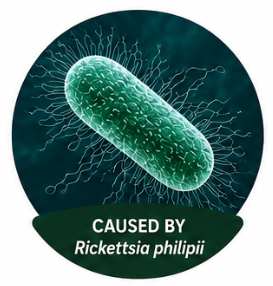
It is caused by Rickettsia rickettsii subsp. californica, a spotted fever group Rickettsia bacterium previously known as Rickettsia species 364D.
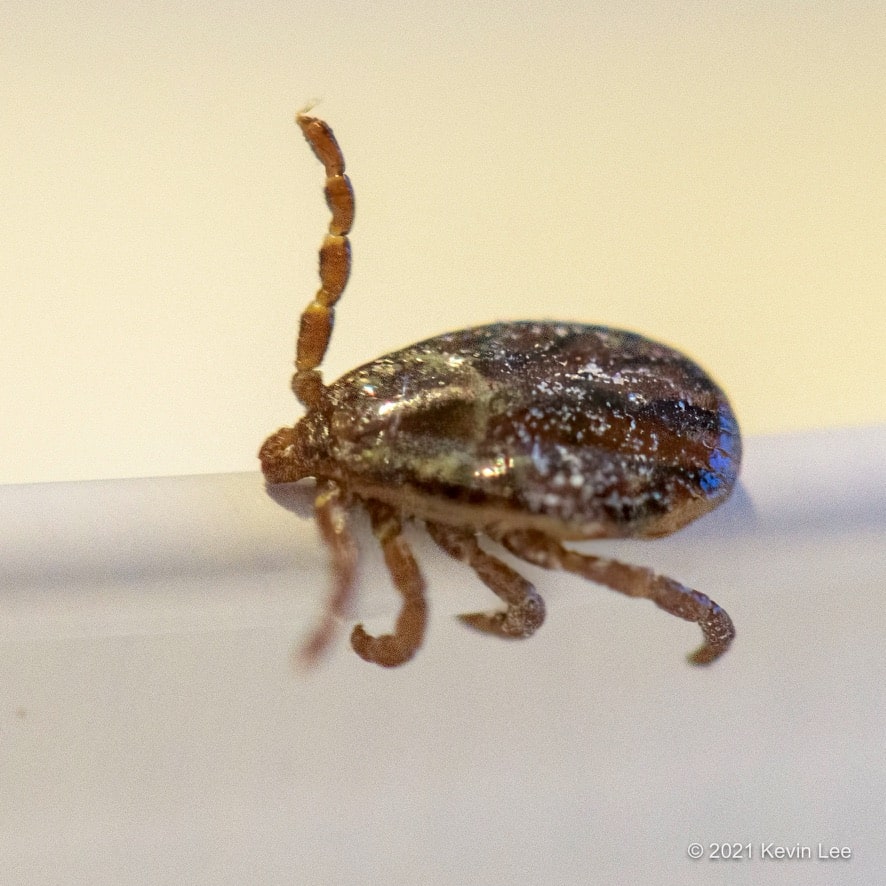
PCTF is transmitted to people through the bite of an infected Pacific Coast tick (Dermacentor occidentalis).
PCTF is generally less severe than Rocky Mountain spotted fever (RMSF), although the two diseases can share symptoms. One of the most characteristic features of PCTF is an eschar, an ulcerated or scab-like lesion that develops at the site of an infected tick bite. Rash can occur but is less common with PCTF than with many other spotted fever rickettsioses.
What Was PCTF Previously Called?
The bacterium that causes PCTF was historically known as:
Rickettsia species 364D
It was also referred to in some scientific literature by the provisional name Rickettsia philipii.
Whole-genome and other taxonomic analyses support classification of the organism as:
Rickettsia rickettsii subsp. californica
This name is currently used by the CDC and the California Department of Public Health (CDPH), which also note that the organism was previously known as Rickettsia species 364D.
How Is Pacific Coast Tick Fever Spread?
People become infected when an infected Pacific Coast tick (Dermacentor occidentalis) bites and feeds on them.
The tick can transmit R. rickettsii subsp. californica during feeding.
People may encounter Pacific Coast ticks while spending time in grassy, brushy, wooded, or other suitable outdoor habitats within the tick’s geographic range.
A person does not necessarily need to remember being bitten by a tick for a tick-borne rickettsial infection to be considered. Tick bites may go unnoticed.
Which Tick Spreads Pacific Coast Tick Fever?
The vector of PCTF is the:
Pacific Coast Tick
Dermacentor occidentalis
CDC states that the Pacific Coast tick occurs along the western coastline of the United States, including:
- California
- Oregon
- Washington
However, recognized human PCTF cases to date have been associated with exposure in California.

California public-health surveillance has detected the PCTF-causing bacterium in Pacific Coast ticks from both northern and southern California.
The presence of the Pacific Coast tick in Oregon and Washington does not by itself establish that PCTF transmission has been documented there.
Where Does Pacific Coast Tick Fever Occur?
Human PCTF has been recognized primarily in California.
The first confirmed human case occurred in California in 2008, and the organism was reported as a confirmed cause of human disease in 2010.
Subsequent recognized human PCTF cases have also been associated with exposure in California.
Most reported human cases have occurred in northern California, although infected Pacific Coast ticks have been detected in both northern and southern California.
Therefore, PCTF should be considered after compatible tick exposure throughout California, not only in areas where previous human cases have been reported.
The Pacific Coast tick itself also occurs in Oregon and Washington, although recognized human PCTF cases to date have involved California exposure.
How Common Is Pacific Coast Tick Fever?
PCTF is considered uncommon.
California Department of Public Health states that approximately 0–3 confirmed PCTF cases are typically reported in California each year.
A detailed scientific review published in 2025 identified 27 confirmed or probable PCTF cases through 2023, involving patients from 10 California counties.
Because commonly available tests for spotted fever rickettsioses may not identify the specific Rickettsia species responsible, some PCTF infections may not be recognized as PCTF specifically.
How Soon Do Symptoms Appear?
Unlike some other tick-borne diseases, a specific incubation-period range for PCTF has not been firmly established in CDC clinical guidance.
What is known is that an eschar usually develops within a few days to approximately one week after the bite of an infected tick.
Other symptoms generally develop several days after the eschar appears.
For accuracy, a specific numerical incubation period should not be assumed from RMSF or Rickettsia parkeri rickettsiosis.
What Is an Eschar?
An eschar is one of the most characteristic signs of PCTF.
It develops at or near the site where an infected tick has bitten the skin.
An eschar is an ulcerated skin lesion that may appear:
- Dark brown or black
- Crusted or scab-like
- Ulcerated
- Surrounded by redness
Eschars generally develop a few days to approximately one week after the infected tick bite.
A person can occasionally develop more than one eschar.
Eschars are important diagnostically because they are characteristic of PCTF but are uncommon in classic RMSF.
What Are the Symptoms of Pacific Coast Tick Fever?
People with PCTF usually develop an eschar, followed by symptoms that may include:
- Fever
- Swollen regional lymph nodes
- Headache
- Muscle aches
- Fatigue
Rash
A rash can occur, but CDC states that rash is less common in PCTF than in many other spotted fever rickettsioses.
Published clinical observations also support rash being relatively uncommon in recognized PCTF cases.
Some patients may develop multiple eschars, and California public-health guidance notes that eschars can occur with or without fever and muscle aches.
How Is Pacific Coast Tick Fever Different From Rocky Mountain Spotted Fever?
PCTF and Rocky Mountain spotted fever (RMSF) are spotted fever rickettsioses, but their usual clinical patterns differ.
Pacific Coast Tick Fever
- Usually produces an eschar
- Regional lymph-node swelling is characteristic
- Fever, headache, muscle aches, and fatigue may occur
- Rash is less common
- Illness is generally less severe than RMSF
- Hospitalization has been uncommon in recognized cases
- No deaths have been reported in published PCTF case series
Rocky Mountain Spotted Fever
- Eschars are uncommon
- Rash is more characteristic
- Disease can progress rapidly
- Severe complications and death can occur
- Delayed doxycycline treatment substantially increases the risk of severe illness
Because early signs and symptoms can overlap, healthcare providers should consider RMSF and other spotted fever rickettsioses when evaluating a compatible illness following tick exposure.
Other Spotted Fever Rickettsioses in the Differential
Other spotted fever group infections may also cause overlapping symptoms.
Of particular relevance in the western United States, Rickettsia lanei is a newly recognized spotted fever group Rickettsia associated with RMSF-like illness.
Recent investigations in California identified R. lanei in Pacific Coast ticks (Dermacentor occidentalis) and implicated this tick species as the likely source of a documented human infection.
A human case of R. lanei rickettsiosis was also identified in Oregon in 2025.
Because different spotted fever rickettsioses can produce similar symptoms and routine serologic tests often cannot determine the exact species involved, laboratory findings should be interpreted together with the patient’s clinical presentation, geographic exposure, and other epidemiologic information.
Can Pacific Coast Tick Fever Become Serious?
PCTF has generally caused mild to moderately severe illness in the limited number of recognized cases.
Hospitalizations have been infrequent, and no deaths have been reported in published PCTF case series.
However, more significant illness has occasionally occurred. In one published pediatric case, the patient developed:
- Low blood pressure
- Leukopenia, or a low white blood cell count
- Thrombocytopenia, or a low platelet count
- Abnormal blood-clotting findings
Because relatively few PCTF cases have been identified, the complete clinical spectrum may not yet be fully understood.
Prompt medical evaluation remains important because PCTF can resemble other spotted fever rickettsioses, particularly RMSF, which can become life-threatening if treatment is delayed.
How Is Pacific Coast Tick Fever Diagnosed?
Healthcare providers may consider a combination of:
- Symptoms
- Presence of an eschar
- Regional lymph-node swelling
- Recent tick bite
- Outdoor exposure
- Travel or residence in an area where Pacific Coast ticks occur
- Laboratory testing
A known tick bite is not required, because people may not notice that a tick was attached.
The presence of an eschar after possible tick exposure in California can be an especially important clue.
Laboratory Testing
PCTF is diagnosed using laboratory methods similar to those used for other spotted fever rickettsioses.
Serologic Testing
The reference standard for serologic diagnosis of spotted fever rickettsiosis is the indirect immunofluorescence antibody (IFA) test.
Antibody testing is frequently negative early in illness.
CDC states that approximately 85% of patients with spotted fever rickettsiosis do not have detectable antibody titers during the first week of illness.
Therefore, a negative antibody result during the first week does not rule out infection.
The strongest serologic evidence comes from paired blood samples showing a fourfold or greater rise in IgG antibody titer.
Acute and convalescent samples are generally collected weeks apart.
Important Limitation of Serology
Spotted fever group Rickettsia species share similar antigens.
Therefore, commercially available antibody tests generally cannot distinguish PCTF from RMSF, R. parkeri rickettsiosis, R. lanei rickettsiosis, or another spotted fever group infection.
A single elevated antibody result may also reflect a past infection because antibodies can remain elevated for months or longer.
For these reasons, laboratory results must be interpreted together with the patient’s:
- Symptoms
- Exposure history
- Geographic location
- Clinical findings
PCR, Eschar Swabs, and Skin Biopsy
PCR testing can detect rickettsial DNA and may help identify the specific organism causing an infection.
However, spotted fever group Rickettsia organisms may not circulate in large numbers in the blood during the first several days of illness, so whole-blood PCR can be negative early in infection.
When an eschar is present, particularly useful specimens can include:
- An eschar swab
- A skin biopsy from the eschar
- A biopsy of a rash lesion, if present
PCR may be performed on these specimens.
Skin biopsy specimens may also be evaluated using immunohistochemistry (IHC).
Specialized public-health or reference laboratories may be able to perform testing that identifies the specific Rickettsia species responsible.
Treatment Should Not Wait for Test Results
If a healthcare provider suspects a spotted fever rickettsiosis, treatment should not be delayed while waiting for laboratory results.
CDC advises that treatment should never be delayed or withheld because test results are pending or because an early laboratory test is negative.
This is particularly important because PCTF can initially resemble RMSF, a potentially life-threatening disease requiring prompt doxycycline treatment.
How Is Pacific Coast Tick Fever Treated?
The recommended treatment for PCTF is:
Doxycycline
CDC recommends doxycycline as the treatment of choice for suspected spotted fever rickettsioses, including:
- Pacific Coast tick fever
- Rickettsia parkeri rickettsiosis
- Rocky Mountain spotted fever
- Other spotted fever rickettsioses
Doxycycline is the first-line treatment for adults and children of all ages.
CDC also recommends doxycycline for presumptive treatment of serious tick-borne rickettsial disease in pregnant patients when clinically indicated. Available evidence suggests that treatment at recommended doses and durations is unlikely to pose a substantial teratogenic risk; however, available data are not sufficient to conclude that there is no risk. Treatment decisions during pregnancy should therefore be made with a healthcare provider after considering the potential risks and benefits.
For spotted fever rickettsioses, doxycycline treatment is generally continued for at least 5–7 days and until at least 72 hours after fever subsides with evidence of clinical improvement.
When appropriate treatment is started within the first 5 days of illness, fever generally resolves within approximately 24–48 hours.
Severely ill patients may take longer to improve.
Treatment decisions should be made by a qualified healthcare provider based on the patient’s individual circumstances.
Should Antibiotics Be Taken After a Tick Bite to Prevent PCTF?
No.
CDC does not recommend antibiotic prophylaxis after a tick bite to prevent rickettsial infection.
Instead, people who have experienced a tick bite should monitor themselves for symptoms.
Contact a healthcare provider if you develop:
- Fever
- Rash
- Headache
- Muscle aches
- An eschar or unusual scab-like lesion
- Other concerning symptoms
within approximately 2 weeks after the tick bite.
Is There a Vaccine?
No.
No vaccine is licensed for the prevention of tick-borne rickettsial diseases in the United States.
Prevention therefore focuses on avoiding tick bites and promptly removing attached ticks.
How Can Pacific Coast Tick Fever Be Prevented?
The best way to reduce the risk of PCTF is to prevent tick bites.
Before Going Outdoors
When spending time in areas where ticks may occur:
- Avoid brushy or wooded areas with high grass and leaf litter when practical.
- Walk in the center of trails.
- Wear clothing that reduces exposed skin when practical.
- Use an EPA-registered insect repellent according to label directions.
- Treat clothing and outdoor gear with products containing 0.5% permethrin, following product instructions.
After Being Outdoors
- Check your entire body for ticks.
- Check children carefully for ticks.
- Check clothing and outdoor gear.
- Check pets for ticks.
- Shower after returning indoors.
- Remove attached ticks promptly.
Pay particular attention to areas including:
- Hair and scalp
- In and around the ears
- Under the arms
- Around the waist
- Behind the knees
- Between the legs
- Groin area
What Should You Do If You Find a Tick?
If you find a tick attached to your skin, remove it as soon as possible.
- Use clean, fine-tipped tweezers to grasp the tick as close to the skin’s surface as possible.
- Pull the tick away from the skin using steady, even pressure.
- Do not twist or jerk the tick.
- After removing the tick, thoroughly clean the bite area and your hands with soap and water, rubbing alcohol, or hand sanitizer.
- Check the rest of your body for additional ticks.
- Monitor yourself for symptoms.
Do not use petroleum jelly, heat, nail polish, or other substances to try to make an attached tick detach.
If you develop fever, headache, muscle aches, rash, an eschar, swollen lymph nodes, or other concerning symptoms, contact a healthcare provider and mention the possible tick exposure.
Who May Be at Risk?
Exposure may be more likely among people who:
- Live in or visit areas of California where Pacific Coast ticks occur
- Hike
- Camp
- Hunt
- Work outdoors
- Spend time in grassy, brushy, or wooded environments
- Participate in outdoor recreation in California, particularly in areas where infected Pacific Coast ticks occur
Because a tick bite may go unnoticed, a person does not need to remember being bitten by a tick to have had a possible exposure.
Recent PCTF Surveillance in California
PCTF remains relevant to current tick surveillance in California.
The San Diego County Vector Control Program routinely collects and tests ticks for tick-borne pathogens.
During 2026, the county reported repeated detections of the pathogen associated with Pacific Coast tick fever in collected ticks from locations including:
- San Diego
- Ramona
- Escondido
- Poway
- Palomar Mountain
- La Jolla
- Julian
- San Marcos
- Alpine
- Lakeside
- Other locations
Positive detections were reported repeatedly from January through at least July 14, 2026.
These surveillance findings indicate the presence of the PCTF-associated pathogen in local tick populations; they do not represent human PCTF cases.
Is Pacific Coast Tick Fever Nationally Notifiable?
PCTF is included within the broader surveillance category known as:
Spotted Fever Rickettsiosis (SFR)
CDC’s SFR surveillance definition includes:
- Rocky Mountain spotted fever
- Rickettsia parkeri rickettsiosis
- Pacific Coast tick fever
- Other spotted fever rickettsioses
For 2026, Rickettsiosis, Spotted Fever remains a routinely nationally notifiable condition in the United States.
Because commonly used serologic tests often cannot determine which spotted fever group Rickettsia caused an infection, national SFR surveillance data generally cannot provide an exact count of PCTF cases by themselves.
In California, spotted fever group rickettsioses are also reportable to local health departments.
When Should You Contact a Healthcare Provider?
Contact a healthcare provider if you develop:
- Fever
- Headache
- Muscle aches
- Fatigue
- Swollen lymph nodes
- Rash
- An eschar or unusual scab-like lesion
- Other concerning symptoms
after a known or possible tick exposure.
Tell your healthcare provider about:
- Any recent tick bite
- Where the possible exposure occurred
- Recent outdoor activities
- Recent travel
- Time spent in areas where Pacific Coast ticks occur
You may have been exposed even if you never saw or removed a tick.
Because PCTF can share symptoms with Rocky Mountain spotted fever and other spotted fever rickettsioses, prompt medical evaluation is important when a spotted fever rickettsiosis is suspected.
Key Facts About Pacific Coast Tick Fever
- Pacific Coast tick fever (PCTF) is a tick-borne bacterial disease and a type of spotted fever rickettsiosis.
- Current CDC and CDPH terminology identifies the causative organism as Rickettsia rickettsii subsp. californica.
- The bacterium was previously known as Rickettsia species 364D.
- PCTF is transmitted by the Pacific Coast tick (Dermacentor occidentalis).
- Pacific Coast ticks occur in California, Oregon, and Washington.
- Recognized human PCTF cases to date have been associated with exposure in California.
- The first confirmed human case occurred in 2008, and the infection was reported as a confirmed human disease caused by the organism in 2010.
- Most reported human cases have occurred in northern California, although infected ticks have been detected in both northern and southern California.
- An eschar is the characteristic clinical finding.
- Eschars usually develop a few days to approximately one week after an infected tick bite.
- CDC does not provide a firmly established numerical incubation-period range specifically for PCTF.
- Other typical symptoms include fever, regional lymph-node swelling, headache, muscle aches, and fatigue.
- Rash is less common than with many other spotted fever rickettsioses.
- PCTF is generally less severe than RMSF.
- More significant illness has occasionally been reported, but the complete clinical spectrum is not yet fully defined because relatively few cases have been recognized.
- Rickettsia lanei rickettsiosis is another newly recognized spotted fever rickettsiosis that may produce an RMSF-like illness and should be considered in the differential diagnosis when clinically and geographically appropriate.
- Doxycycline is the recommended first-line treatment for adults and children of all ages with suspected spotted fever rickettsiosis.
- Treatment should not be delayed while waiting for laboratory results when spotted fever rickettsiosis is suspected.
- Antibiotic prophylaxis after an asymptomatic tick bite is not recommended for prevention of rickettsial infection.
- No vaccine is licensed to prevent tick-borne rickettsial diseases in the United States.
- PCTF is included within the nationally notifiable Spotted Fever Rickettsiosis (SFR) surveillance category.
California typically reports approximately 0–3 confirmed PCTF cases per year.
Educational Disclaimer
This information is provided for educational purposes only and is not a substitute for professional medical advice, diagnosis, or treatment.
If you develop fever, headache, muscle aches, unusual fatigue, swollen lymph nodes, rash, an unusual scab-like lesion (eschar), or other concerning symptoms after a known or possible tick exposure, contact a qualified healthcare provider and mention the possible tick exposure.

