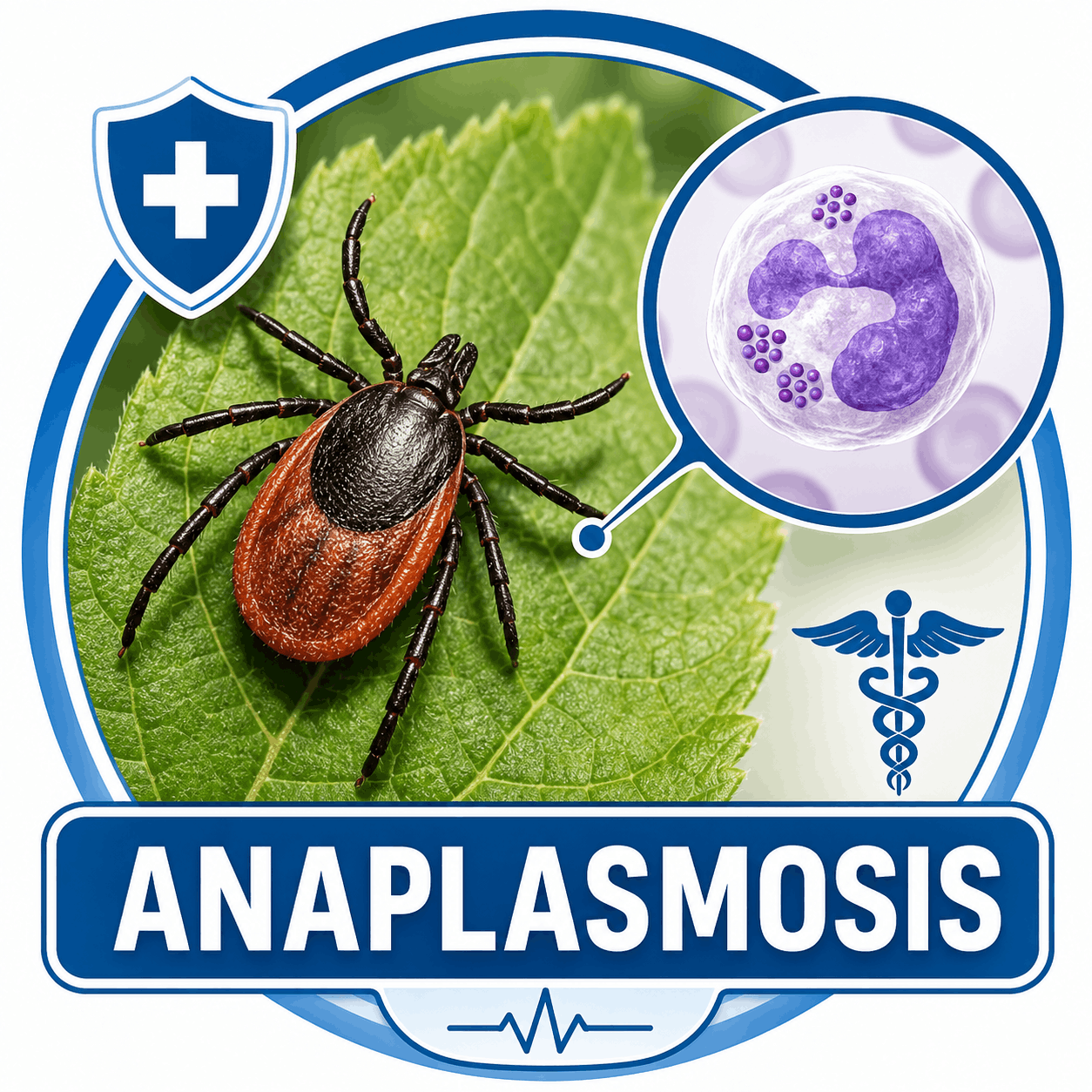
Anaplasmosis: A Tick-Borne Bacterial Disease
What Is Anaplasmosis?
Anaplasmosis is a tick-borne disease caused by the bacterium Anaplasma phagocytophilum. It is also known as human granulocytic anaplasmosis.
In the United States, anaplasmosis is most commonly reported in the Northeast and upper Midwest. CDC notes that the geographic range of reported anaplasmosis cases appears to be expanding throughout parts of the Midwest and East Coast.
Anaplasmosis most often causes mild or moderate illness, but severe disease can occur. Early recognition and prompt antibiotic treatment are important because delayed treatment increases the risk of severe illness.
Anaplasmosis is a nationally notifiable condition in the United States.
How Do Ticks Spread Anaplasmosis?
Anaplasmosis is most commonly transmitted to people through the bite of a tick infected with Anaplasma phagocytophilum.
In the United States, the primary tick vectors are:
- Blacklegged tick or deer tick (Ixodes scapularis) — widely distributed across the eastern United States
- Western blacklegged tick (Ixodes pacificus) — distributed along the West Coast
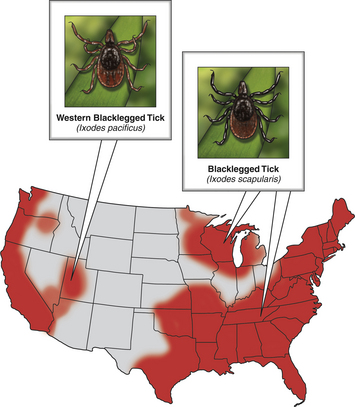
The blacklegged tick can also transmit several other pathogens, including those that cause Lyme disease, babesiosis, hard tick relapsing fever, Powassan virus disease, and Ehrlichia muris eauclairensis infection.
Because blacklegged ticks can carry more than one human pathogen, coinfections can occur. Coinfections involving anaplasmosis and other tick-borne infections, including Lyme disease and babesiosis, have been reported.
Although tick bites are the primary route of transmission, rare cases associated with blood transfusion have also been reported.
Cases can occur during any month of the year, but most reported U.S. cases occur during June through November. The largest seasonal peak typically occurs during June and July, with a smaller peak during October and November.
What Are the Symptoms of Anaplasmosis?
Symptoms typically begin 5–14 days after the bite of an infected tick, although many people do not remember being bitten.
Early signs and symptoms may include:
- Fever
- Chills
- Severe headache
- Malaise, or feeling generally unwell
- Muscle aches
- Nausea
- Vomiting
- Diarrhea
- Loss of appetite

Common laboratory abnormalities may include:
- Low white blood cell count (leukopenia)
- Low platelet count (thrombocytopenia)
- Elevated liver enzymes (aminotransferases)
Normal laboratory results, however, do not completely rule out anaplasmosis.
Does Anaplasmosis Cause a Rash?
A rash is uncommon in people with anaplasmosis. CDC notes that when a rash is present, it may indicate a coinfection with Lyme disease or another tick-borne disease.
Nervous-system involvement is also uncommon or rarely reported.
Can Anaplasmosis Become Serious?
Yes. Severe illness is rare, but it can occur, particularly when treatment is delayed or a person does not receive appropriate medical care.
Severe anaplasmosis may involve:
- Kidney failure
- Respiratory failure
- Peripheral neuropathies
- Disseminated intravascular coagulation (DIC)-like clotting abnormalities
- Rhabdomyolysis, or breakdown of muscle tissue
- Hemorrhage or serious bleeding
In rare cases, severe anaplasmosis can be fatal.
Risk factors for severe disease include:
- Delayed antibiotic treatment
- Being younger than 5 years of age
- Being older than 65 years of age
- Having an immunocompromising condition, such as advanced HIV infection, receiving chemotherapy, or taking certain immune-suppressing medications
A person’s age, coexisting medical conditions, immune status, and how quickly treatment begins can also affect the clinical course of the illness.
How Is Anaplasmosis Diagnosed?
Anaplasmosis can be difficult to diagnose, particularly during the early stages of illness, because its symptoms can resemble those of other tick-borne diseases and other infections.
A known tick bite is not required for a healthcare provider to consider anaplasmosis because many people do not remember being bitten.
Healthcare providers may consider:
- Signs and symptoms
- Recent tick exposure
- Exposure to wooded, brushy, or grassy areas where ticks may be present
- Geographic location and travel history
- Blood-count and liver-enzyme abnormalities
- Specialized laboratory testing
Treatment should be started promptly when anaplasmosis is clinically suspected and should not be delayed while waiting for laboratory test results.
PCR Testing
A polymerase chain reaction (PCR) test performed on whole blood is most sensitive during the first week of illness.
PCR sensitivity decreases after appropriate antibiotic treatment begins and can decrease within 48 hours after administration of appropriate antibiotics.
A positive PCR result provides clear evidence of active infection, but a negative PCR result does not completely rule out anaplasmosis. Treatment should not be withheld solely because of a negative PCR result when the disease is clinically suspected.
Antibody Testing
The reference-standard serologic test for anaplasmosis is the indirect fluorescent antibody (IFA) test for immunoglobulin G (IgG) using Anaplasma phagocytophilum antigen.
CDC recommends testing paired blood samples when serologic confirmation is needed:
- An acute sample collected during the first two weeks of illness
- A convalescent sample collected 2–10 weeks later
Serologic confirmation is demonstrated by a fourfold increase in IgG antibody titer between the acute and convalescent samples.
Antibody tests are frequently negative during the first week of illness, so a single negative early antibody test cannot reliably exclude anaplasmosis.
A single acute antibody result cannot by itself confirm anaplasmosis. However, CDC classifies a single IgG titer of 1:128 or greater as supportive laboratory evidence.
IgM antibody testing is not considered reliable for diagnosing anaplasmosis and should not be used as an indicator of recent infection.
Treatment should never be delayed while waiting for laboratory results when anaplasmosis is suspected.
How Is Anaplasmosis Treated?
Doxycycline is the treatment of choice for anaplasmosis in adults and children of all ages.
Treatment is most effective at preventing severe complications when doxycycline is started early in the course of illness.
When appropriately treated with doxycycline, fever generally subsides within 24–48 hours.
CDC recommends starting doxycycline when anaplasmosis is clinically suspected rather than waiting for confirmatory laboratory test results.
CDC does not recommend antibiotic prophylaxis after a tick bite specifically to prevent anaplasmosis. People who have been bitten by a tick should instead monitor for signs and symptoms and contact a healthcare provider if illness develops.
How Can Anaplasmosis Be Prevented?
There is currently no vaccine to prevent anaplasmosis. Reducing exposure to ticks and preventing tick bites are important ways to lower the risk of infection.
CDC recommends steps such as:
- Avoiding wooded and brushy areas with high grass and leaf litter when possible
- Walking in the center of trails
- Using an EPA-registered insect repellent according to label directions
- Treating clothing and outdoor gear with products containing 0.5% permethrin, according to label directions
- Checking clothing, outdoor gear, pets, and your body for ticks after spending time outdoors
- Showering within two hours after returning indoors
- Promptly removing attached ticks
- Removing leaf litter and clearing tall grasses and brush around the home
Showering within two hours of coming indoors has been shown to reduce the risk of Lyme disease and may also help reduce the risk of other tick-borne diseases.
When Should You Contact a Healthcare Provider?
Contact a healthcare provider if you develop fever, headache, chills, muscle aches, gastrointestinal symptoms, rash, or other signs of illness after a tick bite or after spending time in an area where ticks are common.
Because early treatment can help prevent severe illness, tell your healthcare provider about any recent tick bites, outdoor exposure in tick habitat, or travel to areas where anaplasmosis occurs.
If symptoms develop after a known tick bite, seek medical evaluation promptly.
Educational Disclaimer
This information is provided for educational purposes only and is not intended to replace professional medical advice, diagnosis, or treatment.
If you develop a fever, rash, unusual fatigue, headache, body aches, nausea, vomiting, or other concerning symptoms following a known or possible tick exposure, contact a qualified healthcare provider and mention the potential tick exposure.