
Tick-Borne Encephalitis (TBE): A Serious Tick-Borne Viral Disease
What Is Tick-Borne Encephalitis?
Tick-borne encephalitis (TBE) is a viral disease caused by tick-borne encephalitis virus (TBEV).
The virus is transmitted primarily through the bite of an infected tick and occurs in focal areas extending from western and northern Europe through northern and eastern Asia.
Many people infected with TBE virus develop no symptoms. When illness occurs, it can range from a relatively mild febrile illness to serious disease involving the brain, spinal cord, or membranes surrounding the brain and spinal cord.
Severe TBE can include:
- Meningitis — inflammation of the membranes surrounding the brain and spinal cord
- Encephalitis — inflammation of the brain
- Meningoencephalitis — inflammation involving the brain and surrounding membranes
- Meningoencephalomyelitis — inflammation that can also involve the spinal cord
Severe disease can result in lasting neurological problems and, in some cases, death.
Importantly, according to CDC, TBE virus is not found in the United States. For U.S. residents, TBE is primarily a concern for people traveling to or living in areas of Europe and Asia where the virus occurs.
What Causes Tick-Borne Encephalitis?
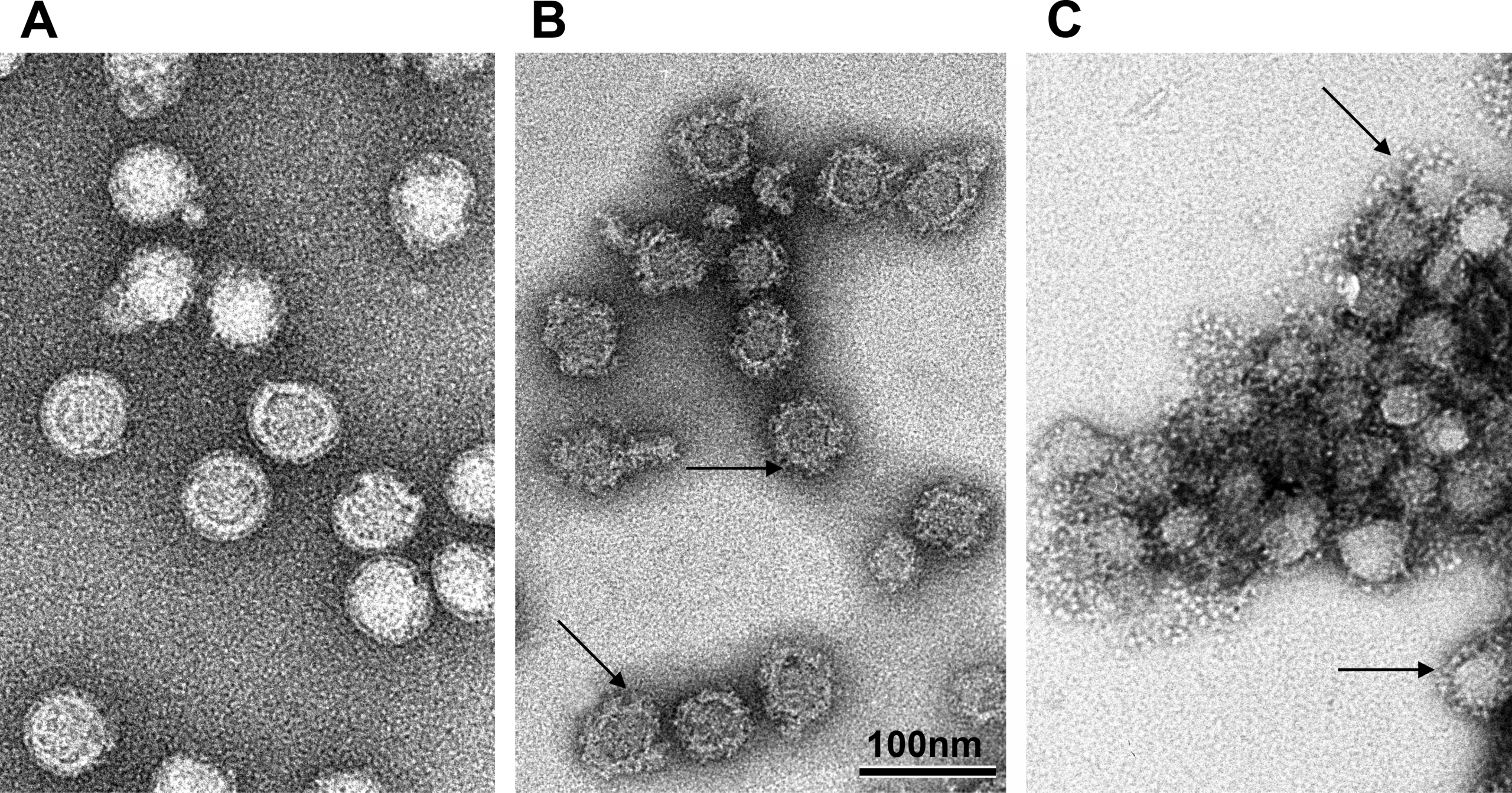
TBE is caused by tick-borne encephalitis virus, a single-stranded RNA virus in the genus Flavivirus.
TBE virus is closely related to Powassan virus, another tick-borne flavivirus that occurs in North America.
CDC describes three main TBE virus subtypes:
- European
- Siberian
- Far Eastern
Genomic studies have also described additional subtype viruses, including the Baikalian and Himalayan subtypes.
The principal subtypes have different geographic distributions and can differ in their typical clinical severity.
How Is Tick-Borne Encephalitis Spread?
TBE virus is transmitted to people primarily through the bite of an infected hard tick of the genus Ixodes.
The principal vectors are:
Castor Bean Tick / European Sheep Tick
Ixodes ricinus
This tick is the primary vector associated with the European subtype of TBE virus.
Taiga Tick
Ixodes persulcatus
This tick is an important vector of the Siberian and Far Eastern subtypes.
Ticks become infected while feeding on infected vertebrate hosts, particularly small rodents. The virus can then be maintained in tick populations and transmitted during future blood meals.
Ticks play an important role both as vectors and reservoirs of TBE virus in nature.
Can TBE Spread Through Food?
Yes, although this is much less common than transmission through a tick bite.
People can occasionally become infected after consuming unpasteurized milk or cheese from infected:
- Goats
- Sheep
- Cows
Transmission from goats has been reported most often among food-associated cases.
People traveling in TBE-risk areas should avoid consuming raw or unpasteurized dairy products from these animals.
Can TBE Spread From Person to Person?
Ordinary person-to-person transmission does not normally occur.
Rare transmission has been reported through:
- Blood transfusion
- Solid-organ transplantation
- Breastfeeding
Other uncommon routes include:
- Laboratory exposure to TBE virus
- Slaughtering infected animals
These routes are rare and are not how most people acquire TBE.
Where Does Tick-Borne Encephalitis Occur?
TBE occurs in focal geographic areas extending from western and northern Europe through northern and eastern Asia.
Risk can vary dramatically within the same country and from year to year. A country may contain areas with substantial transmission, areas with very low risk, and areas where TBE virus has not been detected.
CDC therefore advises interpreting country-level risk information cautiously.
Countries with important recognized areas of TBE transmission include parts of:
- Central and eastern Europe
- Scandinavia and the Baltic region
- Russia
- China
- Mongolia
- Other portions of northern and eastern Asia
In recent years, CDC’s Yellow Book identifies the Baltic states—Estonia, Latvia, and Lithuania—as well as Czechia and Slovenia among the European countries regularly reporting relatively high incidence.
Travelers should use current destination-specific information rather than assuming that an entire country carries the same level of risk.
Is the Geographic Range of TBE Changing?
CDC’s 2026 Yellow Book notes that during approximately the past 30 years, recognized TBE virus transmission has expanded into some new geographic areas, farther west and north, and to higher elevations.
CDC emphasizes that these changes likely result from a complex combination of climatic, ecological, human, and socioeconomic factors, rather than any single cause.
This expanding geographic recognition is one reason travelers should check current TBE risk information before visiting outdoor destinations in Europe or Asia.
Does Tick-Borne Encephalitis Occur in the United States?
TBE virus is not found in the United States, and locally acquired TBE is not recognized in the United States.
However, U.S. residents can become infected while traveling or living in areas of Europe or Asia where TBE virus circulates.
According to the CDC 2026 Yellow Book:
- 12 TBE cases were reported among U.S. civilian travelers during 2000–2023.
- Another 12 cases were reported among U.S. military personnel or their dependents living in Germany during 2012–2021.
The overall risk for most U.S. travelers remains very low, but risk can increase substantially depending on destination, season, outdoor activities, and exposure to tick habitat.
When Is TBE Risk Highest?
TBE transmission occurs primarily during the warmer months when ticks are most active.
CDC identifies the main transmission season as approximately:
April through November
In European countries, peak transmission generally occurs during the warm, humid summer months, particularly June through August.
Seasonal patterns vary somewhat according to location and environmental conditions.
Who Is at Greater Risk?
Travelers may have greater risk when visiting a TBE-endemic area and participating in outdoor activities in or near forests or forest edges.
Activities associated with greater tick exposure can include:
- Hiking
- Camping
- Cycling in woodland areas
- Hunting
- Fishing
- Birdwatching
- Collecting berries or mushrooms
- Forestry work
- Farming
- Field research
- Military training in forested areas
Risk depends on a combination of:
- Destination
- Specific geographic location
- Season
- Outdoor activities
- Frequency and duration of tick exposure
- Length of travel or residence
CDC emphasizes that a traveler can have meaningful exposure even during a relatively short trip if outdoor tick exposure is frequent.
What Are the Symptoms of TBE?
Most infections do not cause symptoms.
CDC’s 2026 Yellow Book estimates that approximately 3 out of every 4 TBE virus infections are asymptomatic.
When symptoms occur, the incubation period is usually approximately:
7–14 days after a tick bite
CDC’s public guidance describes a range of approximately 4–28 days, while the CDC Yellow Book cites a broader published range of 2–28 days. Therefore, the usual 7–14-day period should not be treated as an absolute range.
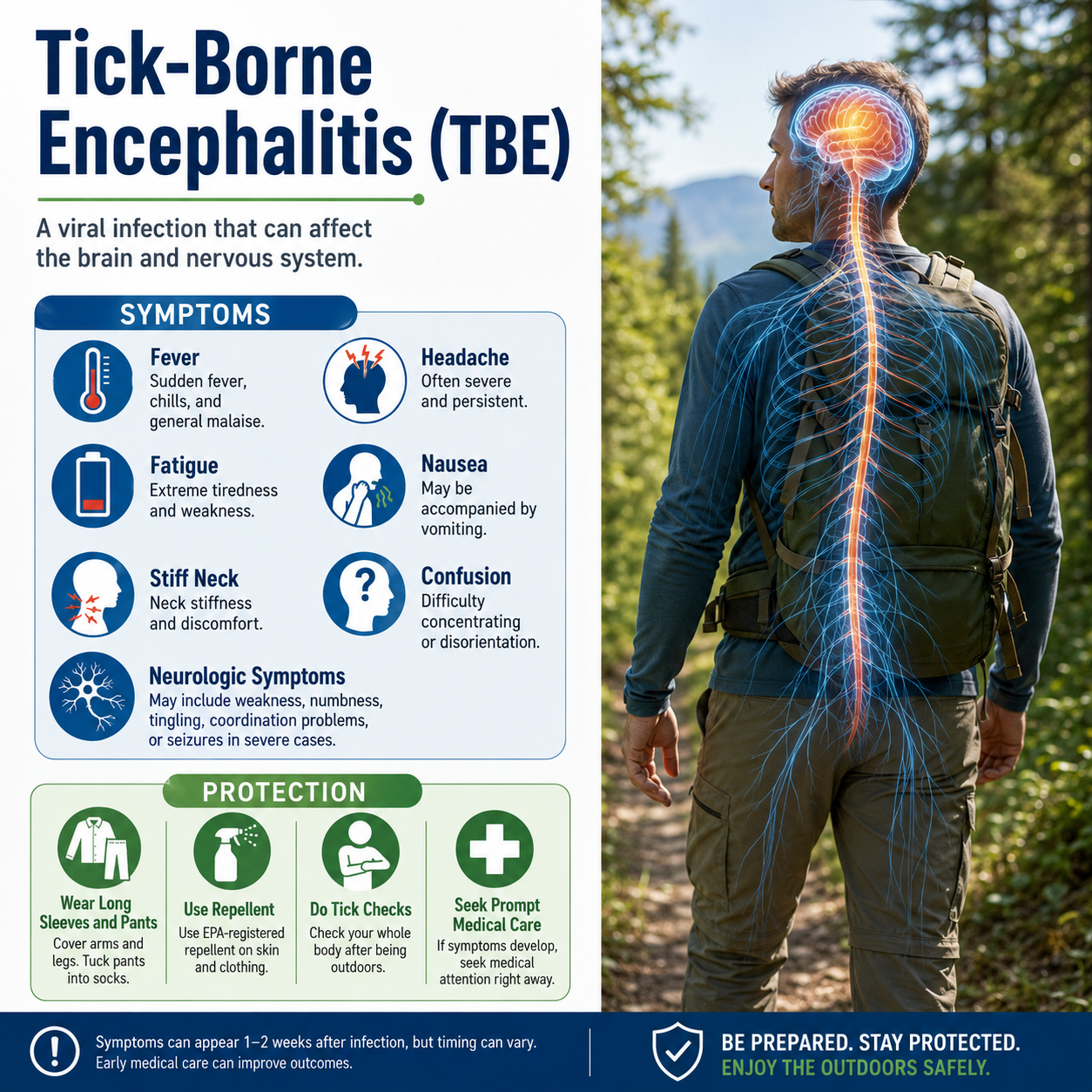
Initial symptoms can include:
- Fever
- Headache
- Vomiting
- Weakness
- Fatigue or malaise
- Muscle aches
- Loss of appetite
- Nausea
Some people experience only a febrile illness and recover.
Others develop more serious disease involving the central nervous system.
What Is Biphasic TBE?
TBE can have either a monophasic or biphasic course.
A biphasic illness is particularly associated with infection by the European subtype.
Phase 1: Initial Febrile Illness
Symptoms can include:
- Fever
- Headache
- Fatigue or malaise
- Muscle aches
- Loss of appetite
- Nausea
- Vomiting
This phase usually lasts several days.
Temporary Improvement
Symptoms can then improve or disappear.
The person may feel relatively well for several days, commonly around a week.
Phase 2: Neurological Disease
In some patients, illness returns with involvement of the brain, spinal cord, or surrounding membranes.
The second phase can be substantially more serious.
What Are the Symptoms of Severe TBE?
Neurological TBE can cause symptoms such as:
- Severe headache
- Stiff neck or other meningeal signs
- Confusion or altered mental status
- Loss of coordination
- Difficulty speaking
- Cognitive problems
- Weakness of the arms or legs
- Tremors
- Seizures
- Cranial nerve weakness
- Muscle rigidity
- Partial paralysis
Severe illness can involve meningitis, encephalitis, or inflammation affecting the spinal cord.
Anyone who develops significant neurological symptoms after recent travel to a TBE-risk area should receive prompt medical evaluation.
Can TBE Cause Long-Term Complications?
Yes.
Some people who develop neurological TBE experience persistent or permanent neurological or cognitive problems.
Possible complications include:
- Persistent weakness
- Limb weakness or paralysis
- Problems with balance or coordination
- Tremors
- Difficulty concentrating
- Cognitive problems
- Other lasting neurological impairment
The frequency of long-term complications varies according to the viral subtype, study population, age, severity of initial illness, and other factors.
CDC reports substantial variation in neurological sequelae among different TBE subtypes and geographic populations.
Disease severity generally increases with age, and the Far Eastern subtype has historically been associated with more severe disease than the European subtype.
Can TBE Be Fatal?
Yes.
TBE can be fatal, particularly when severe neurological disease develops.
The likelihood of severe or fatal disease can vary according to factors such as:
- TBE virus subtype
- Patient age
- Clinical form and severity of disease
- Immune status
- Differences in surveillance, diagnosis, and access to medical care
CDC describes the European subtype as generally producing less severe disease than the Far Eastern subtype.
Older age is an important risk factor for more severe illness and poorer outcomes.
How Is Tick-Borne Encephalitis Diagnosed?
Healthcare providers consider:
- Signs and symptoms
- Recent travel history
- Possible tick exposure
- Consumption of unpasteurized dairy products
- Laboratory testing
Serologic testing is the primary method used to diagnose TBE.
Evidence of recent infection is usually based on detecting TBE virus-specific IgM antibodies in blood or cerebrospinal fluid (CSF).
Because TBE virus is related to other flaviviruses, antibody tests can sometimes cross-react.
One particularly relevant example for U.S. testing is Powassan virus, another tick-borne flavivirus.
TBE virus-specific neutralizing antibody testing can therefore be used to confirm a positive IgM result.
Virus isolation or detection of viral RNA by RT-PCR can sometimes diagnose infection, particularly early in illness, but these tests are rarely positive once neurological disease is established and are not the routine primary diagnostic method.
In the United States, healthcare providers can contact their state or local health department for assistance with specialized TBE testing.
How Is TBE Treated?
There is currently no specific antiviral treatment for TBE.
Treatment is primarily supportive and directed at controlling symptoms and complications.
For mild illness, supportive care can include:
- Rest
- Fluids
- Appropriate medications for pain or fever
People with severe neurological disease often require hospitalization.
Hospital care may include:
- Intravenous fluids
- Management of nausea and vomiting
- Treatment and monitoring of seizures
- Monitoring for increased pressure or swelling in the brain
- Respiratory support when necessary
- Other intensive supportive care
Because TBE is caused by a virus, antibiotics used to treat bacterial tick-borne infections do not treat TBE.
Is There a Vaccine for Tick-Borne Encephalitis?
Yes.
One TBE vaccine, TICOVAC, is licensed and available in the United States.
TICOVAC:
- Is an inactivated vaccine
- Was FDA-approved in August 2021
- Is approved for people 1 year of age and older
- Uses a 3-dose primary vaccination series
TBE vaccines have been used in Europe for many years.
Who Should Get the TBE Vaccine?
CDC and ACIP recommend TBE vaccination for people who are moving or traveling to a TBE-endemic area and expect extensive exposure to ticks based on their outdoor activities and itinerary.
Vaccination may also be considered for travelers or people moving to an endemic area who might participate in outdoor activities where ticks are likely to be found.
The decision can take into account:
- Destination
- Specific geographic areas being visited
- Season
- Planned outdoor activities
- Duration and frequency of tick exposure
- Future travel to TBE-endemic areas
- Risk factors for severe disease
- Individual tolerance for risk
The risk of TBE remains very low for most U.S. travelers.
Laboratory Workers
ACIP also recommends TBE vaccination for laboratory workers with potential occupational exposure to TBE virus.
Laboratory workers with potential exposure to TBE virus should receive the standard 3-dose primary series and one booster dose. If potential occupational exposure continues after these doses, an institutional biosafety committee should provide guidance regarding any need for periodic TBE virus-specific neutralizing antibody testing.
This recommendation does not apply to people simply handling ordinary routine clinical specimens; occupational risk should be assessed by the appropriate institutional biosafety program.
What Is the TBE Vaccine Schedule?
TICOVAC uses a 3-dose primary series.
Adults Age 16 Years and Older
- Dose 1: Initial dose
- Dose 2: 14 days to 3 months after Dose 1
- Dose 3: 5–12 months after Dose 2
Children Age 1–15 Years
- Dose 1: Initial dose
- Dose 2: 1–3 months after Dose 1
- Dose 3: 5–12 months after Dose 2
For all age groups, ACIP states that the 3-dose primary vaccination series should be completed at least 1 week before potential exposure to TBE virus.
For travelers or others with ongoing or repeated exposure, a booster dose may be given at least 3 years after completion of the primary series when continued exposure or re-exposure is expected.
Laboratory workers with potential occupational exposure have specific ACIP booster guidance, as described above.
Because completing the full series takes time, travelers considering TBE vaccination should speak with a healthcare provider well before travel.
How Can TBE Be Prevented?
Vaccination is only one part of TBE prevention.
Travelers should also take precautions to prevent tick bites:
- Use an EPA-registered insect repellent according to label directions.
- Wear long-sleeved shirts and long pants when appropriate.
- Treat clothing and outdoor gear with products containing 0.5% permethrin, or use appropriately pretreated clothing and gear.
- Avoid brushing against dense vegetation when practical.
- Perform thorough tick checks after outdoor activities.
- Remove attached ticks promptly.
- Be particularly careful in forests, forest edges, and areas with dense low vegetation in TBE-risk regions.
- Avoid unpasteurized milk and cheese from goats, sheep, or cows in affected areas.
- Discuss TBE vaccination with a healthcare provider if travel plans could result in meaningful exposure to infected ticks.
How Quickly Can TBE Virus Be Transmitted?
This is an important difference between TBE and some bacterial tick-borne infections.
TBE virus may be transmitted early during tick feeding.
CDC’s 2026 Yellow Book states that laboratory experiments suggest an infected tick can transmit TBE virus to an animal within minutes.
Therefore, the commonly discussed 24-hour attachment concept used for Lyme disease should not be applied to TBE.
Prompt tick removal is still important, but removing a tick quickly cannot be assumed to completely eliminate the possibility of TBE virus transmission.
How to Remove an Attached Tick
If you find an attached tick, CDC recommends removing it as soon as possible.
- Use clean, fine-tipped tweezers to grasp the tick as close to the skin’s surface as possible.
- Pull the tick away from the skin with steady, even pressure.
- Do not twist or jerk the tick.
- If mouthparts remain and can be removed easily with tweezers, remove them. If they cannot be removed easily, leave them alone and allow the skin to heal.
- Clean the bite area and your hands thoroughly with soap and water, rubbing alcohol, or hand sanitizer.
- Check the rest of the body for additional ticks and remove any that are attached.
Do not use petroleum jelly, heat, nail polish, or other substances to try to make an attached tick detach.
Because TBE virus can potentially be transmitted early during feeding, preventing tick bites remains especially important.
When Should You Seek Medical Care?
Contact a healthcare provider if you develop illness after:
- A tick bite while traveling in a TBE-risk area
- Spending time in or near forests or other tick habitats in an affected area
- Consuming unpasteurized dairy products in an area where TBE occurs
Tell the healthcare provider:
- Where you traveled
- When you traveled
- What outdoor activities you participated in
- Whether you remember a tick bite
- Whether you consumed unpasteurized dairy products
A remembered tick bite is not required for TBE to be considered.
CDC’s 2026 Yellow Book notes that approximately 30% of patients with TBE do not recall a tick bite.
Seek urgent medical attention for symptoms such as:
- Severe headache
- Stiff neck
- Confusion or altered mental status
- Significant weakness
- Loss of coordination
- Difficulty speaking
- Seizures
- Paralysis
- Loss of consciousness
- Difficulty breathing
Key Facts About Tick-Borne Encephalitis
- TBE is a viral disease transmitted primarily by infected ticks.
- TBE virus belongs to the Flavivirus genus and is related to Powassan virus.
- CDC describes European, Siberian, and Far Eastern as the three main TBE virus subtypes; additional subtype viruses have also been described.
- TBE occurs in focal areas extending from western and northern Europe through northern and eastern Asia.
- TBE virus is not found in the United States, and locally acquired TBE is not recognized in the United States.
- U.S. cases primarily involve international travelers or people residing abroad who acquired infection in TBE-risk areas.
- The principal tick vectors are Ixodes ricinus and Ixodes persulcatus.
- Transmission risk is generally greatest during April through November.
- Approximately 3 out of 4 infections are asymptomatic, according to CDC’s 2026 Yellow Book.
- When symptoms occur, the incubation period is usually 7–14 days, although a broader range has been reported.
- Some patients experience a biphasic illness.
- Severe TBE can cause meningitis, encephalitis, spinal cord involvement, seizures, weakness, or paralysis.
- Severe disease can result in lasting neurological complications or death.
- There is no specific antiviral treatment; treatment is supportive.
- TICOVAC is the TBE vaccine available in the United States and is approved for people 1 year of age and older.
- CDC and ACIP recommend vaccination for certain travelers with extensive expected tick exposure and recommend it for laboratory workers with potential occupational exposure to TBE virus.
- The primary vaccine series consists of 3 doses and should be completed at least 1 week before potential exposure.
- TBE can occasionally be acquired through unpasteurized dairy products from infected goats, sheep, or cows.
- TBE virus can potentially be transmitted very early during tick feeding, so a Lyme disease-style 24-hour attachment rule should not be applied.
- Preventing tick bites, avoiding unpasteurized dairy products in affected areas, and receiving vaccination when indicated are the primary prevention strategies.
Educational Disclaimer
This information is provided for educational purposes only and is not a substitute for professional medical advice, diagnosis, vaccination advice, or treatment.
If you develop fever, severe headache, vomiting, weakness, stiff neck, confusion, loss of coordination, difficulty speaking, seizures, paralysis, or other concerning neurological symptoms after known or possible tick exposure or after consuming unpasteurized dairy products while traveling in an area where tick-borne encephalitis occurs, contact a qualified healthcare provider and mention your travel history and potential exposure.
Seizures, severe confusion, paralysis, difficulty breathing, loss of consciousness, or rapidly worsening neurological symptoms require immediate emergency medical attention.

