Rickettsia parkeri Rickettsiosis: A Tick-Borne Bacterial Disease
What Is Rickettsia parkeri Rickettsiosis?
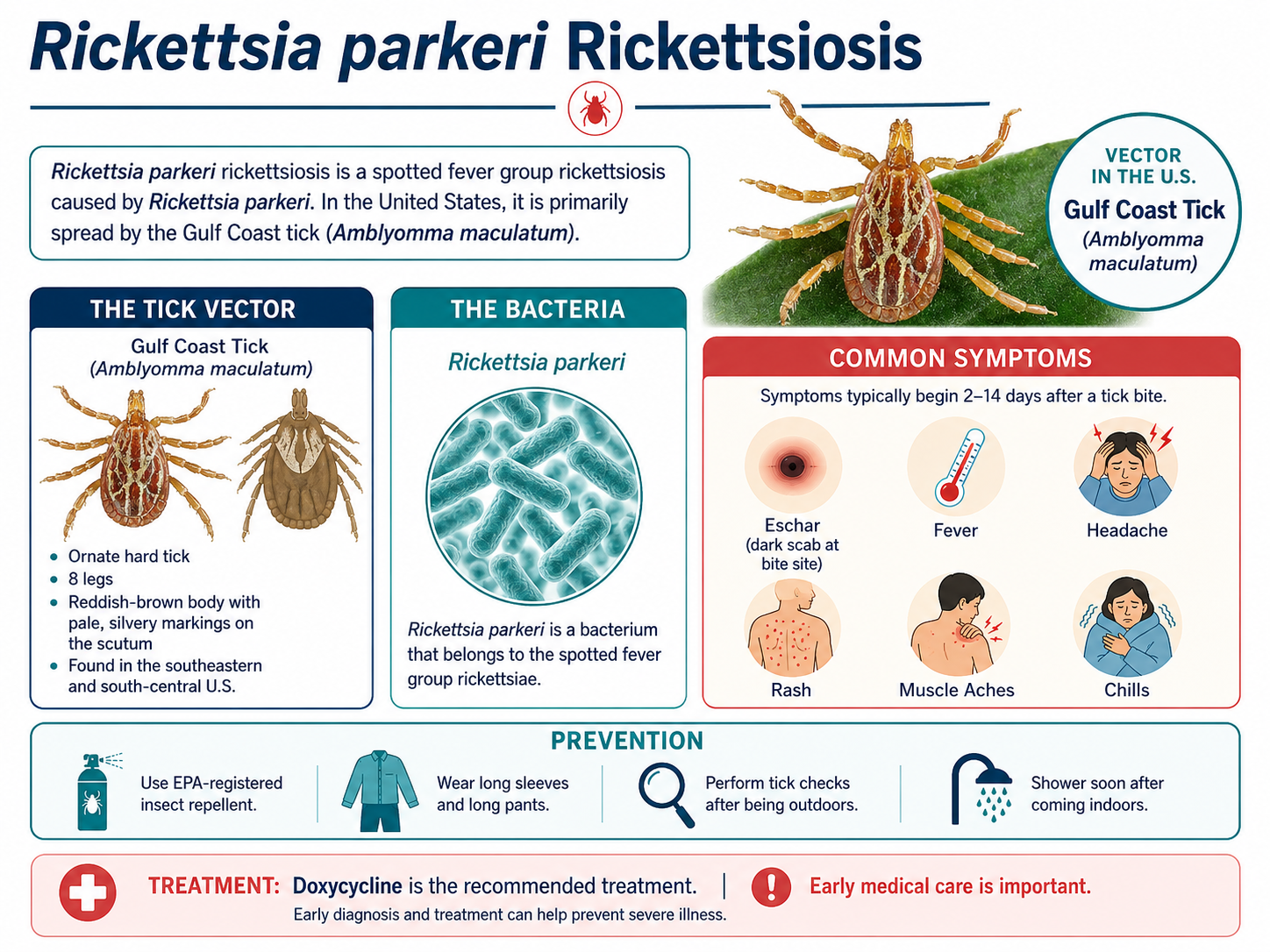
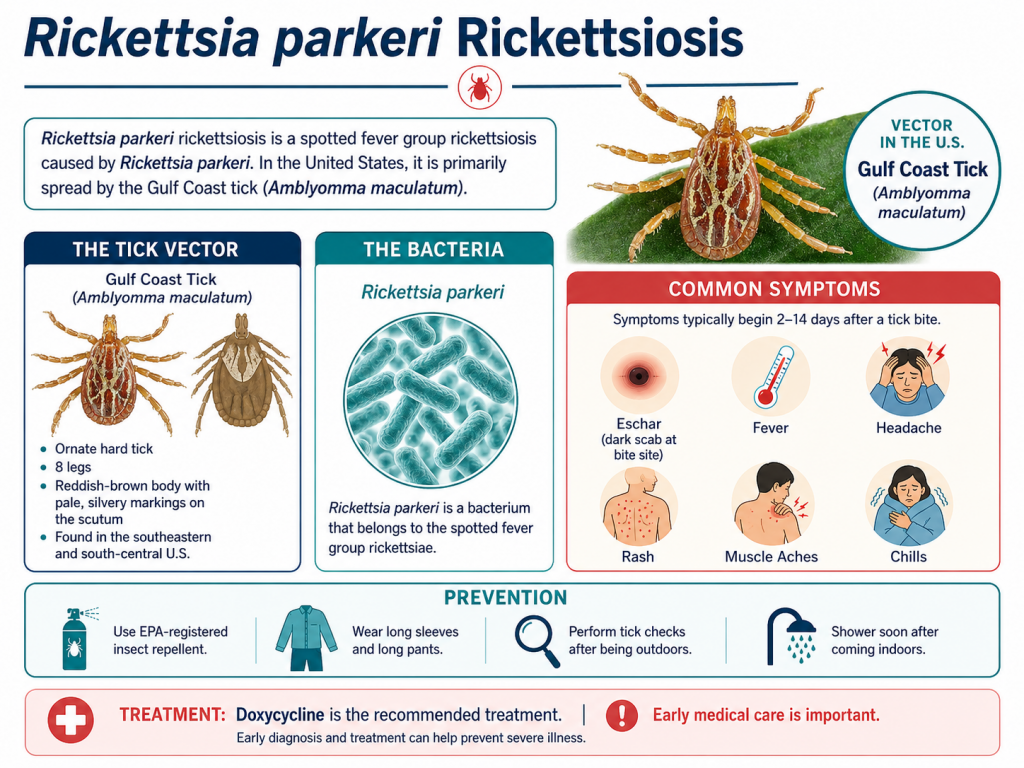
Rickettsia parkeri rickettsiosis is a tick-borne bacterial disease caused by Rickettsia parkeri, a bacterium belonging to the spotted fever group Rickettsia.
In the United States, the principal vector is the Gulf Coast tick (Amblyomma maculatum).
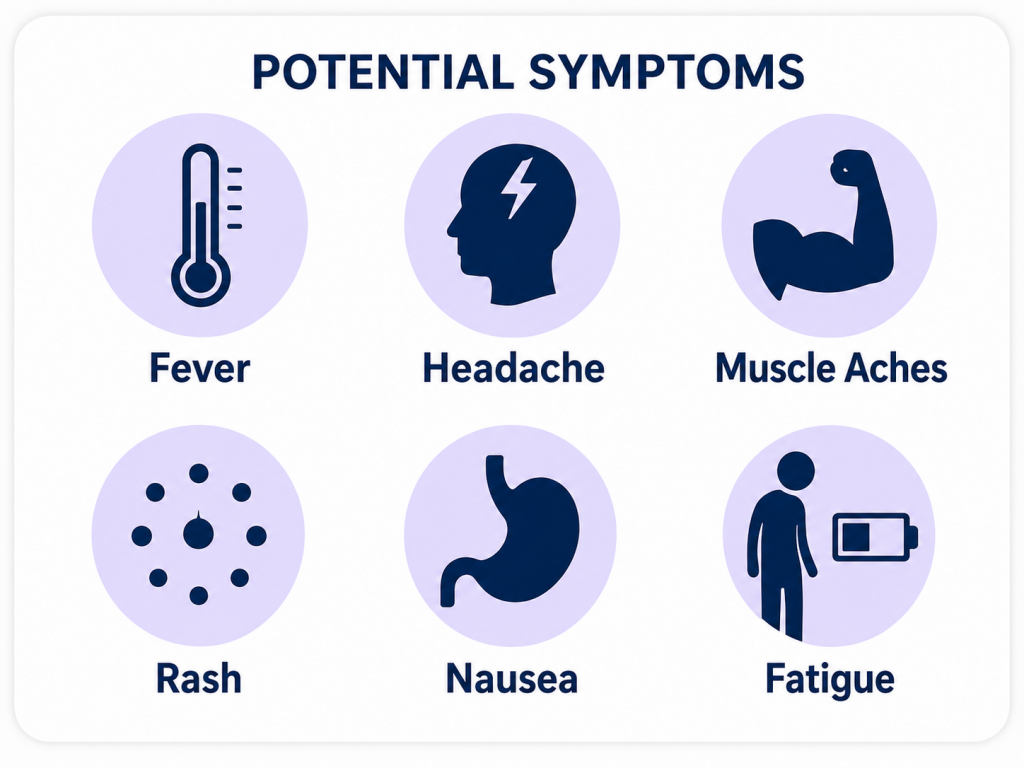
- parkeri rickettsiosis is one of several spotted fever rickettsioses that occur in the United States. It can cause symptoms that overlap with Rocky Mountain spotted fever (RMSF), including fever, headache, muscle aches, and rash.
However, R. parkeri rickettsiosis is generally less severe than RMSF and is characteristically associated with an eschar, an ulcerated, scab-like lesion that develops at the site of the infected tick bite.
How Is Rickettsia parkeri Rickettsiosis Spread?
People become infected through the bite of a tick carrying Rickettsia parkeri.
In the United States, the principal vector is the:
Gulf Coast Tick
Amblyomma maculatum
Adult Gulf Coast ticks bite people and have been associated with transmission of R. parkeri to humans.
People may encounter Gulf Coast ticks while spending time outdoors in areas where these ticks occur, particularly in grassy habitats.
A person may not always remember being bitten by a tick, so recent outdoor activity, geographic location, and travel history can be important when evaluating symptoms.
Which Ticks Spread Rickettsia parkeri Rickettsiosis?
The Gulf Coast tick (Amblyomma maculatum) is the principal vector of R. parkeri in the United States.
CDC describes the Gulf Coast tick as occurring primarily in the southeastern United States, with focal populations in the Northeast, Midwest, and Southwest.
An unusual situation has also been documented in southern Arizona. A 2016 CDC Emerging Infectious Diseases report described one confirmed and one probable case of R. parkeri rickettsiosis acquired after bites from ticks identified as Amblyomma triste, a species closely related to the Gulf Coast tick.
For general U.S. public-health education, however, the Gulf Coast tick remains the principal vector to emphasize.

Where Does Rickettsia parkeri Rickettsiosis Occur?
Risk of R. parkeri rickettsiosis is associated with areas where infected, human-biting Amblyomma ticks occur.
Historically, Gulf Coast ticks occurred predominantly in coastal regions of the southeastern United States.
Their recognized distribution has expanded. CDC currently describes Gulf Coast ticks as occurring primarily in the:
- Southeast
with focal populations in the:
- Northeast
- Midwest
- Southwest
Recent surveillance and research have documented R. parkeri-infected Gulf Coast ticks in parts of the Northeast, including:
- Connecticut
- New York
- New Jersey
A confirmed human case of R. parkeri rickettsiosis was reported in Connecticut after a Gulf Coast tick bite.
In New York City, Gulf Coast ticks are established on Staten Island, and NYC Health states that they may carry R. parkeri.
Recent surveillance has also documented established Gulf Coast tick populations and R. parkeri-infected ticks in Ohio.
How Soon Do Symptoms Appear?
Symptoms of R. parkeri rickettsiosis generally develop:
2–10 days after the bite of an infected tick.
CDC’s detailed clinical guidance describes a median onset of approximately 5 days after the bite.
An eschar is typically one of the earliest manifestations of the disease.
Fever and other symptoms often develop within several days after the eschar appears.
What Is an Eschar?
An eschar is one of the most characteristic signs of R. parkeri rickettsiosis.
It develops at the site where an infected tick has bitten the skin.
An eschar may begin as a small bump or lesion and develop into an ulcerated area covered by a brown or black crust, often surrounded by redness.
Eschars usually develop within a few days to about one week after the bite of an infected tick.
They may be:
- Dark or black in the center
- Crusted or scab-like
- Ulcerated
- Surrounded by a red halo
Eschars may be nontender or only mildly tender and can sometimes be overlooked, particularly if they develop in a difficult-to-see location.
The presence of an eschar can be helpful when distinguishing R. parkeri rickettsiosis from RMSF because eschars are uncommon in Rocky Mountain spotted fever.
What Are the Symptoms of Rickettsia parkeri Rickettsiosis?
People with R. parkeri rickettsiosis typically develop an eschar, followed by symptoms that may include:
- Fever
- Headache
- Muscle aches
- Rash
Rash
The rash associated with R. parkeri rickettsiosis is often described as maculopapular or vesicular/vesiculopapular.
It commonly involves the:
- Trunk
- Arms
- Legs
The rash may also involve the palms of the hands and soles of the feet.
Swollen Lymph Nodes
Regional lymphadenopathy, meaning swollen lymph nodes near the area of the infected tick bite, is detected in approximately 25% of patients, according to CDC clinical guidance.
Gastrointestinal Symptoms
Gastrointestinal symptoms, such as nausea or vomiting, are considered rare with R. parkeri rickettsiosis.
How Is Rickettsia parkeri Rickettsiosis Different From Rocky Mountain Spotted Fever?
parkeri rickettsiosis and Rocky Mountain spotted fever (RMSF) are both spotted fever rickettsioses and can
Both may cause:
- Fever
- Headache
- Muscle aches
- Rash
However, there are important differences.
Rickettsia parkeri Rickettsiosis
- An eschar is characteristic and occurs in nearly all classically described cases.
- Illness is generally less severe than RMSF.
- Rash may be maculopapular or vesicular/vesiculopapular.
- Regional lymph-node swelling may occur.
- Gastrointestinal symptoms are rare.
- Severe illness appears to be uncommon, although more substantial illness has occasionally been reported.
Rocky Mountain Spotted Fever
- Eschars are uncommon.
- Disease can progress rapidly.
- Severe complications and death can occur.
- Prompt treatment with doxycycline is critical.
Because these illnesses can be difficult to distinguish during the early stages, healthcare providers should not delay treatment when a spotted fever rickettsiosis—particularly RMSF—is suspected.
Can Rickettsia parkeri Rickettsiosis Become Serious?
parkeri rickettsiosis is generally considered less severe than RMSF.
CDC describes spotted fever infections other than RMSF as characteristically less severe, with hospitalizations occurring less frequently and no confirmed fatal cases reported among the other spotted fevers covered by its clinical guidance.
Most published cases of R. parkeri rickettsiosis have involved relatively mild illness. However, more substantial illness can occur.
A 2024 report in CDC’s Emerging Infectious Diseases journal described a moderately severe R. parkeri infection in a kidney-transplant recipient in North Carolina during the immediate post-transplant period. The patient recovered after treatment with doxycycline.
Notably, no eschar was identified in that patient, showing that an eschar, although highly characteristic, is not present in every reported case.
Because relatively few R. parkeri cases have been clinically characterized, the complete spectrum and frequency of disease severity are not yet fully defined.
Prompt medical evaluation remains important because R. parkeri rickettsiosis can initially resemble RMSF, which can become life-threatening if appropriate treatment is delayed.
How Is Rickettsia parkeri Rickettsiosis Diagnosed?
Healthcare providers may consider a combination of:
- Symptoms
- Presence of an eschar
- Rash
- Recent tick bite
- Outdoor exposure
- Geographic location
- Travel history
- Laboratory testing
Many people with rickettsial disease do not remember being bitten by a tick, so a known tick bite is not required for the disease to be considered.
Common Laboratory Findings
People with R. parkeri rickettsiosis may have laboratory findings such as:
- Mild leukopenia — a low white blood cell count
- Mildly elevated liver transaminases
- Mild thrombocytopenia — a low platelet count, occurring less frequently
These findings may support clinical suspicion but cannot confirm the diagnosis by themselves.
Laboratory Testing
Several methods may be used to help diagnose spotted fever rickettsioses.
Serologic Testing
The reference standard for serologic diagnosis of spotted fever rickettsiosis is the indirect immunofluorescence antibody (IFA) test.
Antibody testing is often negative early in the illness.
CDC states that approximately 85% of patients do not have detectable antibody titers during the first week of illness. Therefore, a negative antibody test during the first week does not rule out a spotted fever infection.
Diagnosis is typically confirmed by paired acute- and convalescent-phase serum samples demonstrating a fourfold or greater rise in antibody titer.
Acute-phase specimens are generally collected during the first week of illness. CDC states that convalescent-phase samples are generally obtained 2–10 weeks after the illness has resolved.
Important Limitation of Serologic Testing
Spotted fever group Rickettsia species are closely related and share similar antigens.
As a result, commercially available serologic testing generally cannot distinguish R. parkeri infection from RMSF or another spotted fever group rickettsiosis.
Antibodies may also remain elevated for months or longer after an infection has resolved or may reflect previous exposure to antigenically related organisms.
For these reasons, a single antibody titer should not be used by itself to document or exclude a diagnosis or to determine the specific spotted fever group Rickettsia responsible.
PCR, Skin Biopsy, and Eschar Testing
Molecular testing such as polymerase chain reaction (PCR) can detect rickettsial DNA.
Spotted fever group Rickettsia infect cells lining the blood vessels and may not circulate in large numbers in the blood during the first several days of illness.
Therefore, whole-blood specimens can test negative by PCR early in the disease.
When an eschar or rash is present, useful specimens may include:
- A skin biopsy from an eschar or rash lesion
- An eschar swab
PCR can be performed on these specimens.
A skin biopsy may also be tested using immunohistochemistry (IHC).
Eschar swabs are less invasive than skin biopsies but cannot be used for IHC or cell-culture evaluation.
Specialized laboratories may also be able to perform molecular testing capable of identifying the specific Rickettsia species.
Treatment Should Not Wait for Test Results
If a healthcare provider suspects a spotted fever rickettsiosis, treatment should not be delayed while waiting for laboratory results.
CDC specifically advises healthcare providers to never delay or withhold treatment because laboratory results are pending or because an initial test result is negative.
This is especially important because R. parkeri rickettsiosis can initially resemble Rocky Mountain spotted fever, which can progress rapidly.
How Is Rickettsia parkeri Rickettsiosis Treated?
The recommended treatment for R. parkeri rickettsiosis is:
Doxycycline
CDC recommends doxycycline as the treatment of choice for all suspected rickettsial infections, including:
- R. parkeri rickettsiosis
- Rocky Mountain spotted fever
- Pacific Coast tick fever
- Other spotted fever rickettsioses
Doxycycline is the first-line treatment for adults and children of all ages, including pregnant women.
Treatment decisions should be made by a qualified healthcare provider based on the patient’s individual circumstances.
CDC states that when a patient with a rickettsial infection is treated within the first 5 days of illness, fever usually resolves within approximately 24–48 hours.
Patients with more severe illness may take longer for their fever to resolve.
Should Antibiotics Be Taken After a Tick Bite to Prevent Rickettsia parkeri Rickettsiosis?
No.
CDC does not recommend antibiotic prophylaxis after a tick bite to prevent rickettsial infection in people who do not have symptoms.
Instead, after a tick bite, watch for symptoms suggestive of tick-borne illness, such as:
- Fever
- Rash
- Headache
- Muscle aches
- An eschar or unusual scab-like lesion
- Other concerning symptoms
CDC advises consulting a healthcare provider if fever, rash, headache, an eschar, or other concerning symptoms develop within 2 weeks after a tick bite.
Is There a Vaccine?
No.
No vaccine is licensed for the prevention of tick-borne rickettsial diseases in the United States.
Prevention therefore focuses on avoiding tick bites and promptly removing attached ticks.
How Can Rickettsia parkeri Rickettsiosis Be Prevented?
The best way to reduce your risk is to prevent tick bites.
Before Going Outdoors
- Know where ticks may occur. Ticks can be found in grassy, brushy, or wooded areas and on animals.
- Avoid wooded and brushy areas with high grass and leaf litter when practical.
- Walk in the center of trails.
- Use an EPA-registered insect repellent according to label instructions.
- Treat clothing and outdoor gear with products containing 0.5% permethrin, following product directions.
- Wear clothing that reduces exposed skin when practical.
After Being Outdoors
- Check your entire body for ticks.
- Check children carefully for ticks.
- Check clothing and outdoor gear.
- Check pets for ticks.
- Shower soon after returning indoors.
- Remove attached ticks promptly.
Pay particular attention to areas such as:
- In and around the hair
- In and around the ears
- Under the arms
- Inside the belly button
- Around the waist
- Behind the knees
- Between the legs
What Should You Do If You Find a Tick?
If you find a tick attached to your skin, remove it as soon as possible.
- Use clean, fine-tipped tweezers to grasp the tick as close to the skin’s surface as possible.
- Pull the tick away from the skin using steady, even pressure.
- Do not twist or jerk the tick.
- Dispose of the live tick by placing it in a sealed container, wrapping it tightly in tape, flushing it down the toilet, or placing it in alcohol.
- Do not crush the tick with your fingers.
- Thoroughly clean the bite area and your hands with soap and water, rubbing alcohol, or hand sanitizer.
- Check the rest of your body for additional ticks and promptly remove any that are attached.
Do not use petroleum jelly, heat, nail polish, or other substances to try to make an attached tick detach.
After a tick bite, monitor yourself for symptoms.
If you develop fever, rash, headache, muscle aches, an eschar, or other concerning symptoms, contact a healthcare provider and mention the recent tick exposure.
Who May Be at Risk?
People may have an increased chance of exposure if they:
- Spend time where Gulf Coast ticks occur
- Work outdoors
- Hike
- Camp
- Hunt
- Spend time in grassy or other suitable tick habitats
- Participate in outdoor recreational activities
- Live or work near established Gulf Coast tick populations
Risk is not limited to the traditional Gulf Coast or southeastern United States, because focal Gulf Coast tick populations are now recognized in parts of the Northeast, Midwest, and Southwest.
Recent Expansion of the Gulf Coast Tick
The recognized geographic distribution of the Gulf Coast tick has expanded considerably beyond its historically recognized range.
CDC currently describes Amblyomma maculatum as occurring primarily in the southeastern United States, with focal populations in the Northeast, Midwest, and Southwest.
Northeast
A 2024 report in CDC’s Emerging Infectious Diseases journal documented the establishment and expansion of Gulf Coast tick populations in the northeastern United States.
The report documented R. parkeri-infected adult Gulf Coast ticks from:
- Connecticut
- New York
- New Jersey
In those states, approximately 23%–53% of adult Gulf Coast tick specimens included in the cited studies were infected with R. parkeri.
The 2024 report also described a confirmed human case of R. parkeri rickettsiosis in Connecticut following a Gulf Coast tick bite. R. parkeri DNA was detected in the removed tick, and the patient’s antibody testing demonstrated a fourfold rise in IgG reactive with R. parkeri antigens.
New York City
On June 1, 2026, the New York City Department of Health reported that Gulf Coast ticks can be found on Staten Island and may carry R. parkeri.
Established Gulf Coast tick populations have previously been documented at the Freshkills site on Staten Island.
These findings make Gulf Coast ticks and R. parkeri relevant to tick-awareness and prevention efforts in the New York City area.
Midwest — Ohio
An August 2026 CDC Emerging Infectious Diseases early-release report documented established Gulf Coast tick populations in Hamilton and Butler Counties, Ohio, based on surveillance conducted in 2020.
Researchers collected:
- 30 adult Gulf Coast ticks in Hamilton County
- 7 adult Gulf Coast ticks in Butler County
Those collections met the study’s criterion for established Gulf Coast tick populations.
An additional 4 adult Gulf Coast ticks were collected in Madison County in 2021, but that collection did not meet the study’s criterion for an established population.
Of the 29 Gulf Coast ticks tested from the Hamilton County site, 15 (51.7%) were positive for R. parkeri.
The findings document established Gulf Coast tick populations in Ohio along with R. parkeri-infected host-seeking ticks and reinforce that the Gulf Coast tick and its associated pathogen are not confined to the Gulf Coast or Southeast.
Because the CDC article is currently an early-release article for the September 2026 issue, CDC notes that early-release articles are not considered final versions and that any changes will be reflected when the article is officially released.
Is Rickettsia parkeri Rickettsiosis Nationally Notifiable?
parkeri rickettsiosis is included within the broader public-health surveillance category known as Spotted Fever Rickettsiosis (SFR).
In the 2026 national notification requirements, Rickettsiosis, Spotted Fever is a routinely nationally notifiable condition in the United States, with confirmed and probable cases requiring notification to CDC.
The SFR surveillance category encompasses illnesses caused by spotted fever group Rickettsia, including:
- Rickettsia rickettsii — Rocky Mountain spotted fever
- Rickettsia parkeri — R. parkeri rickettsiosis
- Rickettsia rickettsii subsp. californica — Pacific Coast tick fever
- Other spotted fever group Rickettsia
Because routinely used serologic tests generally cannot distinguish one spotted fever group Rickettsia infection from another, national SFR surveillance data generally cannot provide a precise count of R. parkeri rickettsiosis cases alone.
When Should You Contact a Healthcare Provider?
When Should You Contact a Healthcare Provider?
Contact a healthcare provider if you develop:
- Fever
- Headache
- Muscle aches
- Rash
- An eschar or unusual scab-like lesion
- Swollen lymph nodes
- Other concerning symptoms
after a known or possible tick exposure.
Tell your healthcare provider about:
- Any recent tick bites
- Where the possible exposure occurred
- Recent outdoor activities
- Recent travel
- Time spent in areas where ticks occur
You may have been exposed even if you never saw or removed a tick.
Because R. parkeri rickettsiosis can initially resemble Rocky Mountain spotted fever, prompt medical evaluation is important.
Key Facts About Rickettsia parkeri Rickettsiosis
- Rickettsia parkeri rickettsiosis is a tick-borne bacterial disease and a type of spotted fever rickettsiosis.
- It is caused by Rickettsia parkeri.
- The Gulf Coast tick (Amblyomma maculatum) is the principal vector in the United States.
- One confirmed and one probable infection in southern Arizona were associated with bites from Amblyomma triste ticks.
- Symptoms generally develop 2–10 days after an infected tick bite, with a median of approximately 5 days in CDC’s detailed clinical guidance.
- An eschar at the tick-bite site is a characteristic feature and is usually one of the first manifestations.
- Common symptoms include fever, headache, muscle aches, and rash.
- Regional lymph-node swelling is detected in approximately 25% of patients.
- Gastrointestinal symptoms are rare.
- R. parkeri rickettsiosis is generally less severe than RMSF.
- More substantial illness can occur; a moderately severe case was reported in a kidney-transplant recipient in 2024.
- The complete clinical spectrum may not yet be fully understood because relatively few cases have been clinically characterized.
- Early R. parkeri rickettsiosis and RMSF can be difficult to distinguish.
- Doxycycline is the recommended first-line treatment for adults and children of all ages, including pregnant women.
- Treatment should not be delayed while waiting for laboratory results when a spotted fever rickettsiosis is suspected.
- Approximately 85% of patients with spotted fever rickettsiosis do not have detectable antibody titers during the first week of illness.
- Commercial serologic tests generally cannot identify the specific spotted fever group Rickettsia responsible for an infection.
- Eschar swabs and skin biopsies can be useful specimens for molecular testing.
- Antibiotic prophylaxis after an asymptomatic tick bite is not recommended for prevention of rickettsial infection.
- No vaccine is licensed to prevent tick-borne rickettsial diseases in the United States.
- Gulf Coast ticks occur primarily in the Southeast but have focal populations in the Northeast, Midwest, and Southwest.
- R. parkeri-infected Gulf Coast ticks have been documented in parts of New York, Connecticut, New Jersey, and Ohio.
- In Ohio, established Gulf Coast tick populations were documented in Hamilton and Butler Counties, while R. parkeri was detected in tested ticks from the Hamilton County site.
- R. parkeri rickettsiosis is included within the nationally notifiable Spotted Fever Rickettsiosis surveillance category.
Educational Disclaimer
This information is provided for educational purposes only and is not a substitute for professional medical advice, diagnosis, or treatment.
If you develop fever, headache, rash, muscle aches, an unusual scab-like lesion (eschar), swollen lymph nodes, or other concerning symptoms after a known or possible tick exposure, contact a qualified healthcare provider and mention the possible tick exposure.