Powassan Virus Disease
What Is Powassan Virus Disease?
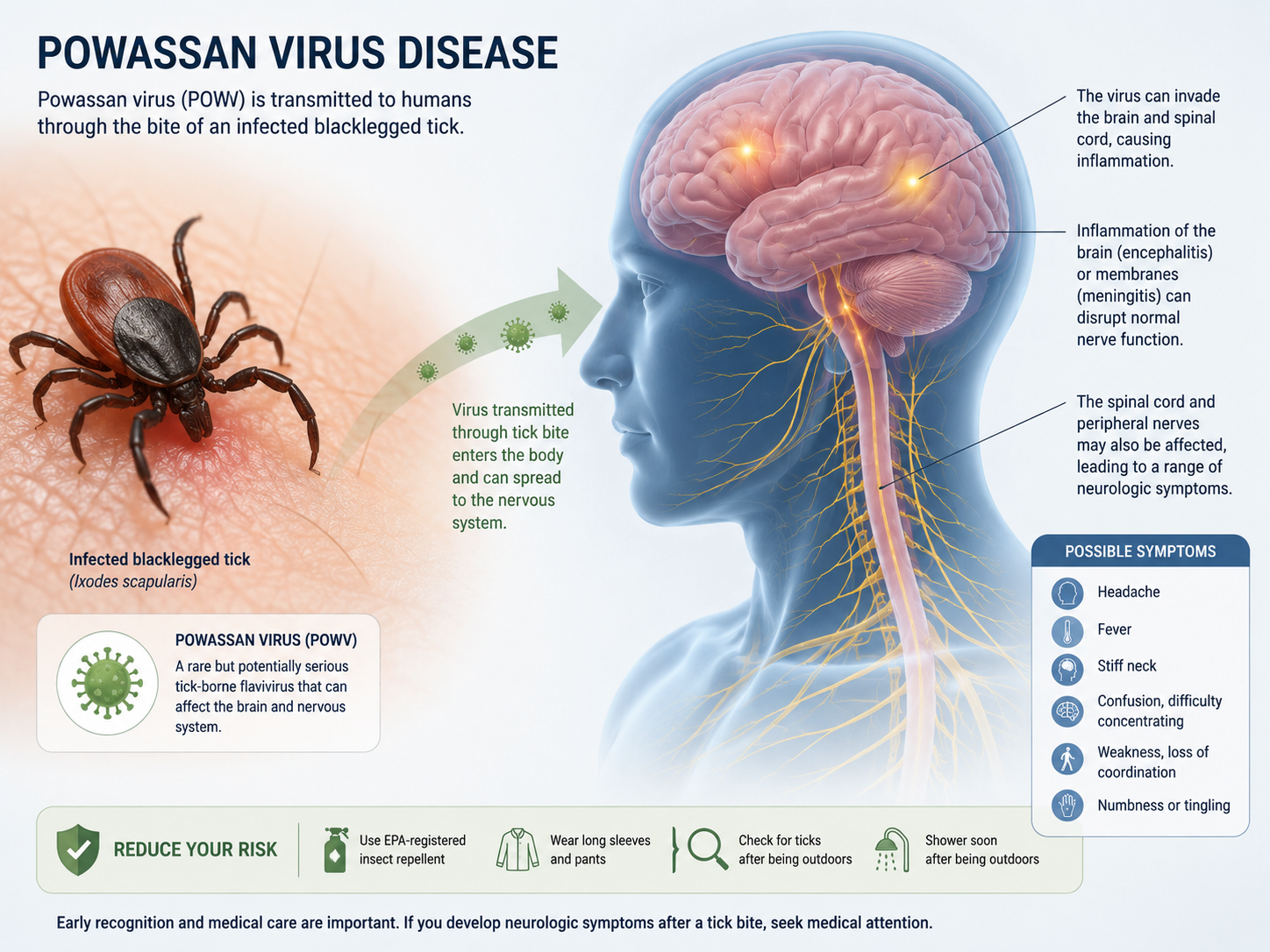
Powassan virus disease is a rare but potentially serious illness caused by a virus that is primarily spread through the bite of an infected tick.
Although Powassan disease is uncommon, reported cases have increased in recent years. In the United States, most reported cases occur in the Northeast and Great Lakes regions, primarily in late spring, early summer, and mid-fall when ticks are active.
Many people infected with Powassan virus do not develop symptoms. However, some people can develop severe illness affecting the brain and nervous system.
How Do Ticks Spread Powassan Virus?
Powassan virus is spread primarily through the bite of an infected Ixodes tick.
Ticks known to transmit Powassan virus include:
- Blacklegged tick or deer tick (Ixodes scapularis)
- Groundhog tick (Ixodes cookei)
- Squirrel tick (Ixodes marxi)
The groundhog tick and squirrel tick rarely bite people, while the blacklegged tick more often bites people and can spread Powassan virus to humans.
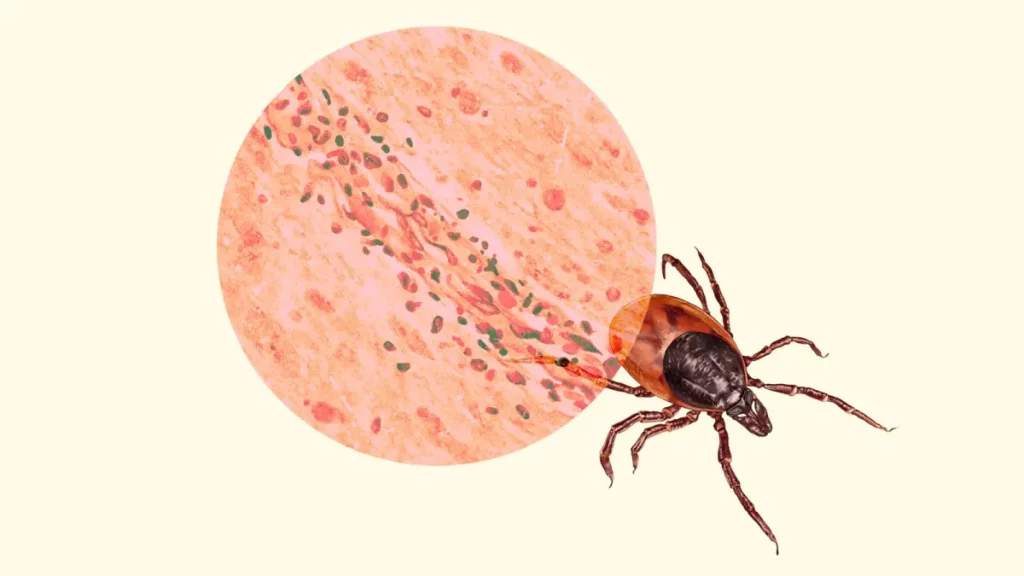
The blacklegged tick is also capable of transmitting several other pathogens that cause illnesses such as Lyme disease, babesiosis, anaplasmosis, and hard tick relapsing fever.
Ticks become infected when they feed on infected animals such as groundhogs, squirrels, mice, and other rodents. An infected tick can later transmit the virus while feeding on a person or another animal.
Powassan virus is not known to spread through ordinary person-to-person contact. Rare transmission through blood transfusion has been documented.
Signs & Symptoms
Many people infected with Powassan virus do not develop symptoms.
For people who do become sick, symptoms generally begin about 1 to 5 weeks after the tick bite.
Initial symptoms can include:
- Fever
- Headache
- Vomiting
- Weakness
Some infections can progress to severe disease involving the brain or the membranes surrounding the brain and spinal cord.
How Can Powassan Virus Affect the Nervous System?
Severe Powassan virus disease can cause:
Encephalitis
Inflammation of the brain.
Meningitis
Inflammation of the membranes surrounding the brain and spinal cord.
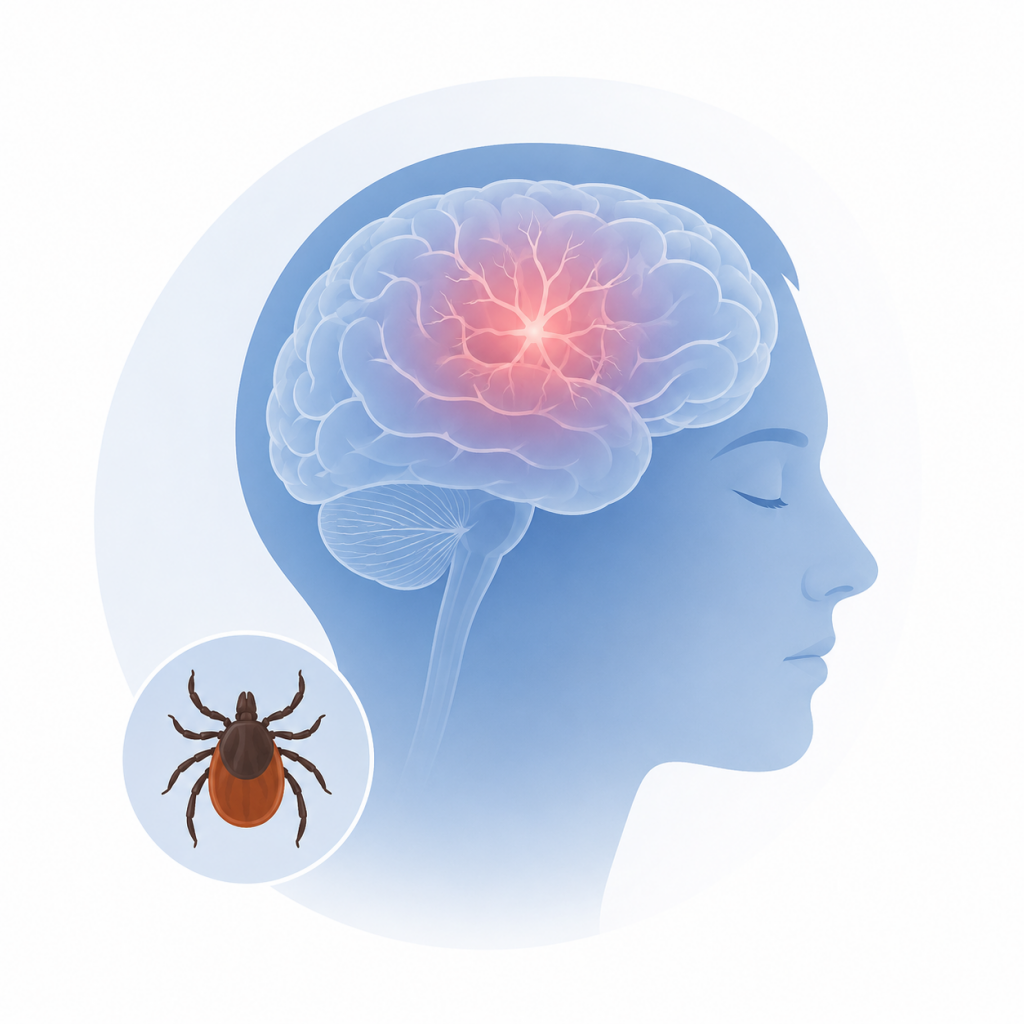
Symptoms of severe neurologic illness may include:
- Confusion or changes in mental status
- Loss of coordination
- Difficulty speaking
- Seizures
- Muscle weakness or paralysis
Severe Powassan virus disease can be life-threatening. Approximately 1 in 10 people with Powassan virus neuroinvasive disease die, and about half of survivors experience long-lasting neurologic problems. These may include headaches, muscle weakness, focal paralysis, and cognitive difficulties.
Anyone infected with Powassan virus can potentially develop severe disease. However, older adults, children, and people who are immunocompromised are at higher risk of developing severe neurologic disease.
When Should You Contact a Healthcare Provider?
Contact a healthcare provider if you develop symptoms after a tick bite or possible tick exposure, particularly after spending time in an area where Powassan virus is known to circulate.
Tell your healthcare provider about:
- Any known or possible tick bites
- Recent outdoor activities
- Places where you recently traveled or spent time outdoors
- When the possible tick exposure occurred
- When your symptoms began
Seek immediate medical attention for serious neurologic symptoms such as confusion, seizures, difficulty speaking, loss of coordination, significant weakness, paralysis, or other sudden changes in neurologic function.
Healthcare providers may use a combination of symptoms, possible tick exposure, geographic and travel history, and laboratory testing to diagnose Powassan virus disease.
Serum or cerebrospinal fluid (CSF) may be tested for Powassan virus-specific IgM and neutralizing antibodies. A positive Powassan virus-specific IgM test result should be confirmed with neutralizing antibody testing through a state public health laboratory or the CDC.
Is Powassan Virus Disease Treatable?
There is currently no specific antiviral treatment for Powassan virus disease, and antibiotics do not work against viruses.
Treatment focuses on relieving symptoms and providing supportive medical care.
People with mild illness may be advised to rest, drink fluids, and use appropriate over-the-counter pain medications for symptom relief.
People with severe illness may require hospitalization for supportive care. This can include assistance with breathing, maintaining hydration, treating seizures, and monitoring or managing complications such as increased pressure or swelling in the brain.
There is currently no vaccine available for people to prevent Powassan virus disease.
How to Help Prevent Powassan Virus Disease
The best way to reduce the risk of Powassan virus infection is to prevent tick bites. If you find an attached tick, remove it as soon as possible.
Protect Yourself From Tick Bites
When spending time outdoors:
- Avoid or use extra caution in wooded, brushy, or grassy areas where ticks may live.
- Use an EPA-registered insect repellent according to the product label.
- Wear long sleeves and long pants when practical.
- Consider clothing and gear treated with 0.5% permethrin. Permethrin should not be applied directly to skin.
- Check your body, clothing, gear, children, and pets for ticks after spending time outdoors.
- Shower within two hours after coming indoors to help wash away unattached ticks and provide an opportunity to perform a thorough tick check.
Check Carefully for Ticks
Ticks can attach in areas that are easy to overlook. Carefully check areas such as:
- In and around the hair
- In and around the ears
- Under the arms
- Around the waist
- Inside the belly button
- Behind the knees
- Between the legs
Check clothing and outdoor gear as well, since ticks can be carried indoors.
Be Tick Smart
If you find an attached tick:
- Use clean, fine-tipped tweezers.
- Grasp the tick as close to the skin’s surface as possible.
- Pull the tick away from the skin using steady, even pressure.
- Do not twist or jerk the tick.
- After removing the tick, thoroughly clean the bite area and your hands.
Remove attached ticks as soon as possible rather than waiting for a healthcare provider to remove them.
Continue to pay attention to how you feel following a tick bite. If you develop fever, headache, weakness, vomiting, neurologic symptoms, or other concerning symptoms after possible tick exposure, contact a healthcare provider and mention the exposure.
Educational Disclaimer
This information is provided for educational purposes only and is not intended to replace professional medical advice, diagnosis, or treatment.
If you develop a fever, rash, unusual fatigue, headache, body aches, nausea, vomiting, or other concerning symptoms following a known or possible tick exposure, contact a qualified healthcare provider and mention the potential tick exposure.