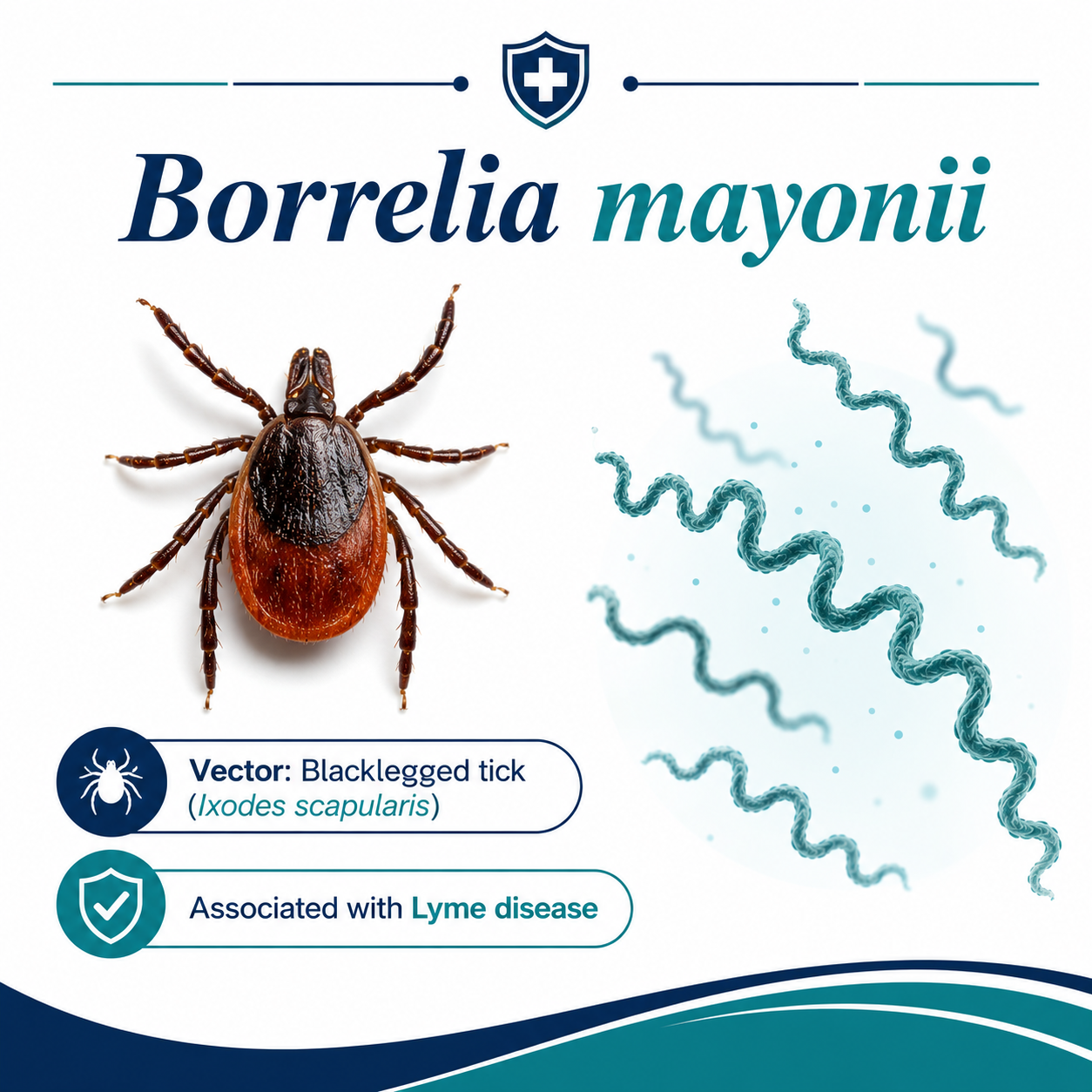
Borrelia mayonii: A Rare Cause of Lyme Disease
What Is Borrelia mayonii?
Borrelia mayonii is a bacterium that can cause Lyme disease.
In the United States, Lyme disease is caused primarily by Borrelia burgdorferi and, much more rarely, by Borrelia mayonii. B. mayonii is therefore not a separate disease from Lyme disease; it is a rare bacterial cause of Lyme disease.
Human illness caused by B. mayonii was first identified in a Minnesota resident in 2013, and the organism was recognized as a cause of Lyme disease in 2016. It is a member of the Borrelia burgdorferi sensu lato complex.
Because relatively few human infections have been identified, researchers are still learning about the complete clinical spectrum, geographic distribution, and epidemiology of B. mayonii infection.
Is Borrelia mayonii Different From Borrelia burgdorferi?
Yes. They are different bacterial species, but both can cause Lyme disease in the United States.
- Borrelia burgdorferi causes the overwhelming majority of U.S. Lyme disease.
- Borrelia mayonii is a rare cause of Lyme disease.
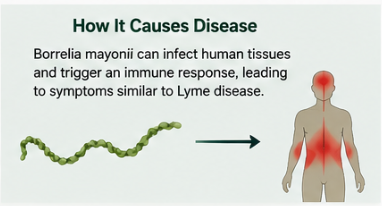
Limited information from people infected with B. mayonii suggests that the illness generally resembles Lyme disease caused by B. burgdorferi. However, some of the earliest identified patients had features that were unusual compared with typical B. burgdorferi infection, including nausea or vomiting, diffuse rashes, symptoms potentially consistent with neurologic involvement, and unusually high concentrations of spirochetes in the bloodstream.
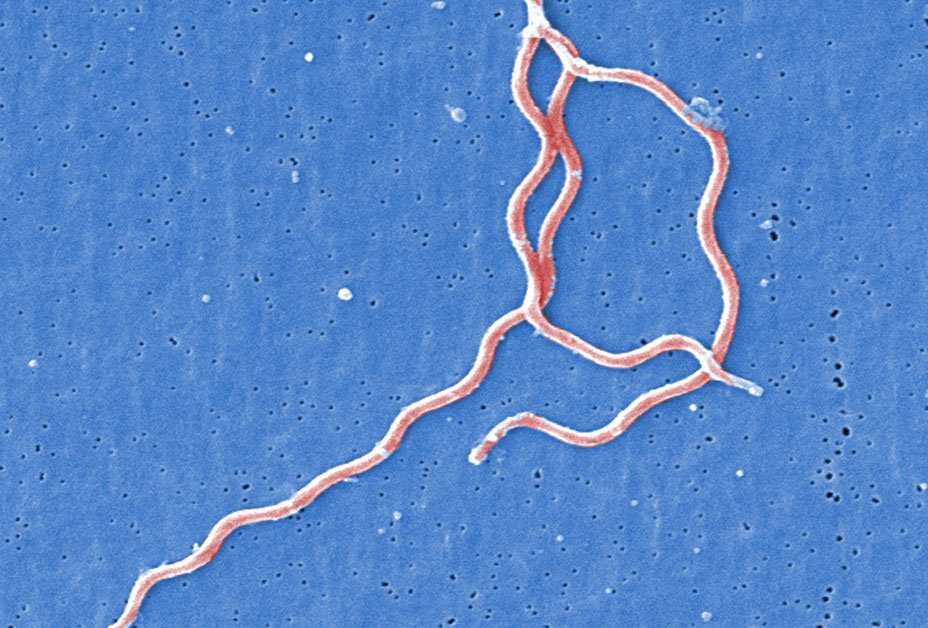
Because only a small number of infections have been studied, these findings should not be assumed to occur in every B. mayonii infection.
How Is Borrelia mayonii Spread?
B. mayonii is transmitted to people through the bite of an infected blacklegged tick (Ixodes scapularis), also commonly called the deer tick.
Blacklegged ticks can transmit several pathogens, including those that cause:
- Lyme disease
- Anaplasmosis
- Babesiosis
- Hard tick relapsing fever caused by Borrelia miyamotoi
- Powassan virus disease
Because the same tick species can carry more than one pathogen, coinfections can occur. The 2025 New York B. mayonii investigation provided direct examples of ticks carrying more than one pathogen.
How Long Does a Tick Need to Be Attached?
For Lyme disease generally, CDC states that infected ticks typically must remain attached for more than 24 hours before transmission occurs.
The Minnesota Department of Health states that, similar to B. burgdorferi, a blacklegged tick infected with B. mayonii must be attached for at least 24–48 hours before it can spread the bacteria.
Prompt removal of attached ticks therefore greatly reduces the risk of Lyme disease transmission.
Because B. mayonii is rare and species-specific transmission data remain limited, attachment time should not be interpreted as an absolute guarantee that transmission can or cannot occur in an individual exposure.
Where Does Borrelia mayonii Occur?
Before the 2025 New York investigation, B. mayonii had been reported in humans and ticks only in Minnesota and Wisconsin, in the upper Midwestern United States.
That changed with an important discovery in New York in 2025.
First Locally Acquired Borrelia mayonii Infection Identified in New York
On July 8, 2025, the New York State Department of Health was notified that a resident of Herkimer County, New York, had tested positive for B. mayonii by real-time PCR.
The patient:
- Developed symptoms consistent with a tick-borne infection in late June
- Had spent time outdoors
- Reported no recent travel
- Had no history of transplant or transfusion
- Was also infected with Anaplasma phagocytophilum
- Was treated with doxycycline
- Made a full recovery
Because the patient had no history of recent travel, transplant, or transfusion, public-health investigators conducted environmental tick sampling to determine whether the infection could have been acquired locally.
What Did Investigators Find?
On July 22, 2025, investigators collected:
- 147 blacklegged-tick nymphs from the wooded property surrounding the patient’s residence
- 22 additional nymphs from a nearby forest
One nymph from the patient’s property tested positive for B. mayonii. That tick was also infected with B. burgdorferi and Anaplasma phagocytophilum.
Investigators returned on October 29, 2025 and collected 305 adult ticks from the two locations. Of the 229 adult ticks collected from the patient’s property, nine tested positive for B. mayonii. Four of those nine ticks were also infected with B. burgdorferi.
In total, investigators identified 10 B. mayonii**-positive blacklegged ticks on the patient’s property**—one nymph and nine adults.
These findings provided evidence of local peridomestic transmission of B. mayonii in New York.
The higher prevalence among adult ticks compared with nymphs collected from the same property and year also suggested an established local enzootic transmission focus, potentially involving a competent wildlife reservoir such as mice or squirrels, rather than simply an isolated introduction of an infected tick.
The New York State Department of Health’s Wadsworth Center described the discovery as the first detection of B. mayonii outside the upper Midwest.
Does This Mean Borrelia mayonii Is Widespread in New York?
No. Current evidence does not show that.
To determine whether B. mayonii was present elsewhere in New York, investigators examined an additional 1,309 ticks collected during 2021–2025 from 23 other New York counties. All were negative for B. mayonii.
Overall, 1,518 individual ticks from 24 New York counties were included in the surveillance described in the investigation. These included:
- 1,437 blacklegged ticks (Ixodes scapularis)
- 81 American dog ticks (Dermacentor variabilis)
The only B. mayonii-positive ticks identified were collected in 2025 from the Herkimer County patient’s property.
The investigation therefore demonstrated the first known locally acquired human infection and first detection of B. mayonii in ticks in New York, but it does not establish that the bacterium is widespread throughout New York or the Northeast.
Continued human, tick, and molecular surveillance will be needed to determine its true geographic distribution and public-health significance.
What Are the Symptoms?
Because relatively few human B. mayonii infections have been identified, the complete range and frequency of symptoms are still being defined.
The Minnesota Department of Health lists commonly reported symptoms including:
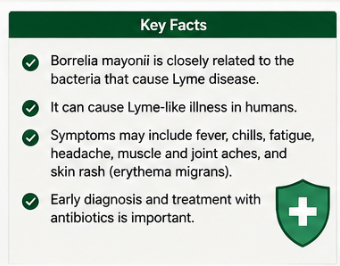
- Fever or chills
- Headache
- Muscle aches
- Joint pain
- Rash
Arthritis, including joint inflammation and swelling, has also been reported as a later manifestation of infection.
Early investigations of B. mayonii also described findings that appeared somewhat different from typical B. burgdorferi Lyme disease, including:
- Nausea
- Vomiting
- Diffuse or widespread rash
- Symptoms potentially consistent with neurologic involvement
- Unusually high concentrations of spirochetes in the bloodstream
These findings come from a very limited number of patients and should not be considered features that occur in every infection.
What Does the Rash Look Like?
There is no single established rash pattern specific to B. mayonii.
Lyme disease commonly causes an expanding skin rash called erythema migrans (EM). An EM rash typically expands gradually over several days and may feel warm to the touch but is rarely itchy or painful. It does not always have the classic “bull’s-eye” appearance.
In the original investigation of six patients with B. mayonii, four had a diffuse or focal rash, and some patients were described as having diffuse macular rashes that differed from the more typical appearance of erythema migrans.
Because so few cases have been studied, it would be inaccurate to describe any single rash appearance as characteristic of all B. mayonii infections.
What Laboratory Abnormalities Can Occur?
Laboratory abnormalities reported in people with B. mayonii infection have included:
- Lymphopenia — a reduced number of lymphocytes
- Thrombocytopenia — a reduced platelet count
- Elevated liver enzymes, particularly hepatic transaminases
These abnormalities are not specific to B. mayonii and can occur with many other illnesses, including other tick-borne infections.
What Is High Spirochetemia?
One of the most notable findings in the original B. mayonii investigation was unusually high spirochetemia.
Spirochetemia means that spirochete bacteria are circulating in the bloodstream.
Lyme disease caused by B. burgdorferi generally produces relatively low concentrations of spirochetes in the blood. In the original study, among five blood specimens from patients with the newly identified organism, the median amount of bacterial DNA detected by the study’s PCR assay was approximately 180 times higher than in 13 blood specimens positive for B. burgdorferi sensu stricto during the same period.
The concentration was high enough that motile spirochetes were visible in a blood specimen from one patient, and organisms were successfully cultured from blood specimens from two patients.
The Minnesota Department of Health also notes that, in some instances, spirochetes may be visible on a Giemsa-stained blood smear.
However, high spirochetemia or visible spirochetes should not be considered findings that must be present in every B. mayonii infection.
How Soon Do Symptoms Appear?
A separate, well-established B. mayonii**-specific incubation period has not been defined** in current public-health guidance.
For Lyme disease generally, CDC states that early symptoms can begin 3–30 days after the bite of an infected tick.
Because relatively few B. mayonii infections have been studied, it is not known whether the timing of symptom onset differs meaningfully from Lyme disease caused by B. burgdorferi.
Can Borrelia mayonii Infection Be Serious?
Yes. Clinically significant illness can occur.
In the original investigation involving six patients:
- Five presented with fever
- Four had a diffuse or focal rash
- Three had symptoms potentially suggesting neurologic involvement
- Two were hospitalized
- The sixth patient presented with knee pain and swelling
Arthritis has also been reported as a later manifestation of B. mayonii Lyme disease.
Lyme disease in general can affect the joints, nervous system, and heart if infection disseminates or remains untreated.
However, because B. mayonii infections remain rare, the frequency of specific complications such as facial palsy, Lyme carditis, meningitis, or other neurologic manifestations has not been independently established for B. mayonii.
The known complication profile of B. burgdorferi Lyme disease therefore should not automatically be assumed to occur with the same frequency in B. mayonii infection.
How Is Borrelia mayonii Infection Diagnosed?
Diagnosis involves considering:
- Signs and symptoms
- Possible exposure to blacklegged ticks
- Residence in or travel to an area where exposure could have occurred
- Physical examination
- Appropriate laboratory testing
PCR Testing
According to the Minnesota Department of Health, confirmation of B. mayonii infection currently relies on molecular testing such as polymerase chain reaction (PCR), which detects DNA from the organism.
- mayonii PCR testing is not widely available, although it can be ordered from some commercial laboratories.
The 2025 New York infection was identified through real-time PCR testing.
Lyme Disease Antibody Testing
For Lyme disease generally, CDC recommends a two-step serologic testing process using FDA-cleared assays when laboratory testing is indicated.
Antibody tests may be falsely negative during the first several weeks after infection because the immune system needs time to produce detectable antibodies.
Standard Lyme disease serologic testing detects an immune response to Lyme bacteria but does not identify the specific Borrelia species responsible for the infection.
Patients infected with B. mayonii may develop a serologic response similar to patients infected with B. burgdorferi, but the Minnesota Department of Health notes that additional research is needed to determine how consistently this occurs.
Therefore, Lyme antibody testing should not be interpreted as species-specific confirmation of B. mayonii.
How Is Borrelia mayonii Lyme Disease Treated?
Patients diagnosed with Lyme disease caused by B. mayonii have been successfully treated with the same antibiotics used to treat Lyme disease caused by B. burgdorferi.
For Lyme disease generally, commonly used antibiotics include:
- Doxycycline
- Amoxicillin
- Cefuroxime axetil
The appropriate antibiotic and treatment duration depend on factors including:
- The clinical manifestation of Lyme disease
- Age
- Medical history and underlying health conditions
- Allergies
- Pregnancy
- Other individual medical considerations
Treatment duration is not identical for every manifestation of Lyme disease. Treatment recommendations differ depending on whether a patient has early erythema migrans, neurologic Lyme disease, Lyme carditis, Lyme arthritis, or another manifestation.
People appropriately treated during the early stages of Lyme disease usually recover rapidly and completely.
Treatment decisions should be made by a qualified healthcare professional.
Important Note About the 2025 New York Patient
The 2025 New York patient was infected with both:
- Borrelia mayonii
- Anaplasma phagocytophilum
This is an important scientific distinction.
Because the patient had a coinfection, individual symptoms in that case cannot confidently be attributed entirely to B. mayonii.
The patient was treated with doxycycline and made a full recovery.
The major significance of the case is that the subsequent tick investigation provided evidence of local B. mayonii transmission in New York, rather than establishing new symptoms specifically attributable to B. mayonii.
Can Borrelia mayonii Lyme Disease Be Prevented?
There is currently no Lyme disease vaccine available for people. CDC reported in April 2026 that new Lyme disease vaccines are under investigation, but none is currently available for routine use.
The best way to reduce the risk of B. mayonii and other tick-borne infections is to prevent tick bites and promptly remove attached ticks.
Before Going Outdoors
- Avoid grassy, brushy, and wooded areas where ticks are common when practical.
- When hiking, consider walking in the center of trails.
- Use an EPA-registered insect repellent according to the product label.
- Wear long-sleeved shirts and long pants when appropriate.
- Wear clothing and gear pretreated with 0.5% permethrin, or treat suitable clothing and gear according to product directions.
- Do not apply permethrin directly to the skin.
After Being Outdoors
- Check your entire body carefully for ticks.
- Check children carefully.
- Check clothing, backpacks, outdoor gear, and pets.
- Shower soon after coming indoors. CDC notes that showering within two hours of coming indoors has been shown to reduce the risk of Lyme disease and also provides an opportunity to perform a thorough tick check.
- Remove attached ticks as soon as possible.
How to Remove an Attached Tick
If you find a tick attached to your skin:
- Use clean, fine-tipped tweezers to grasp the tick as close to the skin’s surface as possible.
- Pull the tick away from the skin with steady, even pressure.
- Do not twist or jerk the tick.
- Dispose of the live tick safely by placing it in a sealed container, wrapping it tightly in tape, flushing it down the toilet, or placing it in alcohol.
- Clean the bite area and your hands thoroughly with soap and water, rubbing alcohol, or hand sanitizer.
- Check the rest of your body carefully for additional ticks.
CDC recommends not waiting for a healthcare provider to remove an attached tick, because delaying removal can increase the risk of acquiring certain tick-borne diseases.
If clean fine-tipped tweezers are unavailable, CDC states that regular tweezers or fingers may be used, while taking care to grasp the tick close to the skin and avoid squeezing its body.
Do not use petroleum jelly, heat, nail polish, or other substances to try to make an attached tick detach.
Should You Have the Tick Tested?
CDC generally does not recommend using commercial tick testing to make medical treatment decisions.
A positive test from a tick does not prove that the person was infected, while a negative result can provide false reassurance because another infected tick could have gone unnoticed. If illness develops after a tick bite, medical decisions should be based on the person’s symptoms, exposure history, examination, and appropriate clinical testing—not solely on testing the removed tick.
When Should You Contact a Healthcare Provider?
Contact a healthcare provider if you develop concerning symptoms after a known or possible tick exposure, particularly:
- Fever
- Rash
- Headache
- Muscle or joint pain
- Joint swelling
- Neurologic symptoms
- Other unexplained symptoms following possible tick exposure
Tell your healthcare provider:
- Whether you found an attached tick
- When the possible exposure occurred
- Where the exposure occurred
- How long the tick may have been attached, if known
- Whether you recently traveled
CDC specifically advises seeking medical care if you develop a rash or fever within several days to weeks after removing a tick, and telling the healthcare provider when and where the bite occurred.
Important Facts About Borrelia mayonii
- Borrelia mayonii is a rare bacterial cause of Lyme disease.
- It is not a separate disease from Lyme disease.
- Most Lyme disease in the United States is caused by Borrelia burgdorferi.
- B. mayonii is transmitted by infected blacklegged ticks (Ixodes scapularis).
- Human illness was first identified in 2013, and the organism was recognized as a cause of Lyme disease in 2016.
- Before the 2025 New York investigation, B. mayonii had been reported in humans and ticks only in Minnesota and Wisconsin.
- In 2025, the first known locally acquired B. mayonii infection in New York was identified in a Herkimer County resident.
- Investigators subsequently identified 10 B. mayonii-positive blacklegged ticks on the patient’s property.
- An additional 1,309 ticks from 23 other New York counties were negative, so current evidence does not show that B. mayonii is widespread across New York.
- Commonly reported symptoms include fever, headache, muscle aches, joint pain, and rash.
- Limited early reports also described nausea, vomiting, diffuse rash, possible neurologic involvement, and unusually high concentrations of spirochetes in the bloodstream.
- Arthritis has been reported as a later manifestation.
- A separate B. mayonii-specific incubation period has not been established.
- Species-specific confirmation currently relies primarily on molecular testing such as PCR, which is not widely available.
- Standard Lyme disease antibody testing does not identify the specific Borrelia species causing an infection.
- B. mayonii infections have been successfully treated using the same antibiotics used for other forms of Lyme disease.
Preventing blacklegged-tick bites and promptly removing attached ticks are important ways to reduce the risk of infection.
Sources
- Centers for Disease Control and Prevention (CDC), Morbidity and Mortality Weekly Report (MMWR) — Notes from the Field: Borrelia mayonii Lyme Disease — New York, 2025. Published June 4, 2026.
- Minnesota Department of Health — About Borrelia mayonii (Lyme Disease). Updated March 5, 2026.
- Minnesota Department of Health — Borrelia mayonii (Lyme Disease) Information for Health Professionals. Updated March 5, 2026.
- CDC — How Lyme Disease Spreads.
- CDC — Signs and Symptoms of Untreated Lyme Disease.
- CDC — Testing and Diagnosis for Lyme Disease and Clinical Testing and Diagnosis for Lyme Disease.
- CDC — Treatment and Intervention for Lyme Disease. Updated April 14, 2026.
- CDC — Preventing Lyme Disease. Updated April 30, 2026.
- CDC — Preventing Tick Bites.
- CDC — Lyme Disease Vaccine. Updated April 28, 2026.
- CDC — What to Do After a Tick Bite. Updated June 9, 2026.
- New York State Department of Health, Wadsworth Center — Wadsworth Center Reports First Detection of Borrelia mayonii in New York State Ticks. Published June 9, 2026.
- Pritt BS, Mead PS, et al. — Identification of a novel pathogenic Borrelia species causing Lyme borreliosis with unusually high spirochaetaemia: a descriptive study. The Lancet Infectious Diseases. 2016;16(5):556–564.
- Pritt BS, Respicio-Kingry LB, et al. — Borrelia mayonii sp. nov., a member of the Borrelia burgdorferi sensu lato complex, detected in patients and ticks in the upper midwestern United States. International Journal of Systematic and Evolutionary Microbiology. 2016;66(11):4878–4880.
Educational Disclaimer
This information is provided for educational purposes only and is not a substitute for professional medical advice, diagnosis, or treatment.
If you develop fever, rash, headache, unusual fatigue, muscle or joint pain, joint swelling, neurologic symptoms, or other concerning symptoms after a known or possible tick exposure, contact a qualified healthcare provider and mention the possible tick exposure.